
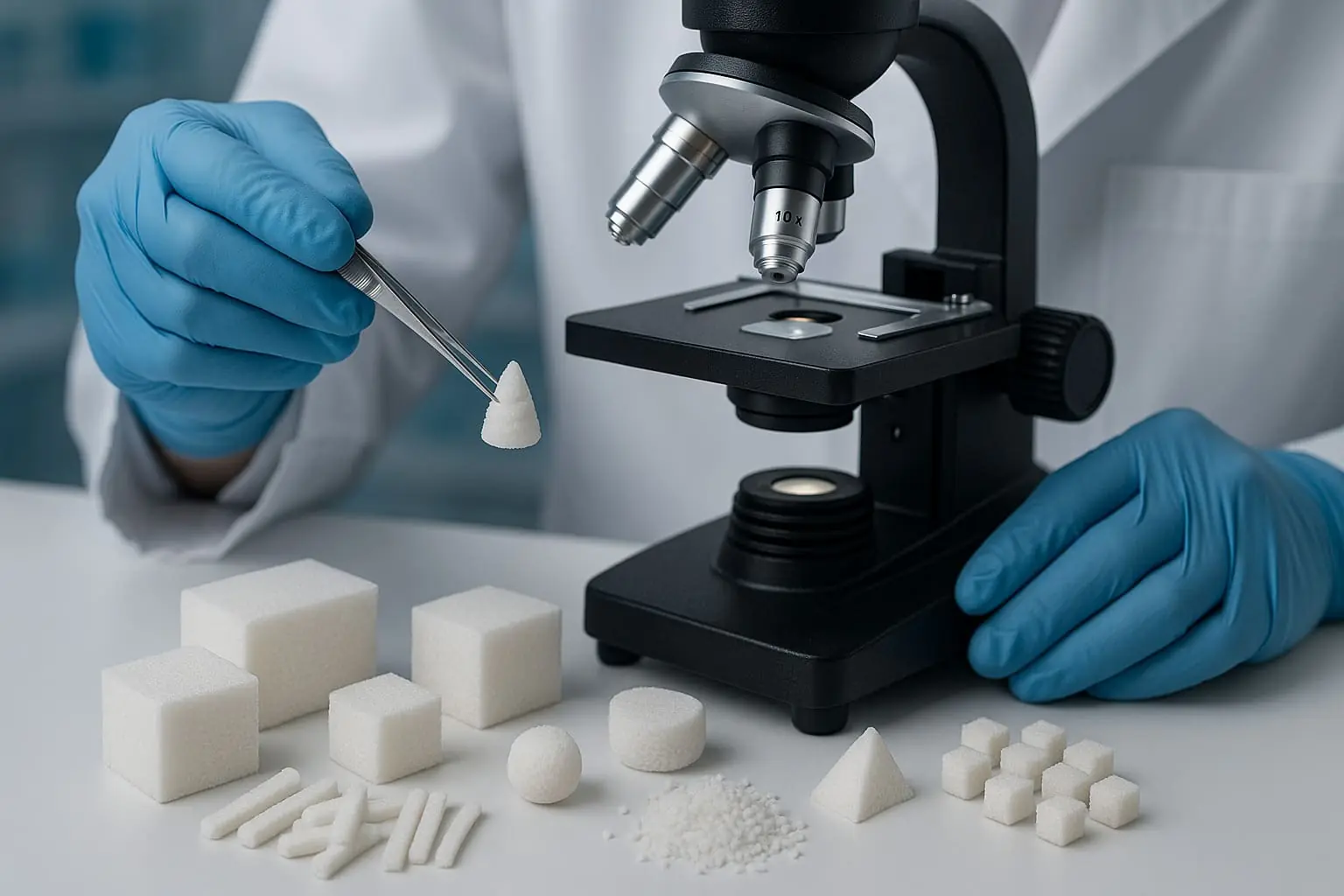

What if we could rebuild human tissues as if we were reconstructing a building? That’s precisely the concept behind tissue engineering, a rapidly evolving field that combines cell biology, materials science, and bioengineering to regenerate or replace damaged tissues.
At the core of this discipline are the scaffolds. In this article, we explain what they are, how they work, and why they are transforming regenerative medicine through advances in scaffold tissue engineering.
The importance of scaffolds in tissue engineering
In tissue engineering, scaffolds are three-dimensional structures made from natural or synthetic biomaterials that provide a physical framework for cell growth. These structures can be inert—serving only as passive supports—or play an active role in tissue biology by releasing chemical signals that stimulate and regulate key processes such as cell proliferation, migration, and differentiation.
Thanks to these properties, scaffolds have become essential tools for the regeneration and repair of damaged or lost human tissues, driving major progress in regenerative medicine.
The main functions of scaffolds include:
- Structural support: providing a framework for cell adhesion, proliferation, and differentiation.
- Mechanical properties: contributing to the stiffness and elasticity of the regenerated tissue, adapting to the characteristics of the original tissue.
- Bioactive signaling: releasing compounds that promote cell migration, differentiation, and new blood vessel formation.
- Reservoir for growth factors: storing and releasing bioactive molecules that regulate cell activity.
- Dynamic remodeling: facilitating tissue restructuring during healing and homeostasis.
How are scaffolds fabricated in tissue engineering?
Scaffolds can be produced from a wide range of biomaterials — including biodegradable polymers, silk proteins, calcium phosphate ceramics, and collagen. One of their most critical features is porosity, as interconnected pores allow for cell migration, nutrient diffusion, and tissue integration — all essential aspects of scaffold biology.
In addition to their physical architecture, scaffolds can incorporate bioactive substances that promote cell migration, adhesion, and differentiation. Some are designed to be biodegradable, gradually decomposing as new tissue forms and replacing the scaffold with living, functional tissue. The most common fabrication methods include:
- Injection molding: enables complex and precise geometries.
- Electrospinning: produces nanoscale fibers that mimic the extracellular matrix (ECM) architecture.
- 3D printing: offers high precision for designing custom structures tailored to each tissue type.
- Tissue decellularization: removes cells from biological tissues while preserving the natural ECM as a biological framework for new growth.
Why scaffolds in tissue engineering are revolutionizing regenerative medicine
Scaffolds are at the forefront of regenerative medicine because they replicate the natural extracellular matrix, supporting cell growth, differentiation, and organization into functional tissues. This capacity is crucial for regenerating complex tissues such as bone, cartilage, skin, and muscle, and it is paving the way for major medical advances.
When combined with technologies such as in vitro assays and cell culture systems, scaffold tissue engineering enables precise evaluation of the bioaccessibility and bioavailability of bioactive compounds. These controlled systems help scientists analyze how such compounds are absorbed and how they affect cellular function, facilitating the development of safer and more effective products for human health.
Bone tissue engineering: a promising solution
Bone tissue engineering has emerged as an innovative approach to address bone defects, complex fractures, and degenerative bone diseases.
This field combines cells, bioactive factors, and biomaterials to create 3D scaffolds capable of promoting functional and structural bone regeneration. Advances in biotechnology, 3D printing, and bioactive materials now make it possible to design customized scaffolds that replicate the mechanical and biological properties of natural bone, opening new clinical opportunities in traumatology, orthopedics, and reconstructive surgery.
Integrated with complementary technologies such as in vitro digestion and absorption models, scaffold in tissue engineering represents one of the most promising pillars of modern regenerative medicine.
By mimicking the extracellular matrix, guiding cell behavior, and adapting to the specific needs of each tissue type, scaffolds are becoming key tools for addressing previously unsolved medical challenges. Tissue engineering is not only redefining how we understand healing — it is also shaping the design of tomorrow’s medicine.