Subscribe to our newsletter
- R&D&I Programmes
- Technological Services
- Consultancy Services
- Laboratory Services
- Training and Events
- Sectors
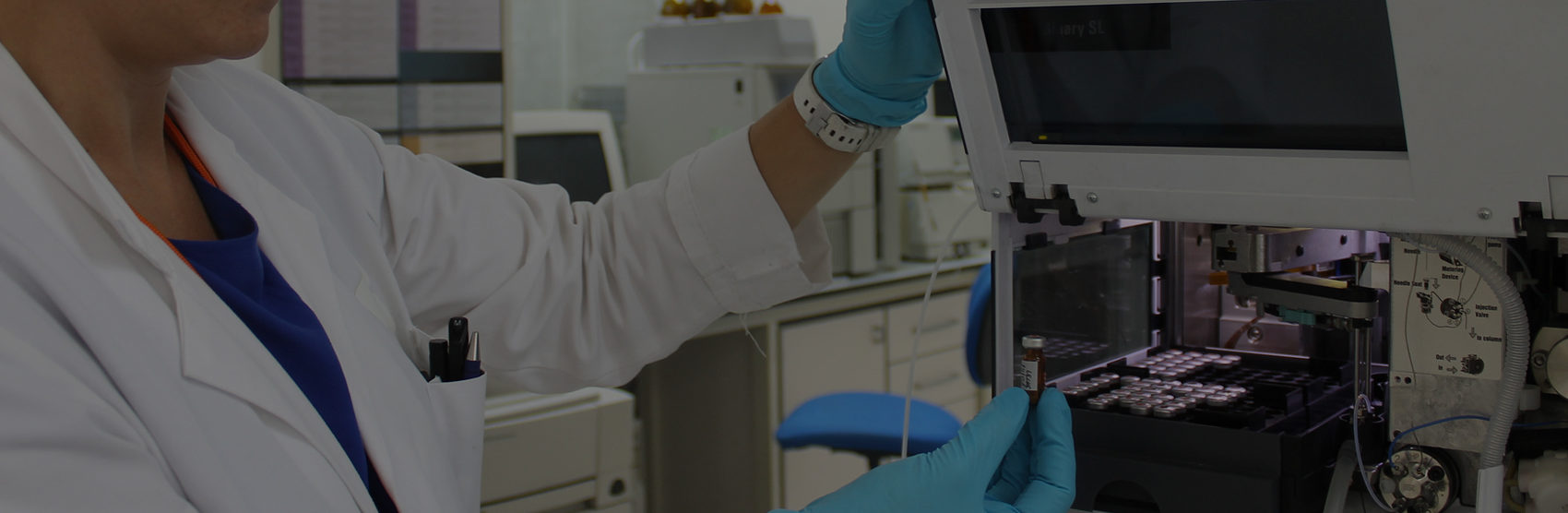
NIAS (Non-Intentionally Added Substances) are chemical compounds of very diverse nature that may be present in polymeric raw materials and also in final or semi-finished products derived from them during processing. Due to the largely unknown nature of these chemical species and their potential adverse effects on human health, legislation on plastic materials intended to come into contact with food has placed particular emphasis on NIAS risk assessment, alongside the application of Good Manufacturing Practices (GMP) to minimise their presence.
From a legislative perspective, the basic principles applicable to NIAS in food contact materials are grounded in the provisions set out in Article 3 of Regulation (EC) No 1935/2004, which states:
“1. Materials and articles, including active and intelligent materials and articles, shall be manufactured in compliance with good manufacturing practice so that, under normal or foreseeable conditions of use, they do not transfer their constituents to food in quantities which could:
a) endanger human health; or
b) bring about an unacceptable change in the composition of the food; or
c) bring about a deterioration in the organoleptic characteristics thereof.”
In addition to Regulation (EC) No 1935/2004, NIAS are also addressed in Regulation (EU) No 10/2011 on plastic materials and articles intended to come into contact with food. This regulation refers to them as “non-intentionally added substances”, defining them as “an impurity in the substances used, a reaction intermediate formed during the production process, or a decomposition or reaction product.”
Although Regulation (EU) No 10/2011 explicitly acknowledges NIAS, their specific regulation had not been fully developed for many years. However, following the amendment introduced by Regulation (EU) 2025/351, NIAS are now affected by the requirement for a “high degree of purity”, as defined in the new Article 3(a) and referenced in Article 8(1).
This latest amendment regulates the presence of non-intentionally added substances more explicitly and introduces the mandatory inclusion of NIAS-related information in the Declaration of Compliance (DoC). As a result, food safety is further reinforced by requiring that the DoC also includes information on NIAS such as impurities, reaction intermediates, and decomposition or reaction products formed during the manufacture of the plastic material or article and potentially present in the final food contact material.
The regulatory situation for NIAS has not yet been fully clarified or standardised. Although they are addressed in Regulation (EU) No 10/2011, defining all possible scenarios in which NIAS may occur remains highly complex. Consequently, risk assessment is essential for these substances.
In this context, particular attention should be paid to the work published by the German Federal Institute for Risk Assessment (BfR), “A draft concept for the assessment of non-intentionally added substances in food contact materials”, presented within the EFSA FCM Network in October 2025. In line with EFSA’s position, the BfR highlights the complexity of NIAS assessment due to analytical identification challenges, the frequent lack of toxicological data, and the high associated costs. In many cases, analytical standards or pure reference substances are not available, and uncertainty in quantification remains high.
In response to this reality, the BfR proposes a pragmatic and operational approach, based on:
a structured workflow for analysis and assessment,
defined analytical quality criteria,
toxicological evaluation proportional to the identified migration level,
the integration of NAMs (New Approach Methodologies), and
the acceptance of NIAS with very low migration levels, provided they are adequately justified.
An analysis of the BfR proposal shows that it does not contradict EFSA’s approach or the EU legal framework, but rather provides greater operational clarity and more explicit expectations for NIAS assessment. From a regulatory and training perspective, the key message is the need for well-justified, proportionate and transparent evaluation strategies, avoiding the automatic application of tools such as the Threshold of Toxicological Concern (TTC) and clearly distinguishing between scientific risk assessment and routine regulatory compliance.
José María Ferrer Villar
Since joining AINIA in 1997, I have worked in the field of Food Law. Thanks to my legal education and specialization in the agri-food sector, I have been able to engage in activities related to consultancy and teaching through participation in multidisciplinary projects in collaboration with companies from various agri-food sectors. I am particularly motivated by applying technical knowledge to real market challenges, facilitating the interpretation and application of Food Law by operators.


| Responsible | AINIA |
| Address | Calle Benjamín Franklin, 5 a 11, CP 46980 Paterna (Valencia) |
| Purpose | To attend to, register and contact you to resolve the request you make to us through this contact form |
| Legitimation | Your data will be processed only with your consent, by checking the box shown on this form |
| Recipients | Your data will not be transferred to third parties. |
| Rights | You have the right to request access to, correct or delete your data. You can also request that we limit its processing, oppose it and request the portability of your data by contacting our postal address or [email protected] |
| More info | You can find more information in our Privacy Policy |
| DPO | If you have any questions about how we will treat your data or would like to make any suggestions or complaints, please contact the Data Protection Officer at [email protected] or at the Data subject support form |
I consent to the use of my personal data to process my request, as set forth in your Privacy Policy
I consent to the use of my data to receive information and commercial communications from your entity.

Head office
Parque Tecnológico de Valencia
Av. Benjamín Franklin, 5-11
46980 Paterna, Valencia
+34 961 366 090
+34 963 052 525 · Laboratories

