
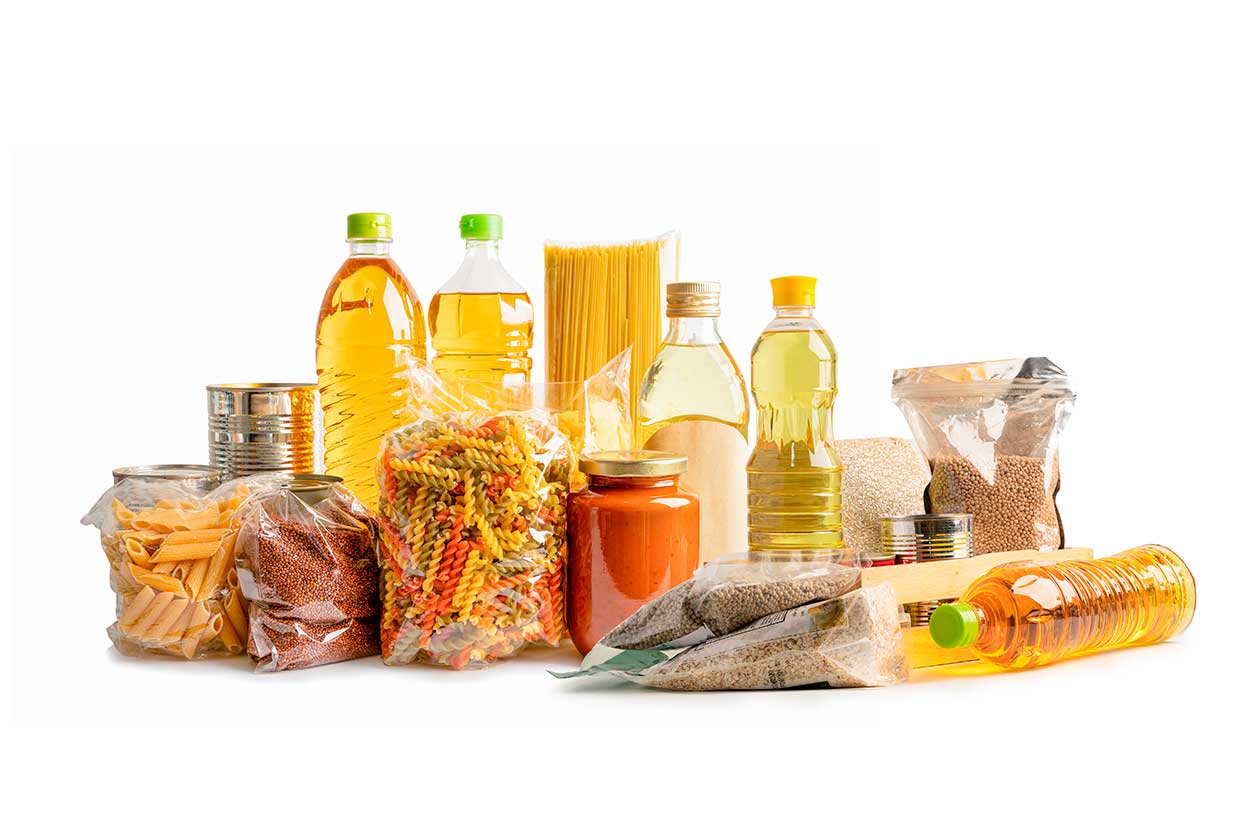

The European Commission continues to move forward with the regulatory process to establish maximum limits for mineral oil aromatic hydrocarbons (MOAH). The formal notification to the World Trade Organization (WTO) has now taken place regarding the proposed Regulation to amend Regulation (EU) 2023/915 on food contaminants. The notification, made under the Agreement on Sanitary and Phytosanitary Measures (SPS Agreement), confirms the international scope and potential trade impact of this future legislation.
Context and rationale for the proposal
MOAH are a group of contaminants with genotoxic and carcinogenic potential, especially those compounds with three or more aromatic rings. In light of the updated EFSA risk assessment (2023) and the monitoring data collected by the Member States, the Commission considers it necessary to establish legally binding maximum limits to ensure a high level of protection of human health.
The WTO notification confirms that:
- There is currently no applicable international standard (Codex) for MOAH.
- The measure is justified exclusively on food safety grounds.
- It will potentially affect all EU trading partners.
What does the proposal set out?
A new Section 5.5 “Mineral oil aromatic hydrocarbons” is introduced into Annex I of Regulation (EU) 2023/915, establishing maximum MOAH levels (≥ C10–≤ C50) across a very broad range of foods, both of plant and animal origin, including processed products.
In line with previous updates to Regulation (EU) 2023/915, the proposed amendments are based on two pillars:
- ALARA principle, setting the limits, in many cases, at the limit of quantification (LOQ).
- Progressive implementation, with staggered transitional periods to allow operators to adapt, especially in complex matrices such as oils and fats.
Which foods are affected?
The main food groups affected by the proposal notified to the WTO are:
Oils and fats
This is the category with the greatest level of detail and transitional provisions:
- Oilseeds and oil fruits: 2.0 mg/kg.
- Vegetable oils and animal fats: differentiated limits depending on the type of oil, with initially high values (up to 10 mg/kg) that are progressively reduced to 2.0 mg/kg by 2030.
- Specific provisions for olive pomace oil, marine oils and derived products with high fat content.
Cereals and cereal-based products
- Cereal grains and products with low fat content: 0.5 mg/kg.
- Higher-fat products: limits of 1.0 or 2.0 mg/kg, depending on fat content.
- Exception for cereals intended for beer or spirits, provided that the residues are not marketed as food.
Nuts, pulses and cocoa
- Tree nuts: 2.0 mg/kg.
- Pulses: 0.5 mg/kg.
- Cocoa and chocolate: specific limits, with deferred application for cocoa beans (from 2030).
Milk, dairy products and infant foods
- Milk: 0.5 mg/kg.
- Dairy products and infant foods: limits modulated according to fat content (0.5 / 1.0 / 2.0 mg/kg). These groups stand out because of their toxicological relevance, as they affect sensitive populations.
Spices, tea, supplements and additives
- Spices, dried herbs, tea and herbal infusions: regulated only when used as an ingredient or in instant format.
- Food supplements: initial limit of 10 mg/kg from 2027, reduced to 5 mg/kg in 2030.
- Food additives: obligation for the raw materials used to comply with the established limits.
Processed and composite foods
From 1 January 2030, specific limits are introduced for processed and composite foods containing regulated ingredients, again depending on the total fat content.
Key dates confirmed in the WTO notification. The EU SPS notification provides timing information that is especially relevant for international operators:
- Expected adoption of the Regulation: September 2026.
- Estimated publication: September 2026.
- General application: 1 January 2027.
The proposal may be subject to comments from third countries until 10 May under the SPS Agreement framework.
Once approved, a transitional period is envisaged so that foods lawfully placed on the market before the date of application may remain on the market until the end of their shelf life.
In addition, we must keep 1 January 2030 very much in mind, as that is the date proposed for the full application of the final limits, including those for processed foods.
Practical implications for the food sector
The WTO notification confirms that the EU considers this measure to be structural and long term. For food business operators, this implies:
- Review of critical raw materials (oils, fats, cocoa, spices).
- Identification and control of sources of contamination (lubricants, food contact materials, processes).
- Adjustment of analytical plans, taking demanding LOQs into account.
- Anticipation in supply chains with a strong import component.
In this context, at AINIA we have recently analysed the technical and regulatory implications of these contaminants in a specialised webinar, where we addressed both the future European legislative framework and the analytical and operational challenges involved in controlling them in the food industry. You can read more in the article AINIA analyses the technical and regulatory challenges of MOSH and MOAH contaminants in food.
In addition, to better contextualise the scope of this future regulation, it is worth consulting the article MOSH and MOAH in food: regulatory framework, where we outline the regulatory evolution and the regulatory approach applicable to these contaminants in the food sector. And, to better understand what these compounds are, what their main sources are and why their analytical control is highly complex, you can also consult the content MOSH-MOAH analysis: what they are, main sources and control challenges.
Regulatory follow-up and support for the sector
We can conclude that MOAH regulation in food is a little closer, and we will continue to follow the process closely over the coming months until the new legislation is finally published.
In parallel, at AINIA we are working on R&D initiatives aimed at improving the detection, prevention and control of MOSH and MOAH contaminants in food. Among them, the MOSH-MOAH project stands out, through which we are developing technological solutions to help companies anticipate new regulatory requirements and strengthen their control systems.


