Health
- R&D&I Programmes
- Technological Services
- Consultancy Services
- Laboratory Services
- Training and Events
- Sectors
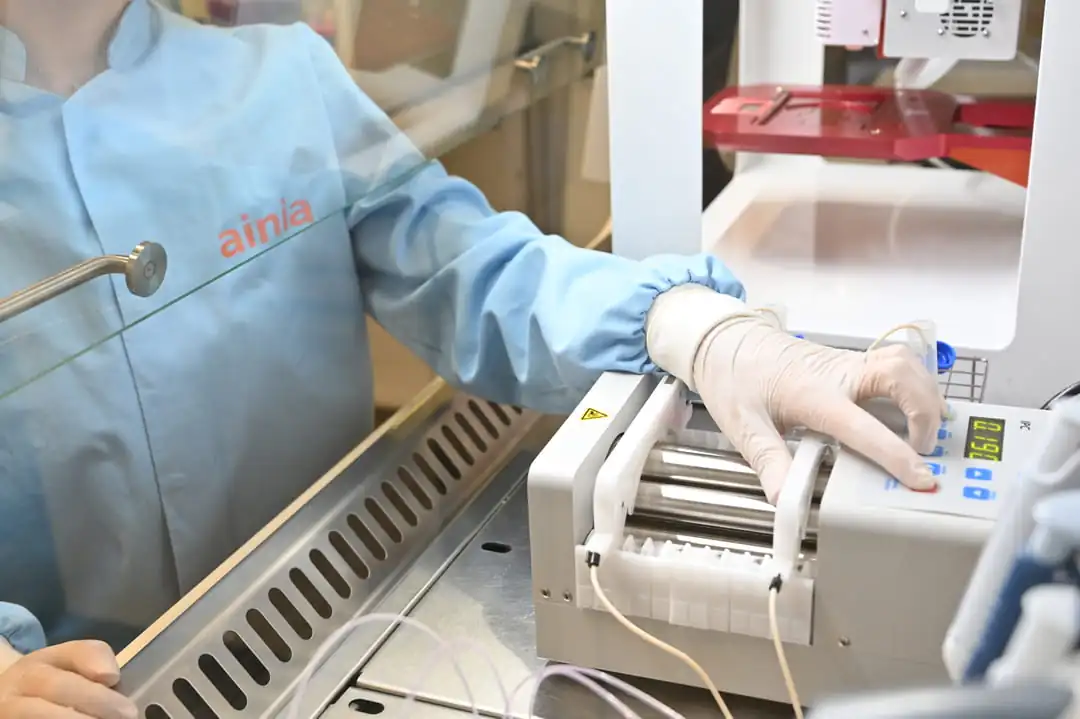
3D bioprinting is an advanced technology that enables the fabrication of living three-dimensional tissues. This technique allows the creation of complex cellular structures without the need for moulds, while maintaining strict control over cell geometry, density and spatial distribution. It represents a transformative tool that brings in vitro models closer to in vivo behaviour. At AINIA, we place this technology at the service of your innovation to help you develop more effective, safer and more sustainable products.
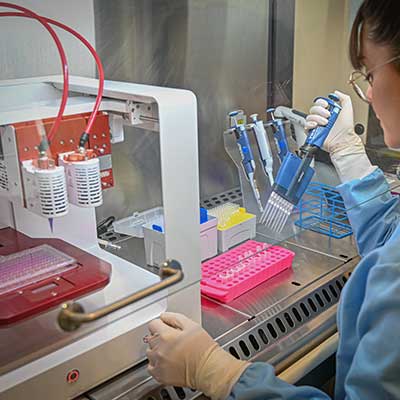
Safety, hydration, pigmentation and cellular regeneration without animal testing.
At AINIA, we apply 3D bioprinting to generate three-dimensional human skin models that faithfully reproduce skin structure and physiological behaviour, enabling more precise evaluation of the efficacy and safety of cosmetic ingredients and formulations without the need for animal testing.
These models are essential for assessing the efficacy and safety of ingredients, formulations or finished products by measuring performance parameters such as hydration, regeneration, collagen and elastin synthesis, or pigmentation modulation, among others.
In addition, 3D bioprinting provides an ethical and highly precise alternative to animal testing, while also enabling rapid comparative studies to optimise formulations at early stages of development.

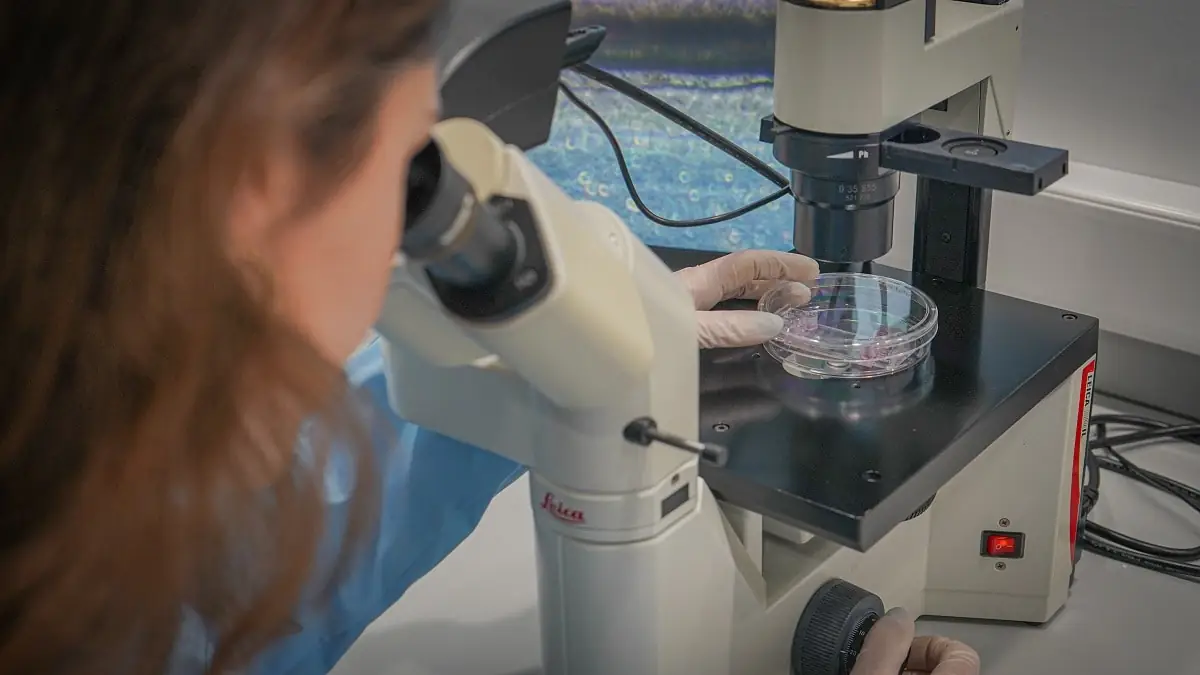
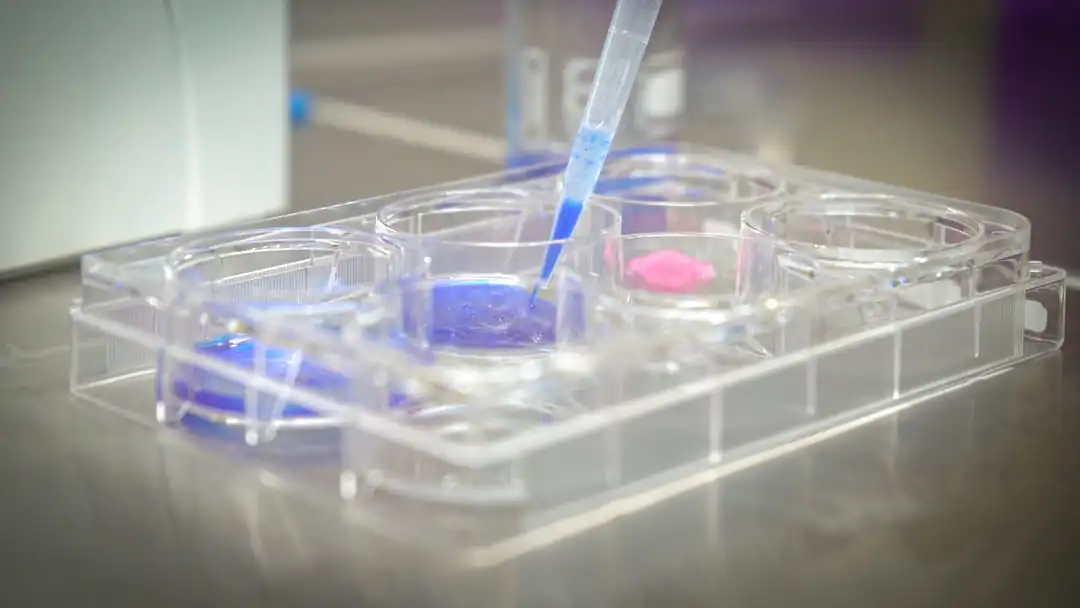
At AINIA, we enhance 3D bioprinting by integrating it with other advanced technologies to deliver more precise and transferable results.
This integration allows us to recreate the full interaction pathway between compounds and the human body, from digestion and absorption to their biological effect on target tissues, generating functional and molecular data with high predictive value. With more than ten years of experience in biotechnology and advanced analysis, we provide companies with a robust technological environment to:
| Responsible | AINIA |
| Address | Calle Benjamín Franklin, 5 a 11, CP 46980 Paterna (Valencia) |
| Purpose | To attend to, register and contact you to resolve the request you make to us through this contact form |
| Legitimation | Your data will be processed only with your consent, by checking the box shown on this form |
| Recipients | Your data will not be transferred to third parties. |
| Rights | You have the right to request access to, correct or delete your data. You can also request that we limit its processing, oppose it and request the portability of your data by contacting our postal address or [email protected] |
| More info | You can find more information in our Privacy Policy |
| DPO | If you have any questions about how we will treat your data or would like to make any suggestions or complaints, please contact the Data Protection Officer at [email protected] or at the Data subject support form |
I consent to the use of my personal data to process my request, as set forth in your Privacy Policy.
I consent to the use of my data to receive information and commercial communications from your entity.

Head office
Parque Tecnológico de Valencia
Av. Benjamín Franklin, 5-11
46980 Paterna, Valencia
+34 961 366 090
+34 963 052 525 · Laboratories
