
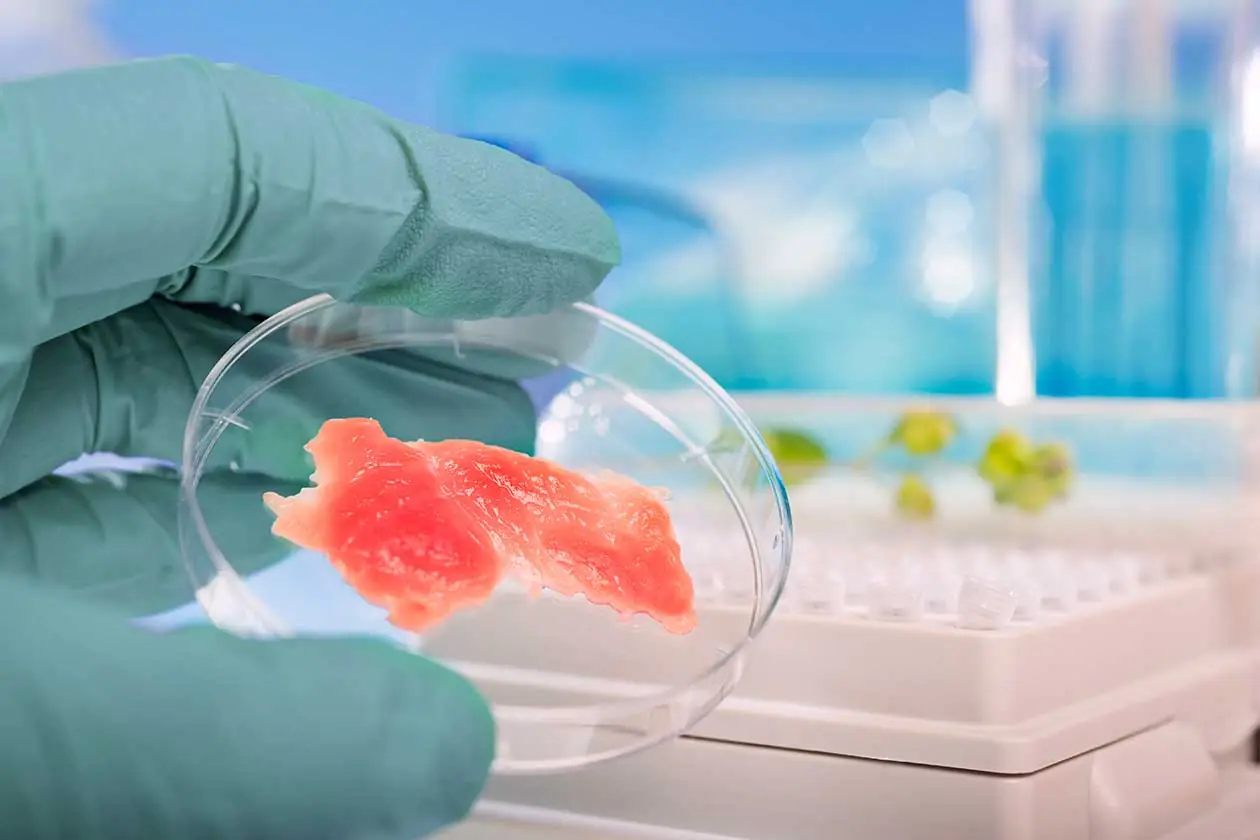

In a world that is constantly evolving, the search for sustainable alternatives to meet our food needs has become imperative. One of the most promising advancements in this field is the development of in-vitro cultured meat, a revolutionary technology with the potential to transform the food industry as we know it. At AINIA, we are working along these lines to carry out the production of cultured meat in an efficient and sustainable manner. Let us tell you about it.
Within the realm of in-vitro cultured meat, we at AINIA are engaged in an innovative project called SMARTFARM. In this multidisciplinary project, we are addressing various key areas to carry out the production of cultured meat in an efficient and sustainable way.
One of the fundamental pillars of this project is the establishment of primary cultures and bovine cell lines from animal biopsies. This phase involves the extraction and cultivation of animal cells, with a specific focus on muscle and adipose (fat) tissue. These cells will serve as the basis for the production of cultured meat.
Challenges in the Production of In-Vitro Cultured Meat
3D bioprinting technology plays a crucial role in this project by enabling the recreation of ideal shapes for meat products. Through 3D printing with cultured meat, it is possible to achieve the desired texture and structure of the meat, providing an authentic and satisfying culinary experience.
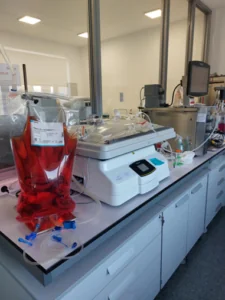
- Scaling Up Production: Scaling up production is another vital aspect for the viability of in-vitro cultured meat on a large scale. The implementation of bioreactors enables the increase of cultured meat production in an efficient, controlled, and reproducible manner. This paves the way to meet the growing demand for sustainable meat alternatives in the market.
- Alternatives to Fetal Bovine Serum: Lastly, a significant challenge in the production of cultured meat is finding alternatives to commonly used fetal bovine serum. In this project, the expression of growth factors is being explored since their incorporation into the culture medium is essential to replace fetal bovine serum. This allows not only a more ethical and sustainable production of cultured meat but also ensures optimal growth and development of cells, thus aligning the technology with the principles of animal welfare and responsible food production.
Benefits of In-Vitro Cultured Meat
Within the SMARTFARM project, where we aim to develop in-vitro cultured meat, we foresee benefits that could transform the food industry and contribute to a sustainable and ethical future:
- Reduces Greenhouse Gas Emissions: This alternative significantly reduces the need for land, water, and greenhouse gas emissions compared to traditional meat production.
- Promotes Animal Welfare: This innovative approach also promotes animal welfare by eliminating the breeding and slaughtering of animals, addressing ethical concerns and fostering a more compassionate food system.
- Decreases the Risk of Foodborne Diseases: Additionally, by being produced in controlled and sanitary environments, it considerably decreases the risk of foodborne diseases, thus ensuring a safer and healthier diet for the population.
These combined benefits position in-vitro cultured meat at the forefront of solutions that can improve our world and change the way we perceive and consume meat. We are on the threshold of a transformative shift towards a more conscious and responsible food future.
Regulation: Towards the Approval of Cultured Meat as Novel Food
It is important to mention that one of the key challenges and requirements for the successful commercialisation of in-vitro cultured meat is obtaining approval as Novel Food. The evaluation and approval of Novel Food are crucial to ensure food safety and compliance with quality standards before cultured meat can be marketed in the EU.
This rigorous process allows authorities to assess potential health risks and gives consumers confidence that novel foods meet the established criteria before being introduced to the market. In this regard, Singapore has set a milestone by approving the sale of in-vitro cultured meat, setting a precedent in the adoption of this innovation and paving the way for its global acceptance.
In-Vitro Cultured Meat, a Sustainable Food Alternative
In this context, at AINIA, we are committed to ensuring the safety and viability of in-vitro cultured meat as a sustainable food alternative. In addition to rigorous food quality and safety evaluations, we will focus on closely monitoring all legal aspects related to the production and commercialisation of this innovative technology, thereby ensuring that regulatory requirements are met and its responsible and effective adoption in the market is promoted.



