Subscribe to our newsletter
- R&D&I Programmes
- Technological Services
- Consultancy Services
- Laboratory Services
- Training and Events
- Sectors
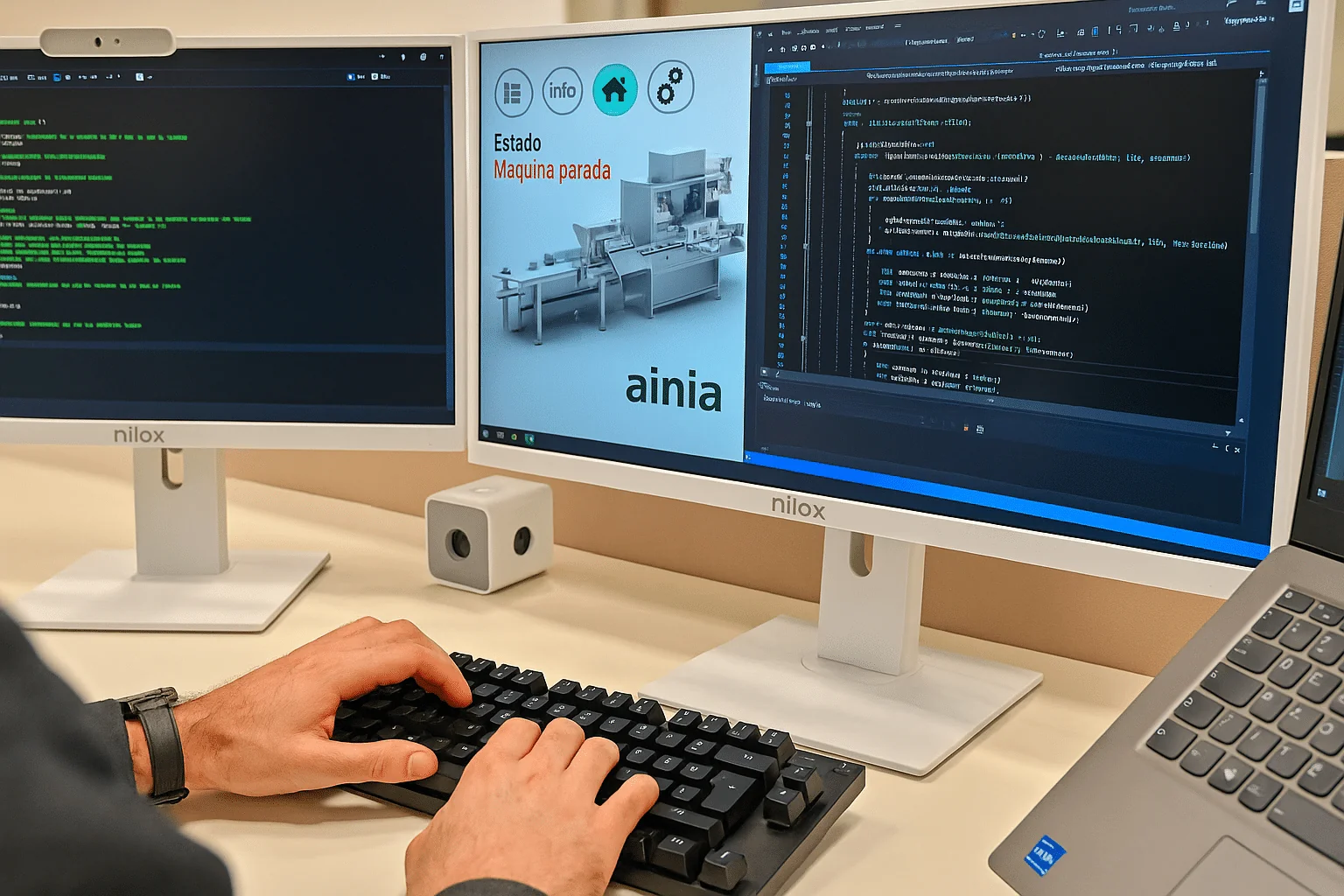
In a context of global supply chains, increasing regulatory pressure and more demanding consumers, AINIA held an online session analysing how artificial intelligence (AI) is transforming food safety. The head of digital strategic development and alliances, David Martínez, and the food safety manager at AINIA, Roberto Ortuño, agreed that AI enhances human expertise and improves decision-making. Both also highlighted the importance of having multidisciplinary teams (technology and food safety), ensuring data quality and guaranteeing the explainability of models in order to move towards a more proactive and effective approach to food control.
For the head of digital strategic development and alliances at AINIA, “AI does not replace expertise; it amplifies it. It is our copilot to react earlier, with greater precision and with evidence-based decisions”. Under this premise, David Martínez explained how the combination of advanced sensing, data analytics and predictive models makes it possible to move from reactive models to proactive approaches in food safety.
In this regard, the food safety manager at AINIA highlighted efficient data management: “We handle more and more data and more responsibilities. AI helps us turn data into useful information to make better and timely decisions”. Roberto Ortuño added that “the key lies in standardising and unifying internal and external data to make evidence-based decisions, with explainable models aligned with regulatory requirements”.
The speakers agreed that the most effective approach is progressive, interdisciplinary and based on rapid pilots with clear metrics. They also highlighted the importance of interoperability and sector collaboration to multiply the impact, especially in areas such as early warning and the identification of emerging risks.
Among the applications presented in the webinar, it was shown how AI accelerates the detection of emerging risks through the automated curation of signals in scientific literature, improves the filtering of early alerts (RASFF, AESAN) and enables the anticipation of contamination in plants through the integration of IoT sensors and imaging. Cases of automatic in-line inspection, data analytics for KPIs and real-time prediction of microbiological risks were also addressed.
“The combination of early warning and advanced analytics allows us to anticipate emerging and re-emerging risks and act before a problem reaches the market,” highlighted Roberto Ortuño.
Regarding the pace of adoption, David Martínez noted: “The challenge is no longer whether to apply AI, but when and with what level of ambition. Those who integrate these technologies will make the difference in food safety”.
Among the operational recommendations, both speakers suggested starting with concrete and measurable cases with a clear vision of success; ensuring clean and representative data; creating mixed teams (AI, food safety and plant staff); prototyping and validating quickly with short iterations; requiring transparency, explainability and traceability of models; and promoting interoperability to avoid “data islands” and enable data spaces with partners and suppliers. This approach makes it possible to accelerate the transition from idea to reality and consolidate a framework for continuous improvement and more robust audits.
Eva Sánchez
I specialise in science communication and R&D communication, contributing to the strategic visibility of knowledge generated through innovation projects. My work focuses on enhancing innovation visibility by developing communication strategies and content that translate scientific and technological advances into clear, credible and high-impact messages for diverse stakeholders.


| Responsible | AINIA |
| Address | Calle Benjamín Franklin, 5 a 11, CP 46980 Paterna (Valencia) |
| Purpose | To attend to, register and contact you to resolve the request you make to us through this contact form |
| Legitimation | Your data will be processed only with your consent, by checking the box shown on this form |
| Recipients | Your data will not be transferred to third parties. |
| Rights | You have the right to request access to, correct or delete your data. You can also request that we limit its processing, oppose it and request the portability of your data by contacting our postal address or [email protected] |
| More info | You can find more information in our Privacy Policy |
| DPO | If you have any questions about how we will treat your data or would like to make any suggestions or complaints, please contact the Data Protection Officer at [email protected] or at the Data subject support form |
I consent to the use of my personal data to process my request, as set forth in your Privacy Policy
I consent to the use of my data to receive information and commercial communications from your entity.

Head office
Parque Tecnológico de Valencia
Av. Benjamín Franklin, 5-11
46980 Paterna, Valencia
+34 961 366 090
+34 963 052 525 · Laboratories

