
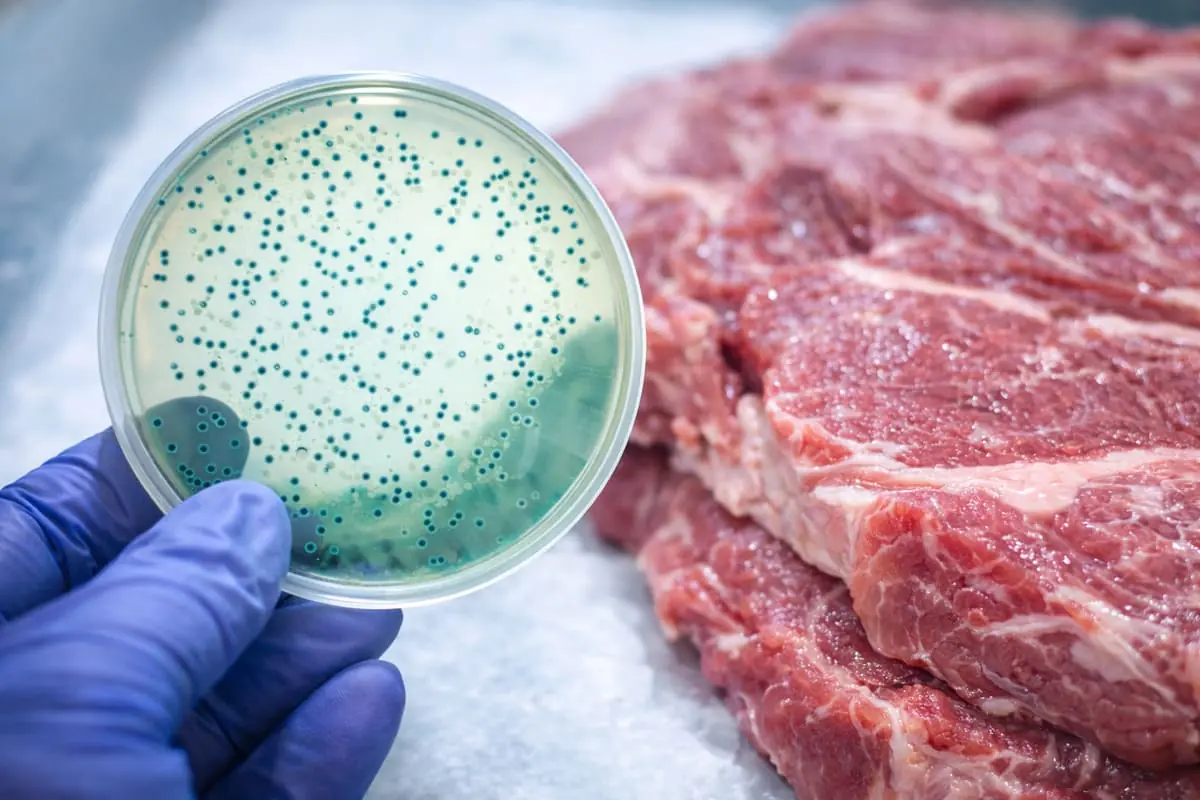

What is E. coli and why is it relevant in food safety?
Escherichia coli is a bacterium commonly present in the digestive tract of animals and humans. Due to its intestinal abundance, it is used as an indicator of faecal contamination in water and food. Most strains are commensal and harmless. However, some pathogenic varieties possess genetic information that allows them to:- Produce toxins (such as shiga toxins)
- Adhere to and invade intestinal cells
- Alter cellular metabolism
- Cause tissue destruction
- Low infectious dose in certain strains.
- High survival capacity in different food matrices.
- Possibility of transmission throughout the food chain.
Main routes of E. coli contamination in food
E. coli contamination is predominantly of faecal origin, both human and animal. The main routes are:Contamination in primary production
- Use of untreated manure.
- Contaminated irrigation water.
- Soils fertilised with insufficiently composted organic matter.
- Presence of wild animals or livestock in cultivation areas.
Contamination during slaughter and milking
Ruminants, especially cattle, are considered the main reservoir of STEC and EHEC. In products of animal origin, contamination usually occurs through:- Intestinal spillage during slaughter.
- Inadequate hide removal.
- Hygiene deficiencies in slaughterhouses.
- Incorrect handling in milking facilities.
Cross-contamination during processing and distribution
- Contaminated surfaces.
- Infected handlers or asymptomatic carriers.
- Uncontrolled process water.
- Poorly sanitised equipment.
Subsequent growth in food
Bacterial growth can occur when parameters such as the following are not controlled:- Storage temperature.
- pH.
- Water activity.
- Exposure time.
Foods at greater risk of contamination
A wide variety of foods can act as a vehicle for E. coli, depending on their ecology and production conditions.Products of animal origin
- Raw or insufficiently cooked minced meat.
- Fermented meat.
- Raw milk and unpasteurised cheeses.
Fresh produce
- Lettuce.
- Spinach.
- Melons.
- Mushrooms.
- Sprouted seeds.
Juices and processed foods
- Unpasteurised juices.
- Minimally processed products.
- Ready-to-eat foods (RTE).
Control of E. coli in the food industry
The effective control of E. coli requires a comprehensive approach, based on multiple barriers and preventive risk management.- Primary production
- Slaughterhouses and processing
- Fresh products and sprouted seeds
- Distribution, retail and consumer
- Identify critical points throughout the whole chain.
- Apply differentiated interventions according to the epidemiological variant.
- Adopt an interdisciplinary approach integrating animal health, plant production and public health.
 Funded by the aid program for hiring young professionals specialized in internationalization


