


Helicobacter pylori: symptoms and usage profiles
H. pylori colonizes the gastric mucosa thanks to urease, which raises the local pH and protects the bacterium in an acidic environment. This biology conditions the design: gastro-resistance, adhesion to mucin and activity in microaerophilic conditions are key. The most common symptoms are:- Functional dyspepsia: epigastric pain or burning, early satiety, postprandial distension, frequent belching.
- Gastritis: diffuse epigastric discomfort with intermittent nausea; sometimes halitosis linked to alteration of the gastric microenvironment.
- Peptic ulcer: rhythmic pain with meals, nocturnal in duodenal cases; it may occur with loss of appetite and weight loss.
- Associated manifestations: digestive intolerance to antibiotics during eradication therapies (diarrhea, soft stools, meteorism), occasional reflux and a feeling of a “sensitive stomach”.
- Adjunct to eradication therapy (PPI + antibiotics ± bismuth), where we seek to improve gastrointestinal tolerability and adherence by separating doses 2–3 h and using protected release.
- Support in associated dyspepsia, prioritizing strains with mucin adhesion and epithelial barrier reinforcement.
- Maintenance after eradication, with stable formulations that promote recovery of the gastric/duodenal ecosystem.

How to formulate a probiotic for Helicobacter pylori?
The most effective strains against helicobacter pylori are:- Limosilactobacillus reuteri: strains capable of producing antimicrobial compounds and with good mucin adhesion.
- Lacticaseibacillus rhamnosus / Lacticaseibacillus casei: adhesion and local immune modulation.
- Lactobacillus acidophilus / Ligilactobacillus gasseri: acid balance and epithelial barrier.
- Saccharomyces boulardii: non-bacterial yeast useful for GI tolerability in co-treatments.
- Reduce adverse effects
- Modulate gastric inflammation
- Decrease bacterial load
- Improve treatment adherence
Relevant mechanisms of action
We recommend combining complementary mechanisms:- Adhesion competition
- Local microbiostasis
- Epithelial barrier reinforcement
- Immune modulation
- Mitigation of adverse effects
Formulation matrix
- Gastro-resistance and release through microencapsulation: alginate, pectin, alginate-chitosan complexes, modified starches.
- Compatibility with co-treatments: screening of surfactants and salts to avoid viability losses.
- Quality and stability control: CFU at end of shelf life, sorption isotherms, accelerated and real-time studies; compression and filling tests, and enteric disintegration to ensure consistent dosing.
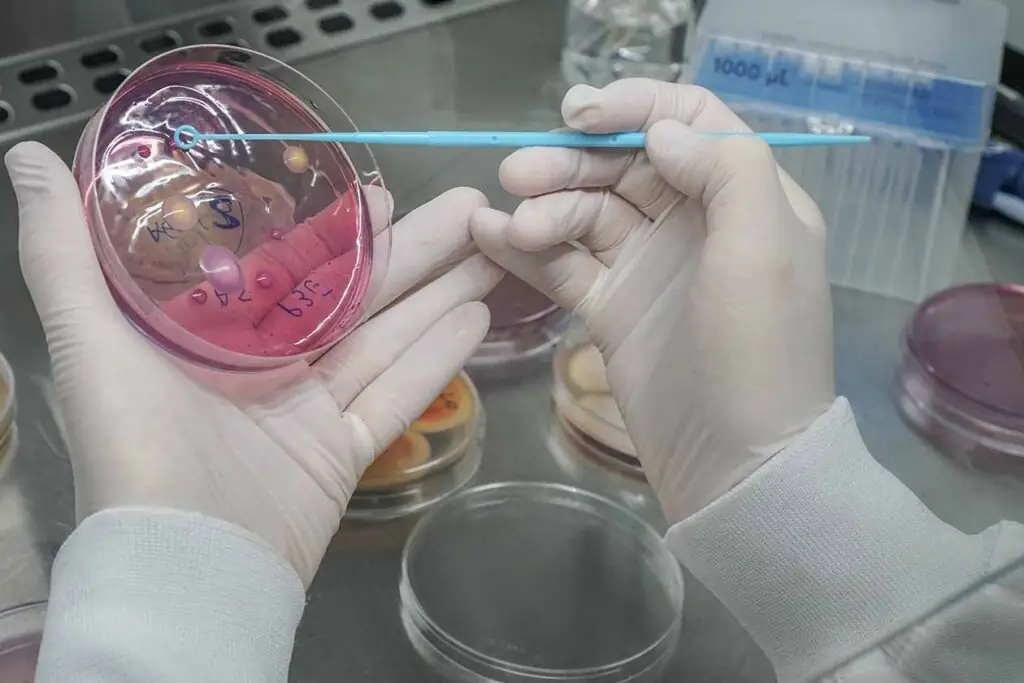
Design and evaluation of probiotics for Helicobacter pylori
To obtain a highly effective probiotic, we must combine a rational design of strains and matrix with a scalable preclinical evaluation. Our approach integrates bioprocesses, advanced microencapsulation and proprietary in vitro technologies, together with regulatory support, to reduce risks and accelerate market entry.1) Discovery and characterization of strains
We start from our own collection. We carry out functional screening and discard profiles with risks of transmissible AMR.2) Process design and biotechnological scaling
We optimize the fermentation process to maximize viability and robustness; we define stabilization strategies compatible with the target format. This stage is coordinated with formulation requirements.3) Matrix and delivery technology
We select and adjust customized microencapsulation processes or gastro-resistant capsules to ensure survival through gastric transit and release in the target window.4) In vitro preclinical evaluation
Through our dynamic in vitro digester (DigestSim ®) we reproduce pH gradients, enzymes and realistic residence times to measure survival, release profile of microencapsulated systems and post-digestion functional activity against H. pylori.5) Gastric and intestinal cellular models
We quantify TEER, mucins, IL-8 and other biomarkers to demonstrate barrier reinforcement and modulation of the inflammatory response.6) Stability and regulatory compliance
We validate shelf life under accelerated and real-time conditions and ensure compliance with labelling/claims with specialized legal advice. Funded by the aid program for hiring young professionals specialized in internationalization


