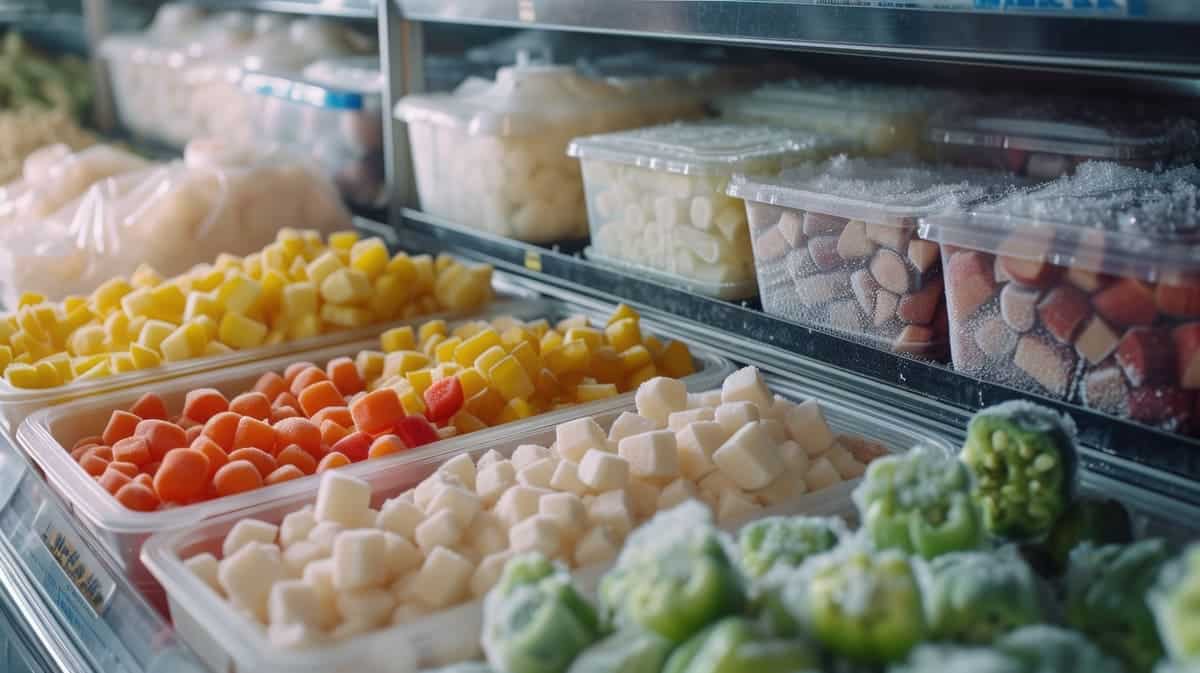
The determination of shelf life in frozen foods is an increasing challenge for the food industry, especially in a context of new formulations, process optimisation and pressure to reduce food waste. Although traditional testing provides robust results, it requires long storage periods that slow down decision-making and delay the market launch of new products.
In this scenario, having methodologies that shorten timelines without compromising technical robustness becomes a key factor for innovation, as it allows companies to
support R&D and quality decisions with experimental evidence in timeframes that are more compatible with industrial cycles.
In this article:
Freezing does not mean infinite stability: what happens during storage
Freezing significantly slows down deterioration, but it does not stop it completely. During frozen storage, foods may still undergo degradation mechanisms that affect their quality, particularly over long periods or in products with complex matrices.
The most common phenomena include:
- Lipid oxidation, particularly relevant in meat and fish products.
- Freezer burn caused by surface dehydration.
- Texture changes due to ice recrystallisation or water migration.
- Loss of colour or aroma in vegetables, fruits and ready meals.
- Accumulated sensory changes affecting product acceptability.
- Loss of valuable compounds (vitamins, etc.).
Analysing these phenomena under accelerated conditions makes it possible to anticipate deterioration and establish a shelf life that more closely reflects the real behaviour of the product throughout the cold chain.
Accelerated evaluation: a data-driven approach
Accelerated shelf life studies aim to reproduce deterioration mechanisms under controlled conditions in order to obtain useful information in a shorter timeframe than real storage. In frozen foods, experimental design must be particularly rigorous because product evolution depends on variables such as the food matrix, processing, packaging and its interaction with the food, as well as sensitivity to specific physicochemical changes.
In this context, AINIA has developed a methodology for accelerated shelf life evaluation in frozen foods, capable of reducing study time compared with real storage by between 56% and 64% depending on the food category. This approach maintains technical rigour and robustness, combines physicochemical and sensory analyses, and adapts the study to the specific type of food being evaluated.
Benefits for manufacturers and food waste reduction
For frozen food manufacturers, obtaining robust results in less time enables more agile decisions at different stages of the product life cycle. Key benefits include:
- Faster R&D decisions.
- Reduced development costs.
- Improved quality control.
- Greater competitiveness.
- More realistic shelf-life estimations.
- Direct impact on food waste reduction.
In addition, these types of studies can help prevent food waste by enabling companies to define shelf lives that better reflect the real behaviour of frozen products.
Methodology and criteria for a robust approach
The methodological approach integrates different analytical layers to ensure technical consistency and industrial applicability. Specifically, it is based on:
- Evaluation of critical parameters by food matrix.
- Analysis of packaging–product interaction.
- Controlled simulation of accelerated conditions.
- Advanced deterioration modelling.
- Technical criteria for determining shelf life.
According to the Head of the Food Quality and Safety Area at AINIA, Roberto Ortuño Macián, “Reducing evaluation times without losing rigour is key for industry to innovate, optimise processes and minimise food waste. This methodology provides companies with a reliable resource for making agile, data-driven decisions.”
Infographic: key aspects of the methodology
To complement the information, we have prepared an infographic summarising the current challenges in frozen products, the main deterioration mechanisms during storage and the technical basis of accelerated studies.