Subscribe to our newsletter
- R&D&I Programmes
- Technological Services
- Consultancy Services
- Laboratory Services
- Training and Events
- Sectors
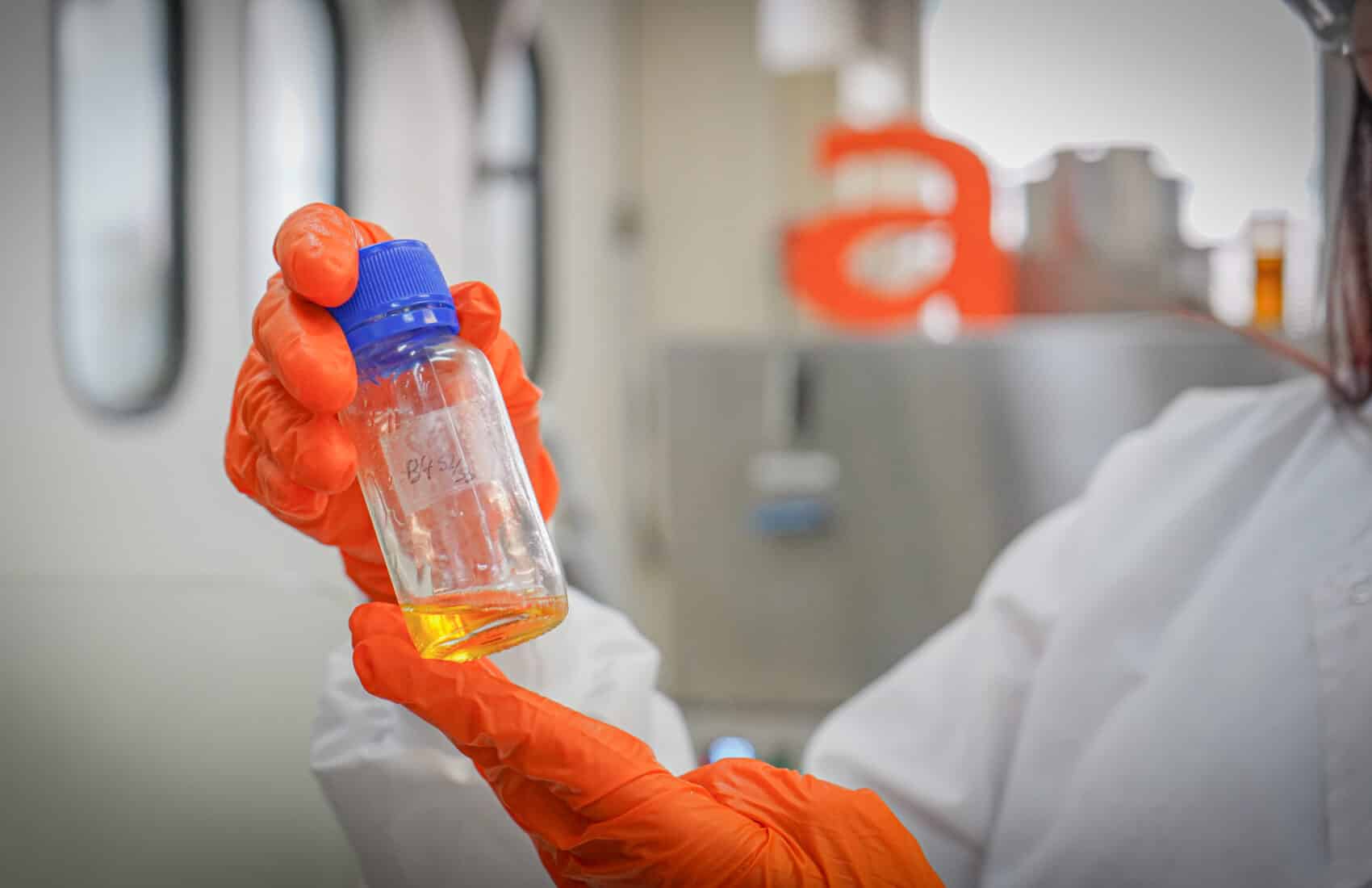
Within the framework of the PHARMANOVA II project, AINIA has developed new biotechnological solutions based on plant by-products to treat inflammatory diseases of the colon, such as ulcerative colitis or Crohn’s disease. To achieve this, four key technologies have been used: in vitro technology based on 3D cellular models, separation technologies, chemical characterisation technologies and controlled release technologies.
One of the main advances has been the improvement of a cell platform that rapidly and reliably identifies natural molecules with therapeutic potential. This has made it possible to verify the anti-inflammatory effect of plant extracts such as pomegranate and pistachio.
Within the framework of this project, the AINIA team has developed advanced cellular models from human colorectal carcinoma cells to study their mechanism of action. Among the techniques developed, 3D culture techniques stand out for the generation of intestinal spheroids, three-dimensional cellular structures that mimic the organisation and behaviour of human tissue. Based on these, 3D inflamed colon models have been created, allowing a more representative evaluation of the response of intestinal cells to natural compounds with therapeutic potential. In particular, with this technology it has been possible to observe the anti-inflammatory action of a postbiotic —a beneficial compound produced during fermentation— and pomegranate extract.
In addition, an innovative technology known as gut-on-chip has been used, a small device that simulates the conditions of the human intestine. This tool allows real-time monitoring of how inflammatory processes evolve and how the studied compounds act on them.
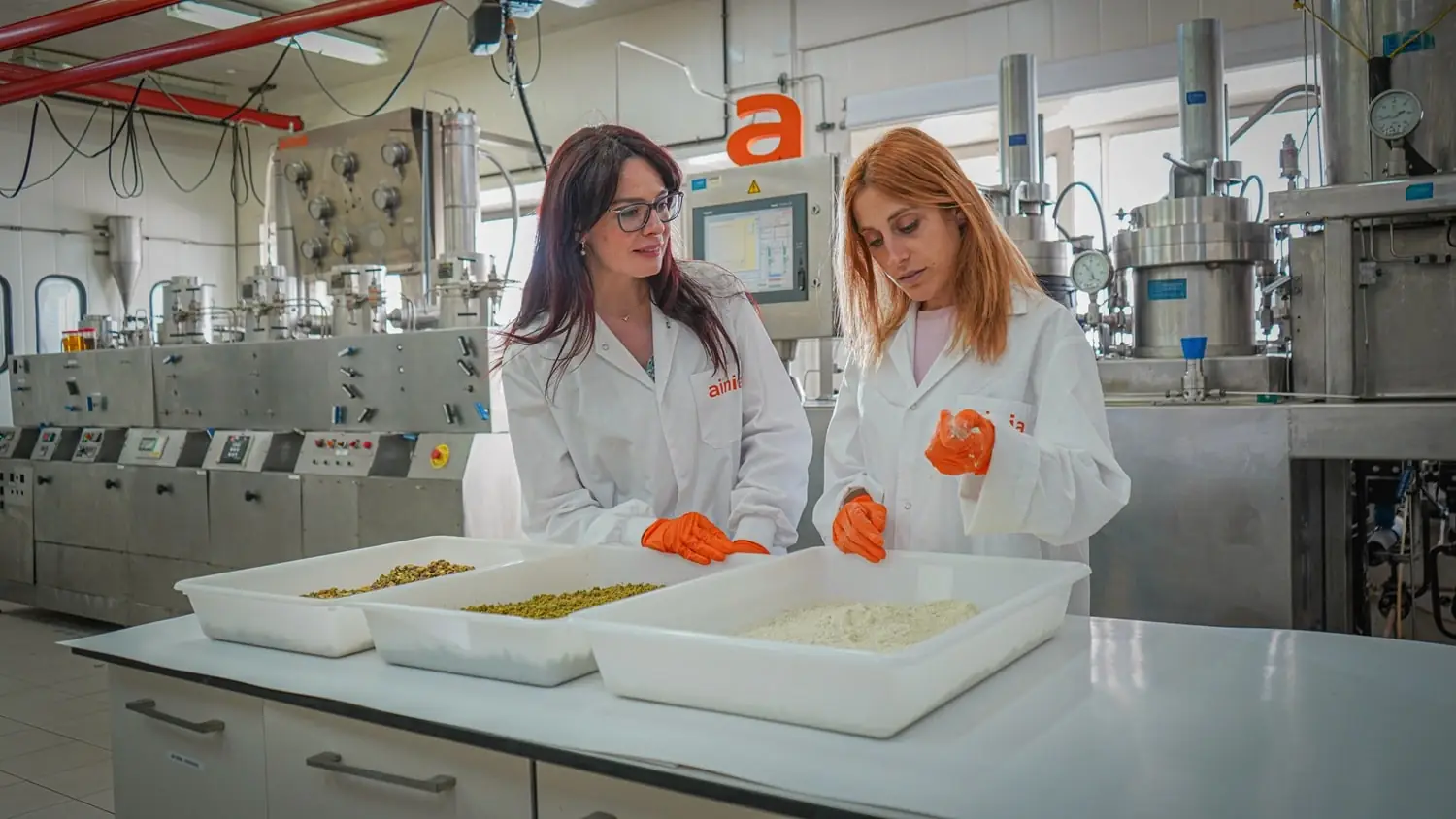
Another line of work has focused on using supercritical CO₂, a more sustainable and environmentally friendly extraction technology. Thanks to this method, more stable pomegranate and pistachio fractions have been obtained with a higher concentration of compounds that may contribute to improving inflammatory processes.
To analyse these extracts accurately, the team has also developed a technique that makes it possible to reliably measure the presence of tocotrienols, a type of vitamin E with antioxidant properties and potential benefits against inflammation.
The project has also made it possible to design a double encapsulation system that protects natural compounds during digestion, ensuring that they reach the colon, where they must exert their action.
PHARMANOVA II is a project supported by IVACE, through the FEDER Comunitat Valenciana 2021-2027 Programme funded by the European Union, and developed in collaboration with the companies Nova Terra Foods and Monteloeder.

Eva Sánchez Sáez
I specialise in science communication and R&D communication, contributing to the strategic visibility of knowledge generated through innovation projects. My work focuses on enhancing innovation visibility by developing communication strategies and content that translate scientific and technological advances into clear, credible and high-impact messages for diverse stakeholders.


| Responsible | AINIA |
| Address | Calle Benjamín Franklin, 5 a 11, CP 46980 Paterna (Valencia) |
| Purpose | To attend to, register and contact you to resolve the request you make to us through this contact form |
| Legitimation | Your data will be processed only with your consent, by checking the box shown on this form |
| Recipients | Your data will not be transferred to third parties. |
| Rights | You have the right to request access to, correct or delete your data. You can also request that we limit its processing, oppose it and request the portability of your data by contacting our postal address or [email protected] |
| More info | You can find more information in our Privacy Policy |
| DPO | If you have any questions about how we will treat your data or would like to make any suggestions or complaints, please contact the Data Protection Officer at [email protected] or at the Data subject support form |
I consent to the use of my personal data to process my request, as set forth in your Privacy Policy
I consent to the use of my data to receive information and commercial communications from your entity.

Head office
Parque Tecnológico de Valencia
Av. Benjamín Franklin, 5-11
46980 Paterna, Valencia
+34 961 366 090
+34 963 052 525 · Laboratories

