Subscribe to our newsletter
- R&D&I Programmes
- Technological Services
- Consultancy Services
- Laboratory Services
- Training and Events
- Sectors
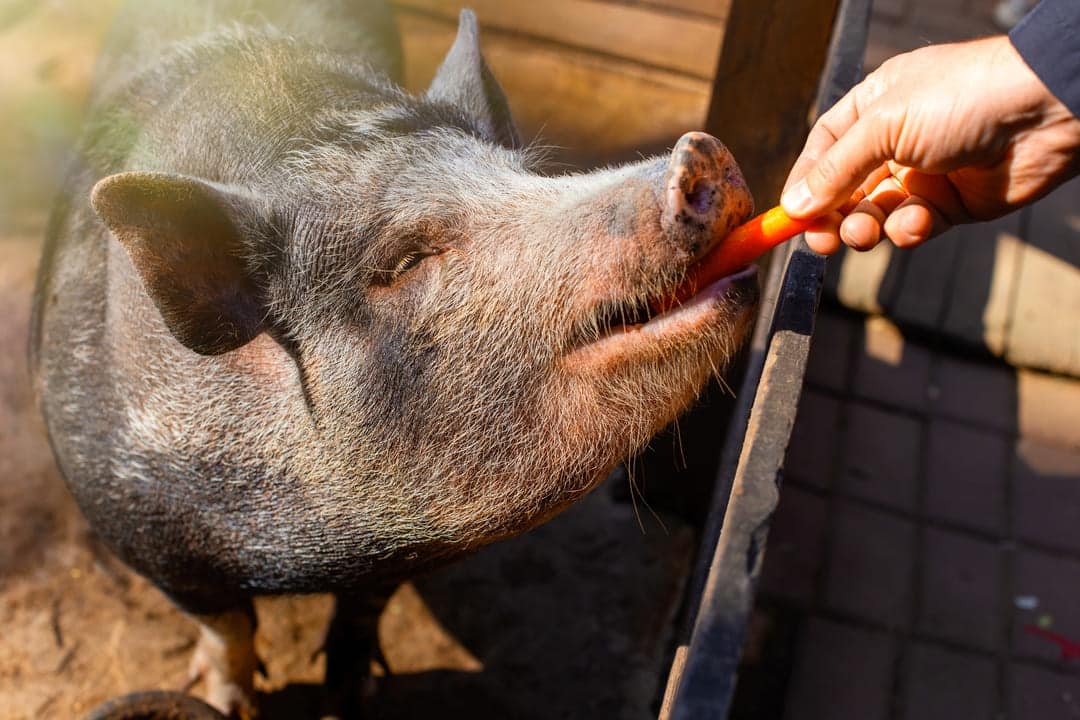

Animal digestive health and animal nutrition are essential to ensure health and productivity in any production system, as they help prevent disease and improve product quality. For this reason, it is crucial to scientifically validate the effect of an ingredient on animals’ digestive system. It’s not enough to include novel ingredients, it’s necessary to understand how they behave within the animal’s digestive tract and prove their real functionality.
Although the digestive process varies across species — for example, between herbivores, carnivores, and omnivores, or between monogastric animals and ruminants — it generally follows a common functional sequence: ingestion, mechanical and enzymatic digestion, fermentation, absorption, and elimination.
The duration depends on the type of feed and the digestive system of each species, and may range from a few hours to more than a day. The process is divided into several phases: oral, gastric (or pregastric in ruminants), intestinal, and colonic.
Thanks to in vitro simulation of the digestive process, it is possible to assess, in a controlled and reproducible manner, the bioaccessibility, bioavailability, and efficacy of an ingredient on animal digestive health.
Dynamic in vitro assays can replicate the physiological conditions of each phase of the digestive system: oral, gastric, intestinal, and colonic. Key parameters such as pH, transit time, concentration of digestive enzymes and bile salts are reproduced, and adapted to the digestive health of the target animal species.
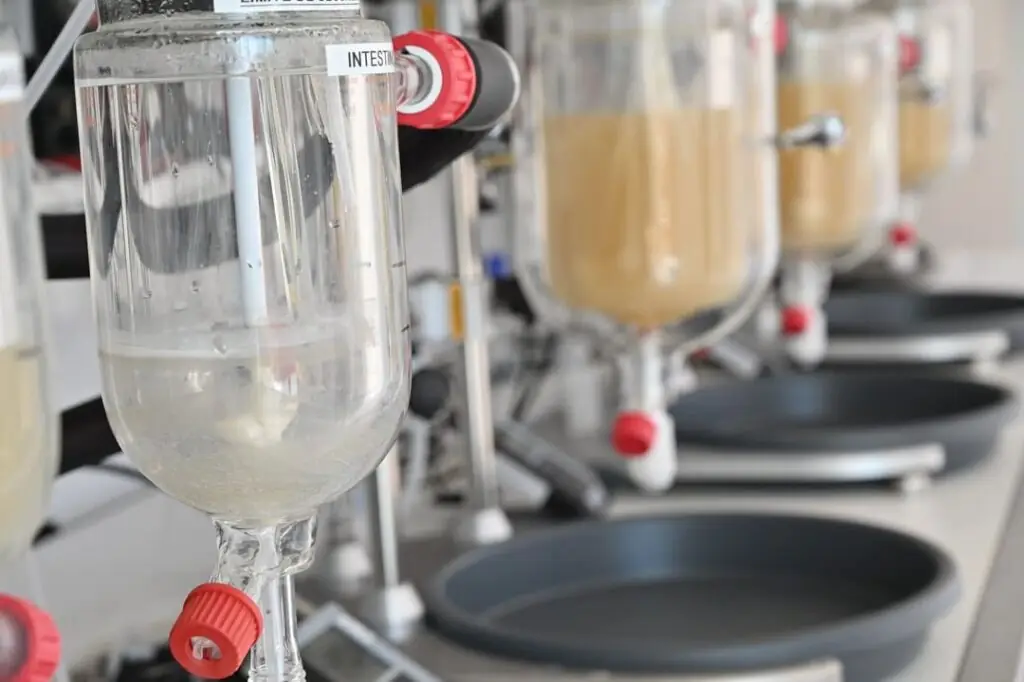
The use of in vitro digestive models in animals offers multiple advantages in the context of animal nutrition.
Furthermore, these simulations are particularly useful for:
Digestibility, bioaccessibility, and bioavailability
Monitoring release profiles
Thanks to in vitro digestive models in animals, we can:
Identify bioactive compounds
Study mechanisms of action
Improve the formulation of functional feed for pets or livestock
Validate the biological effects of digestive supplements or microbiome modulators
Identify new protein sources or alternative ingredients to improve digestive health



| Responsible | AINIA |
| Address | Calle Benjamín Franklin, 5 a 11, CP 46980 Paterna (Valencia) |
| Purpose | To attend to, register and contact you to resolve the request you make to us through this contact form |
| Legitimation | Your data will be processed only with your consent, by checking the box shown on this form |
| Recipients | Your data will not be transferred to third parties. |
| Rights | You have the right to request access to, correct or delete your data. You can also request that we limit its processing, oppose it and request the portability of your data by contacting our postal address or [email protected] |
| More info | You can find more information in our Privacy Policy |
| DPO | If you have any questions about how we will treat your data or would like to make any suggestions or complaints, please contact the Data Protection Officer at [email protected] or at the Data subject support form |
I consent to the use of my personal data to process my request, as set forth in your Privacy Policy
I consent to the use of my data to receive information and commercial communications from your entity.

Head office
Parque Tecnológico de Valencia
Av. Benjamín Franklin, 5-11
46980 Paterna, Valencia
+34 961 366 090
+34 963 052 525 · Laboratories

