IVACE – Plan of Activities of a non-economic nature of AINIA financial year 2022

AINIA 2022 Non-economic Activities Plan
12 July, 2022

OBJECTIVE

AINIA’s new general strategic framework is in the final consolidation phase. 5 major social and business “challenges” have been identified, on which AINIA will focus its research and innovation activities:

  1. Food of the future
  2. Food Safety
  3. Digital transition
  4. Ecological transition
  5. Health and quality of life

In each of these challenges, AINIA works in different “areas of action”:

Food of the future

  • Healthy and sustainable foods
  • Packaging
  • Processes
  • Consumer and market

Quality and food safety

  • Food quality
  • Industrial hygiene
  • Food safety management

Green transformation

  • Bioeconomy
  • Circular economy and resource-use efficiency
  • Energy transition and climate change
  • Zero pollution

Digital transformation

  • Industry 4.0
  • Precision agriculture

Health and wellbeing

  • Health
  • People’s well-being
  • Clinical equipment and systems


In each of these areas of action, it has a broad “technology offer or portfolio” classified into the following categories:

  • R&D lines
  • Technological support
  • Consultancy services
  • Analytical services
  • Education
  • Industrial services

These services are aimed at the following “sectors”:

  • Agri-food
  • Chemical
  • Cosmetic
  • Pharmaceutical
  • Packaging
  • Environment

among others, and also at the public sector and society in general.


Finally, AINIA’s knowledge portfolio, which enables the development of its entire offer, is divided into 9 “knowledge areas”:

  1. Biotechnology
  2. Environmental and energy technologies
  3. Physicochemical technologies
  4. Food technology
  5. Packaging technologies
  6. Sensory analysis and market research
  7. Law and regulations
  8. Digital technologies


ACTIVITIES

The non-economic R&D activities fall within the following main lines of AINIA’s R&D&I activity:

  1. WASTE BIOREFINERY
    1. 10 innovative technologies for transforming waste into high-value bioproducts and biofuels
      European Week for Waste Reduction
    2. Progress in the study and valorisation of CO2 that contributes to mitigating climate change
    3. Sustainable economy models: Obtaining high-value products from waste
      Conference – 15 November
    4. Nanocellulose biorefineries: An opportunity for innovation in the agricultural sector
  2. HYGIENIC ENGINEERING AND DESIGN
    1. How can contamination risks be reduced during food processing?
      EHEDG Course – 23 November
    2. Everything you need to know about Hygienic Design
      Innovation Conference – Advanced Course
  3. DEVELOPMENT OF SUSTAINABILITY SERVICES
    1. Treatment and recovery of process water in the agri-food industry
      Beyond wastewater: Comprehensive water management
    2. Aquatic crops, new plant-based products
    3. Circularity and digitalisation, the two major pillars in comprehensive water cycle management
      International Seminar – 22 September
  4. ADVANCED VISION
    1. Progress in the development of an intelligent platform for the detection of complex microorganisms
    2. Experts will address the latest trends and challenges in the digital transformation of the agri-food sector
    3. How to address digitalisation in the agri-food industry
      Artificial Intelligence, drones with machine vision to detect pests, big data or collaborative robots
  5. NEW ARTIFICIAL INTELLIGENCE-BASED SPECTRAL ANALYSIS TECHNOLOGIES
    1. Innovative solutions in the field of food inspection: New multipurpose equipment
    2. Experts will address the latest trends and challenges in the digital transformation of the agri-food sector
    3. How to address digitalisation in the agri-food industry
      Artificial Intelligence, drones with machine vision to detect pests, big data or collaborative robots
  6. EMRISK 2022
    1. What we saw at Fruit Attraction: High-impact solutions for the fruit and vegetable sector
  7. DEVELOPMENT OF NEW PRODUCTS AND PROCESSES
    1. Which technological lines will shape food for a sustainable future?
    2. Technology and sustainability, keys to the food of the future
    3. First Innovation Conference of the year at AINIA
    4. Towards more sustainable food: What are the main advances to accelerate this change?
    5. New protein sources are being sought to meet consumer needs
  8. MICROENCAPSULATION
    1. Spray drying, a lower-energy-cost technology for the stabilisation of microorganisms
    2. How to improve the efficacy of nutritional supplements: advances in microencapsulation and preclinical studies
    3. Sustainability drives innovation in cosmetics: What we saw at the “7th Beauty Innovation Days”
    4. Probiotics and cosmetics, why does microencapsulation play a key role?
    5. The 4 technological pillars underpinning innovation in the cosmetics sector In Cosmetics Global
    6. How to scale up the microencapsulation process to reach the market successfully
    7. AINIA brings its latest cosmetic technology to Paris
  9. PRESERVATION AND SHELF LIFE
    1. The 5 factors to consider when identifying the right heat treatment for each food product
    2. Legislation, a driver of change towards more sustainable packaging
      More eco-design, less food waste
  10. SENSORY SCIENCE AND CONSUMER RESEARCH
    1. Cosmetic 360: The latest trends in the cosmetics sector are driven by the consumer
    2. Why are sensory claims important in product development?
    3. The 5 main factors to consider when designing sensory research with children
    4. The 7 pillars of sensory analysis in food and consumer response
      AEPAS publication
  11. FOOD QUALITY AND SAFETY – RISKS – FRAUD
    1. Nitrosamines in food, future legislation in the EU?
    2. Official Control of Veterinary Medicines, update on the legislative landscape in the European Union
    3. Official controls in the agri-food chain, a new legislative scenario
    4. Control of food from third countries by the EU, how does it work?
    5. Ethylene oxide in food additives, the EU will specify the limits
  12. PRECLINICAL STUDIES
    1. The 3 key elements of precision nutrition: colonic microbiota, nutrigenomics and chronobiology
    2. How to improve the efficacy of nutritional supplements: advances in microencapsulation and preclinical studies
    3. The 4 technological pillars underpinning innovation in the cosmetics sector
      In Cosmetics Global
    4. AINIA brings its latest cosmetic technology to Paris
  13. COMPUTING TECHNOLOGIES
    1. Experts will address the latest trends and challenges in the digital transformation of the agri-food sector
    2. How to address digitalisation in the agri-food industry
      Artificial Intelligence, drones with machine vision to detect pests, big data or collaborative robots
  14. SUPERCRITICAL FLUIDS
    1. Supercritical CO2 extraction technology present at Biofach 2022
    2. The 4 technological pillars underpinning innovation in the cosmetics sector
      In Cosmetics Global
    3. AINIA brings its latest cosmetic technology to Paris
  15. MICROBIOLOGY AND INDUSTRIAL BIOTECHNOLOGY
    1. Genetic Engineering: How to obtain biofactory organisms
      Webinar – 9 June
    2. Good Manufacturing Practices: How can I adapt my laboratory or workspace to GMP regulations?
    3. The 4 technological pillars underpinning innovation in the cosmetics sector
      In Cosmetics Global
    4. AINIA brings its latest cosmetic technology to Paris
  16. MARKET RESEARCH (IDM)
    1. AINIA connects companies with consumers in an innovation workshop
    2. Knowledge and interest: how do these drivers affect the purchase of nutricosmetics?
    3. Insights from nutricosmetics consumers
    4. AINIA Consumer Barometer The food market from the consumer’s perspective 2022
    5. Online shopping: What is the consumer who buys food online like?
  17. DEVELOPMENT OF NEW PACKAGING AND MATERIALS
    1. Paper and cardboard: alternative or complementary materials for food packaging?
      II Paper Packaging Conference – 13 October
    2. The main packaging innovations we saw at Hispack 2022
    3. Main packaging eco-design strategies promoted by the new Waste Law
    4. The 15 most outstanding innovations in food packaging that we will see in supermarkets
      MeetingPack 2022
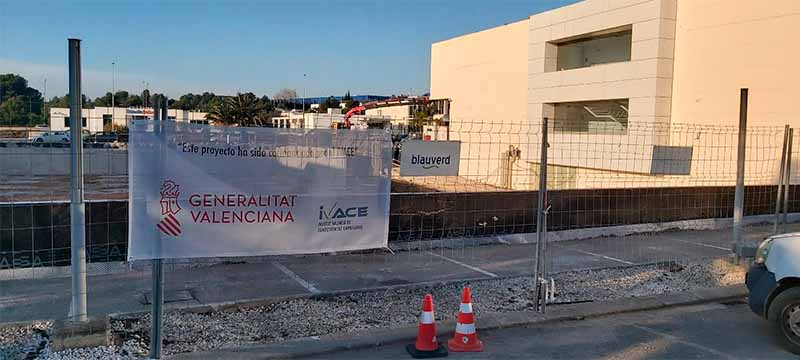
  18. CONSTRUCTION OF A BUILDING TO HOUSE NON-ECONOMIC R&D ACTIVITIES
    Inventory No.: 22-AF00008 / Amount: €1,527,721.64

Construction images
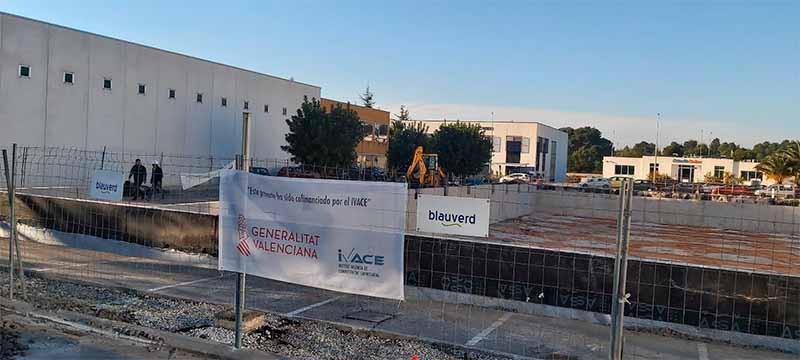
AINIA Building 4 2022 AINIA Building 4 2022<br />” width=”415″ height=”187″></a></p>
<p> </p>
<h2>
<h2>RESULTS</h2>
</h2>
<p><strong>WASTE BIOREFINERY</strong></p>
<ul>
<li><strong>Fine-tuning of equipment related to biohydrogen production from anaerobic digestion.</strong> Development of a methodology at AINIA to simultaneously produce biohydrogen and biogas, using two-stage anaerobic digestion, GC-TCD chromatography and reactors controlled under mesophilic and thermophilic conditions. </li>
<li><strong>Design and fine-tuning of dry anaerobic fermentation technology optimised with bioaugmentation strategies to avoid inhibitions at small scale.</strong> Optimisation of dry digestion through bioaugmentation, assessing the growth of ammonia nitrogen-tolerant strains and daily monitoring of key parameters to improve process stability and efficiency. </li>
<li><strong>Studies on the biodegradability of bioplastics under anaerobic conditions. </strong>Application of ISO-15985 methodology to assess plastic biodegradability under high load conditions, using FORSU inoculum, triplicate reactors and continuous measurement of biogas and analytical parameters for at least 15 days. </li>
<li><strong>Exploration of gas bioconversion strategies. </strong>Evaluation of biological routes for converting CO₂, including tests with Methanosarcina acetivorans, concluding that progressive conditioning is required and that anaerobiosis does not guarantee direct or efficient consumption.</li>
<li><strong>Progress in the functionalisation tests of MFC, films and paper with fatty acids (AKD/ASA).</strong> Development of superhydrophobic MFC foams modified with AKD, with high selectivity for oils even in salt water, offering applications in environmental remediation, purification and functional packaging. </li>
</ul>
<p><strong>HYGIENIC ENGINEERING AND DESIGN</strong></p>
<ul>
<li><strong>Technical development of the cleanability method,</strong> including the creation of enclosures using CAD, communication with RobotStudio and the execution of complete cleaning tests with the robotic arm, together with improvements to the lighting and image capture system.</li>
<li><strong>Advances in the definition and standardisation of the method,</strong> collaborating with Fraunhofer-IVV, Actalia and the EHEDG group in the preparation of the SOP and in the development of future EHEDG Guideline No. 57.</li>
<li><strong>Improvements in evaluation systems, </strong>integrating new UV lighting elements and optimising the procedure to ensure more homogeneous and reproducible residue detection on surfaces.</li>
<li><strong>Incorporation of hygienic design into new developments, </strong>supporting the integration of hygienic criteria in the design and construction of the bioreactor for vertical microalgae cultivation, facilitating cleaning and minimising contamination risks.</li>
</ul>
<p><strong>DEVELOPMENT OF SUSTAINABILITY SERVICES</strong></p>
<ul>
<li>Improvement of microalgae cultivation infrastructure, incorporating lighting equipment to enable more complete and detailed studies.</li>
<li>Optimisation of heterotrophic and mixed cultivation methodologies (autotrophy-heterotrophy), including specific operational procedures to evaluate water regeneration and the valorisation of organic compounds in agri-food effluents.</li>
<li>Development of the minimum inventory required for the comprehensive sustainability assessment of bioelectrochemical systems, providing a solid basis for future environmental impact and techno-economic feasibility assessments.</li>
</ul>
<p><strong>ADVANCED VISION</strong></p>
<ul>
<li>Collaborative robotics for precision agriculture: development and integration of a robotic prototype with a collaborative arm on an AGV for selective handling and advanced inspection tasks in agricultural fields.</li>
<li>Improving efficiency in software development: training the team in agile methodologies and programming tools to optimise the development, maintenance and scalability of machine vision software.</li>
<li>Research into artificial intelligence algorithms: updating and developing Deep Learning and Machine Learning techniques applied to image analysis, especially for object recognition and segmentation.</li>
<li>Machine vision software tools: creation of an in-house platform for advanced image analysis and processing, aimed at facilitating experimentation with inspection equipment developed by AINIA.</li>
<li>Automatic colony counting using AI: implementation of semantic segmentation models based on neural networks to improve the efficiency and accuracy of microbiological image counting.</li>
</ul>
<p><strong>NEW ARTIFICIAL INTELLIGENCE-BASED SPECTRAL ANALYSIS TECHNOLOGIES</strong></p>
<ul>
<li>Advanced photonic multimodal inspection: design and development of an automated prototype integrating visible vision, hyperspectral vision (Vis-NIR and SWIR) and LiDAR for the physical and chemical characterisation of food samples.</li>
<li>Spectroscopy in liquid and viscous matrices: optimisation and adaptation of spectroscopic equipment for process control, enabling the measurement of composition and key parameters under conditions close to industrial environments.</li>
<li>Hyperspectral characterisation of food: improvement of hyperspectral analysis processes and methodologies for quality and safety assessment, supported by advanced data processing using artificial intelligence.</li>
<li>Hyperspectral analysis of cell cultures: development of a specific protocol for the non-destructive characterisation of cell cultures, aimed at applications in biotechnology and R&D processes.</li>
<li>Data integration in precision agriculture: design of a service for the integration and joint exploitation of multispectral and LiDAR data collected in the field, facilitating advanced agronomic decision-making.</li>
</ul>
<p><strong>EMRISK 2022</strong></p>
<ul>
<li><strong>Advances in molecular microbiology and health surveillance: </strong>development of tools for early detection of SARS-CoV-2 variants in wastewater; adaptation of PCR protocols (SARS-CoV-2, Vibrio spp.); selection of primers for <em>Listeria monocytogenes;</em> validation of duplex PCR for non-O157 STEC.</li>
<li><strong>Boosting automation and digitalisation of analytical processes:</strong> partial automation of plate counts, allergen analysis (DS2 equipment), automated virus extraction (Maxwell) and commissioning of new instrumental platforms (MALDI-TOF, advanced liquid and gas chromatography).</li>
<li><strong>Validation and accreditation of analytical methods</strong>: accreditations in microbiology (surfaces, gluten, viruses), chemical contaminants (metals, specific migration, PAHs, pyrrolizidine and tropane alkaloids, bisphenols), veterinary residues and multicomponent chromatographic methods for pesticides and other emerging contaminants.</li>
<li><strong>Cross-cutting methodological and technical development: </strong>research into accelerated deterioration in frozen foods; optimisation of controls for Bacillus cereus; use of microscopy and DSC; and internal training activities in physicochemical analysis and food contact materials.</li>
</ul>
<p><strong>DEVELOPMENT OF NEW PRODUCTS AND PROCESSES</strong></p>
<ul>
<li>Generation of a new database of protein ingredients containing commercial information, relevant characterisation data of various kinds, as well as their main application in food matrices, as a tool for the design, development and improvement of analogue and/or fermented foods from a nutritional and/or sensory perspective.</li>
<li>a</li>
</ul>
<p><strong>MICROENCAPSULATION</strong></p>
<ul>
<li>Obtaining oil-in-water (o/w) or water-in-oil (w/o) emulsions of active ingredients using cross-flow emulsification technology for chemical microencapsulation processes.</li>
<li>Results of the generation tests of Pickering-type emulsions using pea protein as solid particles.</li>
<li>Study of improving the viability of microorganisms stabilised by spray drying using a three-fluid atomisation nozzle.</li>
<li>Obtaining double encapsulations through atomisation-based microencapsulation processes using both water-soluble materials (polysaccharides) and lipid materials (hydrogenated fatty acids).</li>
<li>Adaptation of fragrance microencapsulation processes using polyurethane modified with chitosan as encapsulation materials.</li>
</ul>
<p><strong>PRESERVATION AND SHELF LIFE</strong></p>
<ul>
<li><strong> Continuous improvement activities in optimisation and adjustment strategies for thermal processes</strong>
<ul>
<li>Study of new time-temperature profiles that guarantee food safety while minimising the impact on the sensory and nutritional quality of the product.</li>
<li>Study of methodologies for the control and validation of thermal processes</li>
<li>Research into thermal processing conditions for different foods due to changes in the packaging system</li>
</ul>
</li>
<li><strong> Continuous improvement activities in alternative post-harvest technologies (thermotherapy, ozone, edible coatings)</strong>
<ul>
<li>Research into the use of thermotherapy treatments as an alternative or complement to conventional processes, aimed at pathogen control and shelf-life extension.</li>
<li>Study of the use of ozone as a sustainable technology for reducing microbial load and residues, evaluating its impact on quality and safety.</li>
<li>Study on formulations of functional edible coatings incorporating natural antimicrobial or antioxidant agents.</li>
</ul>
</li>
</ul>
<p><strong>SENSORY SCIENCE AND CONSUMER RESEARCH</strong></p>
<ul>
<li> <strong>Application of Neuroscience</strong><br />
Emotional measurement techniques (FEA and GSR) were reviewed and practical tests were carried out to understand their use, metrics and conditioning factors. This made it possible to create complete protocols: experimental design, technical requirements, participant criteria, equipment handling and statistical analysis. </li>
<li> <strong>Sensory methodologies for the cosmetics sector</strong><br />
Sensory methods were adapted to the cosmetics context, considering the diversity of formats and user experiences. Guidelines and protocols were developed to facilitate the planning and execution of consumer studies, including recruitment criteria, sample requirements, questionnaires, safety and specialised vocabulary. </li>
</ul>
<p><strong>FOOD QUALITY AND SAFETY – RISKS – FRAUD</strong></p>
<ul>
<li>Develop solutions in the field of <strong>food fraud prevention</strong> through tools or models for assessing vulnerability to food fraud.</li>
<li>Development of a specific methodology for applying <strong>Risk Ranking</strong> in food safety control.</li>
<li>Design of the “<strong>European Authorisation Procedures</strong>” project to support the needs of agri-food operators in this area.</li>
<li>Strengthening and development of the <strong>Lexainia Platform</strong> in line with the opportunities offered by <strong>Open Data</strong> policies.</li>
</ul>
<p><strong>PRECLINICAL STUDIES</strong></p>
<ul>
<li>Improvement, automation and validation of complete gastrointestinal digestion equipment and procedures, reinforcing their approximation to <em>in vivo</em> conditions and expanding AINIA’s service offering.</li>
<li>Development and verification of a specific gastrointestinal digestion and colonic fermentation procedure for fattening pigs, including optimisation of the gastric system for low-solubility bioactive compounds.</li>
<li>Validation of the complete intestinal digestion model (duodenum, jejunum and ileum) under FASTED and FEED conditions, through new modules and programmed procedures.</li>
<li>Implementation and optimisation of gut-on-chip / organ-on-chip technology, based on microfluidics, to complement in vitro gastrointestinal digestion studies using functional intestinal models (Fluigent system).</li>
</ul>
<p><strong>COMPUTING TECHNOLOGIES</strong></p>
<ul>
<li>Prototype of an integrated platform to support the creation of new products (food/cosmetics), covering the entire innovation cycle (ideas, requirements, formulation, portfolio, metrics) and including key screens such as <em>innovation monitor</em>, <em>idea lab</em> and <em>project management</em>, deployed in the Digital Innovation Area demonstrator.</li>
<li>Performance leap in environment monitoring with a proof of concept using Elasticsearch: migration and testing on a large database (≈7M records) in ElasticCloud, achieving clear improvements in query times compared to relational approaches and evaluating architectural adjustments to work through indexing.</li>
<li>Development of a non-functional advanced analytics prototype for factories (quality + process), with interfaces for parameter input, sensor histories, graphs, simulation against predictive models and decision trees, prioritising easy interpretation of results for production/quality users.</li>
<li>Design and initial screens of a system to manage biological samples and strain catalogues: definition of use cases, SQL data model, proposed architecture (Vue + Spring Boot) and mock-ups to control inputs/outputs, traceability of uses and exploitable history for future R&D and <em>in-silico</em> simulation initiatives.</li>
</ul>
<p><strong>SUPERCRITICAL FLUIDS</strong></p>
<ul>
<li>New knowledge for the development of integrated processes for obtaining protein ingredients in a multistage process based on p<br />
				</div>
				<div class= Share this article

Are you interested in this project?

Request the results using this form

Headquarters

Valencia Technology Park c/ Benjamin Franklin, 5-11
E46980 Paterna (Valencia)

Tel. 96 136 60 90

Other public projects