Not a partner company yet? Sign up here
AINIA / Laboratories / Packaging materials / PFAS
Generation of analytical evidence for the detection, quantification and technical interpretation of perfluoroalkyl and polyfluoroalkyl substances (PFAS) in the food chain.
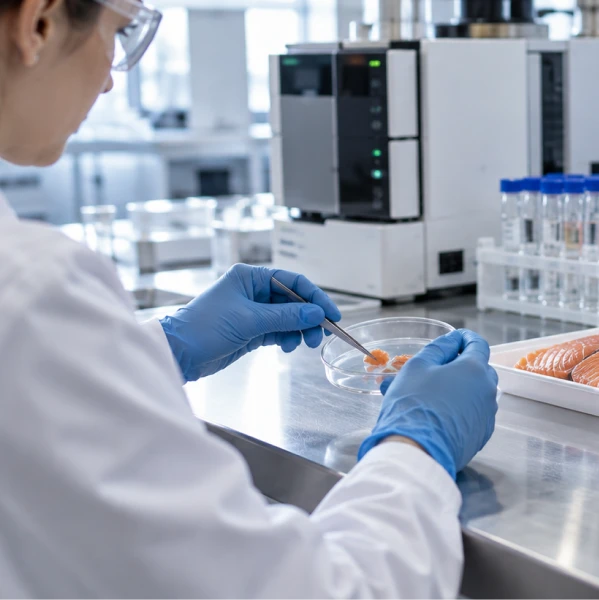


AINIA offers a specialised technical service for the detection and analytical determination of PFAS, aimed at providing reliable, contextualised information to support technical management by operators.
The service designs and carries out analytical studies aimed at detecting and quantifying PFAS in different matrices relevant to the food sector.
Applies advanced analytical techniques suitable for the determination of these compounds at trace levels.
Interprets the results from a technical perspective, considering their relevance to food safety and internal control.
The information generated is used as technical evidence to support diagnostic, monitoring, verification or action prioritisation processes.
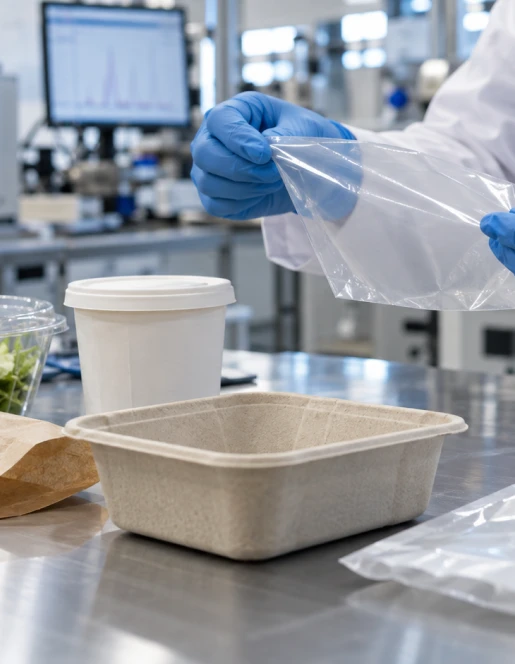

A food business operator wishes to assess the possible presence of PFAS in a product made from raw materials originating from different geographical areas. Through the PFAS determination service, a specific analysis is carried out to quantify the compounds of interest and contextualise the results from a technical perspective. This information is used as an objective basis for deciding whether it is necessary to review suppliers, expand controls or investigate the origin of the contamination in greater depth, without replacing the operator’s responsibilities under any circumstances.
Leave us your details and we will contact you to answer your questions or continue the conversation.