AINIA / Laboratories / Microbiology / Analysis of viable but non-culturable bacteria (VBNC)
- Microbiology
Analysis of viable but non-culturable bacteria (VBNC)
Detection and assessment of viable microorganisms not detectable by culture methods
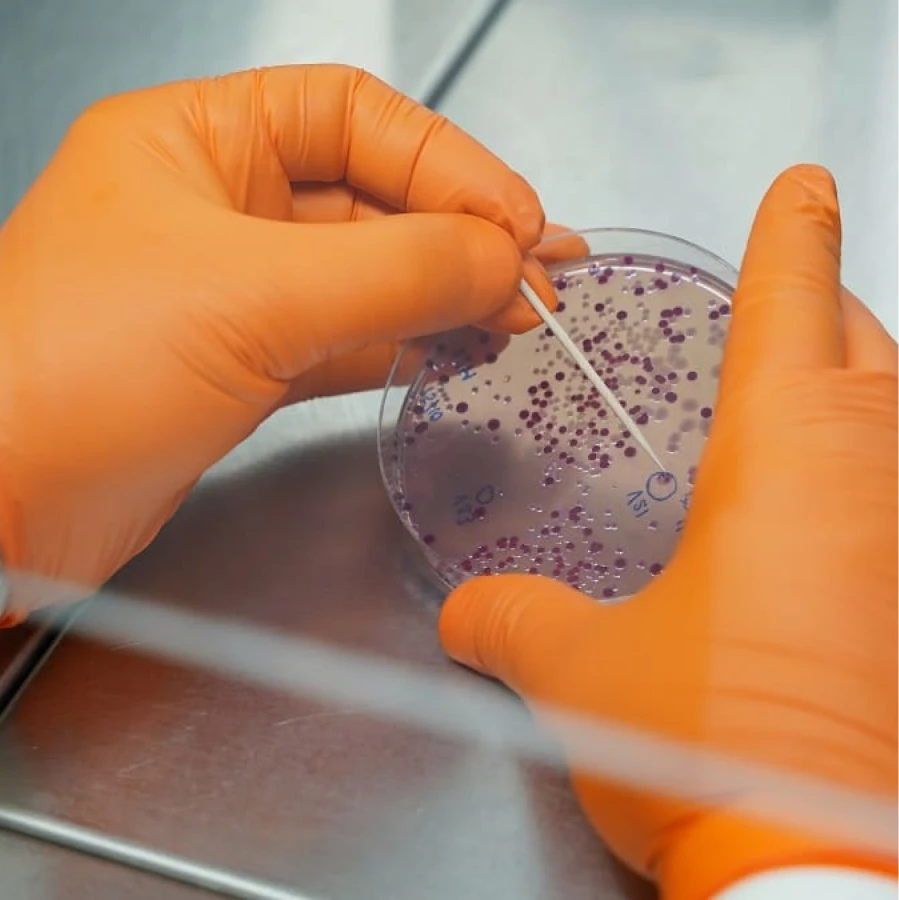
Detection of VBNC bacteria
In certain foods, on surfaces and in facilities, some microorganisms can enter a state known as viable but non-culturable (VBNC), in which they retain metabolic activity and the potential for resuscitation but cannot be detected using conventional culture-based microbiological methods.
This situation can create a false sense of microbiological control and pose a significant food safety risk, particularly in ready-to-eat (RTE) products and in environments where stress treatments are applied (cold, disinfection, low nutrient availability).
In this context, companies need analytical tools that enable the detection and assessment of viable but non-culturable bacteria as a complement to conventional methods and support a more realistic interpretation of the microbiological status of the product or environment.
Our solution
-
Advanced detection techniques
They enable viable microorganisms to be distinguished from inactive or dead ones, regardless of their ability to grow in culture media. -
Molecular and cell viability methodologies
Applied to foods, surfaces and facilities. -
Expert interpretation of results
Enables assessment of the actual significance of the presence of VBNC bacteria according to the type of microorganism, the matrix analysed and the process context. -
Support for microbiological risk management
Providing relevant technical information for its assessment.
Applications
- Detection of viable but non-culturable bacteria in food and raw materials.
- Assessment of the actual microbiological status following hygiene, preservation or processing treatments.
- Support for interpreting negative results obtained using culture methods.
- Technical support in food safety and environmental monitoring studies.
- Complement to microbiological surveillance programmes for RTE products and critical environments.
Impact and benefits
- Improved understanding of the actual microbiological status of food and surfaces.
- Identification of potential risks that cannot be detected using conventional techniques.
- Enhanced decision-making in hygiene control and food safety.
- Greater robustness in the validation of cleaning, disinfection and preservation processes.
- Strong technical support during audits, incident investigations or risk assessments.
Use cases
Investigation of persistent contamination in food and on surfaces
Food companies use VBNC analysis to investigate discrepancies between negative culture results and evidence of persistent contamination on surfaces or in RTE products. The detection of viable but non-culturable bacteria enables a better understanding of the impact of the control treatments applied and helps refine the interpretation of microbiological risk, providing a more comprehensive technical basis for food safety management.
Would you like to know more?
Leave us your details and we will contact you to answer your questions or continue the conversation.

Sonia Marco
Head of Microbiology Laboratory