Incorporating a functional ingredient into a food does not guarantee that it will retain its properties during processing and storage, or that its bioactive compounds will be available during digestion. Ingredients such as polyphenols, carotenoids and fibres offer new opportunities for innovation, but also present challenges related to their stability, bioaccessibility and interactions with the food matrix.
Does the ingredient remain stable throughout the product’s shelf life? How does the food matrix influence its behaviour? What happens when it reaches the digestive system?
Answering these questions is essential to translate the potential of an ingredient into a final product with better-characterised functionality and a solid scientific basis.
Ingredient stability: beyond its incorporation into food
An ingredient may exhibit interesting properties under laboratory conditions and behave differently when incorporated into an industrial formulation.
Temperature, oxygen, light, pH or humidity can affect certain bioactive compounds during processing and storage. Some polyphenols, for example, may undergo chemical transformations, while certain carotenoids are sensitive to oxidation and processing conditions.
Therefore, knowing the initial concentration of the ingredient is not enough. It is necessary to assess how it changes within the product and whether it retains the characteristics relevant to the functionality being studied. Stability studies make it possible to identify potential losses or transformations, compare formulations and select more suitable processing and storage conditions.
The food matrix can change the behaviour of a bioactive compound
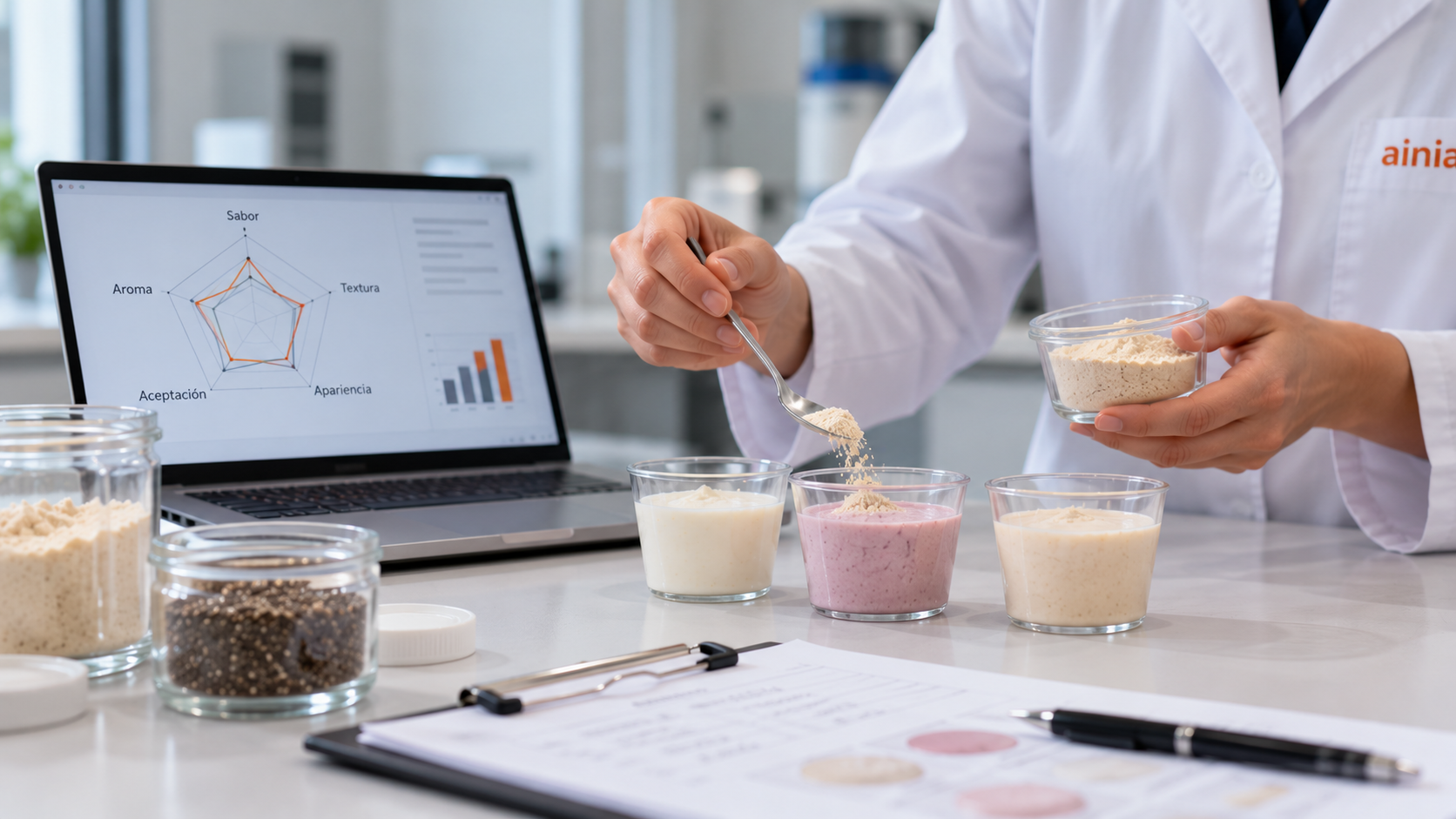
One of the aspects gaining increasing importance in the development of functional foods is the so-called matrix effect. Proteins, fats, fibres and other food components can interact with bioactive compounds and modify their stability, release and behaviour during digestion. This means that the same ingredient may produce different results when incorporated into a beverage, a dairy product or a solid formulation.
Furthermore, a higher concentration of a compound does not necessarily imply greater availability to the body.
Understanding these interactions helps to select the matrix, adjust concentrations and design formulations that favour the expected behaviour of the ingredient.
Bioaccessibility and bioavailability: what happens during digestion?
Once food has been consumed, its components pass through different gastrointestinal conditions that can modify their structure and availability.
Bioaccessibility refers to the fraction of a compound that is released from the food matrix during digestion and becomes available for potential intestinal absorption. Bioavailability, on the other hand, involves considering how much is actually absorbed and becomes available in the body.
This distinction is important because an ingredient may remain stable during storage and yet have limited bioaccessibility.
In vitro gastrointestinal digestion models make it possible to study how a compound is released or transformed during the digestive process. When it is necessary to investigate its behaviour in greater depth, they can be complemented by intestinal absorption models, colonic fermentation models or cell studies. These tools provide relevant information for comparing ingredients and formulations, although their results do not replace the clinical evidence needed to demonstrate certain effects in humans.
What strategies can improve stability and bioaccessibility?
When limitations are identified, there are different technological alternatives for optimising the behaviour of functional ingredients. Microencapsulation, for example, can help protect certain compounds against adverse environmental conditions and modify their release profile.
Other strategies, such as fermentation or certain enzymatic treatments, can transform components of the raw material and modify their availability during digestion.
However, no technology can guarantee an improvement in bioaccessibility on its own. Its effectiveness depends on the compound, the matrix and the application conditions. Therefore, it is particularly useful to compare formulations experimentally before selecting a development strategy.
From ingredient characterisation to functional validation of the product
For companies, the challenge lies in integrating these evaluations into the innovation process, from ingredient selection to final product validation. Combining stability, gastrointestinal digestion and biological activity studies provides a more comprehensive understanding of its behaviour and helps identify opportunities for improvement.
This information also helps to support R&D decisions, reduce uncertainties during development and guide the generation of scientific evidence, distinguishing it from the regulatory requirements applicable to health claims.
How AINIA can help you
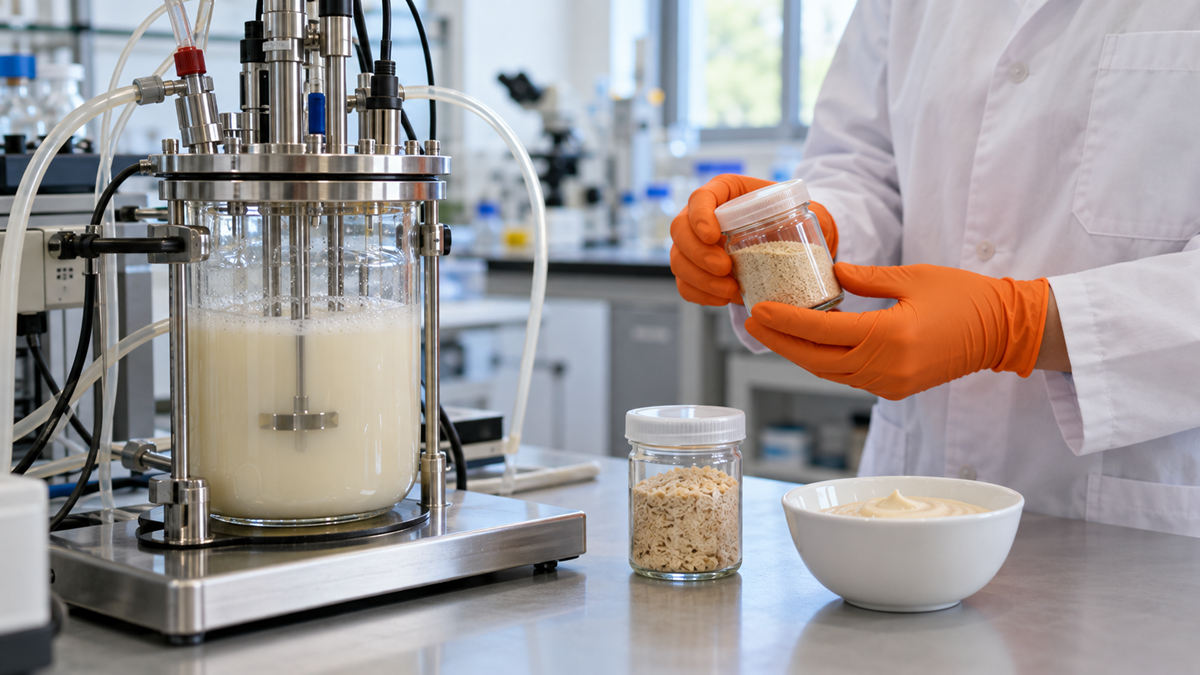
At AINIA, we help companies design, develop and evaluate functional ingredients and foods, working on formulation and the incorporation of ingredients into different food matrices, while taking into account process variables, interactions with the matrix and preservation treatments. We also evaluate their behaviour and functionality through studies of stability, in vitro gastrointestinal digestion, bioaccessibility, colonic fermentation and cell models.
These capabilities make it possible to study the behaviour of bioactive compounds in different formulations and guide the development of products with a stronger scientific foundation.
Discover our solutions for the functional validation of new foods and ingredients and how we can help you evaluate their behaviour before they reach the market.