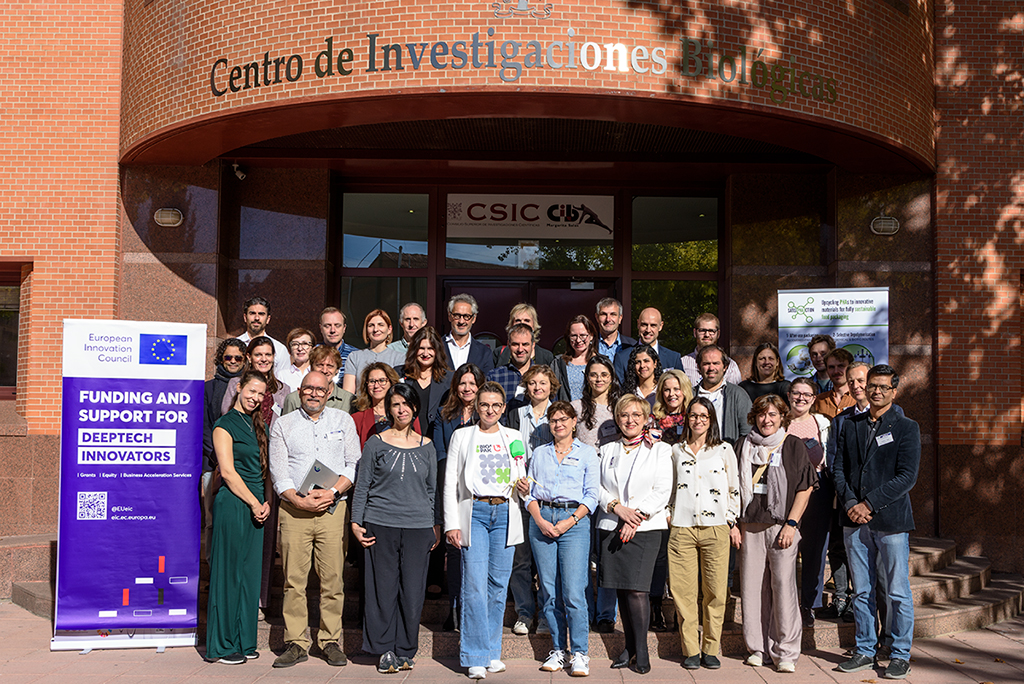
On 21st and 22nd October 2026, SATISPHACTION hosted the first annual meeting of the six projects forming EIC Pathfinder portfolio “Nature-Inspired Alternatives for Food Packaging and Films for Agriculture” at CIB-CSIC facilities in Madrid, with AINIA collaboration.
The first day opened with a welcome from the CSIC-CIB Institute and from the EIC Programme Manager, Walter Eevers. It continued with a session on food contact materials (FCM) legislation, led by DG SANTE and EFSA. The session was organised at the request of the portfolio’s Working Group 2 (WG2), building on its activities and discussions over the past year, which produced a list of overarching portfolio questions regarding the use of bioplastics for food contact material applications, and which span both DG SANTE and EFSA activities.
DG SANTE introduced the framework: Regulation (EC) No 1935/2004, which sets out the general rules for materials in contact with food, including safety, labelling, traceability, inspection and control. Under normal or foreseeable conditions of use, these materials must not transfer their components to food in quantities that could harm human health, change the composition of the food unacceptably or affects its organoleptic characteristics. The Regulation also provides for the adoption of material-specific measures, which may include a positive list of authorised substances. Such authorisations are specific to the materials and conditions of use covered by the relevant legislation.
EFSA started with an explanation of its role and responsibilities, which includes providing independent scientific advice to EU risk managers policymakers, including the European Commission, the European Parliament and the Member States. EFSA does not draft legislation or make decision on product authorisations; its role is to carry out scientific risk assessment to support regulatory and policy decisions. Then EFSA addressed each of the questions raised by WG2. Each project then gave a short update on its achievements, future opportunities and possible collaborations. Walter Eevers closed the day by summarising the main points.
The second day began with a recap of the first day, followed by a session from European Patent Office (EPO) which introduced key intellectual property (IP) concepts and presented an exercise to develop an IP landscape map of food packaging and agricultural films. This mapping will provide the portfolio with an overview of the existing IP landscape, including the main patent applicants and key competitors in the field.
The four Working Groups (Technological Synergies, Regulatory and Certification Activities, Business Development, and Communication and Dissemination) then presented their progress during the first year and introduced the plan for the work ahead.
After a break, the projects had bilateral meetings in a matchmaking session to explore future collaborations, followed by an exchange between the Working Groups for future activities and planning. Under the WG3, the BORN project presented more in detail its strategy and experience regarding exploitation activities.
The Portfolio now has a year of work behind it and twelve months of challenges ahead before the next meeting.