Research into the gut microbiota opens up new opportunities for the food industry. The development of prebiotic ingredients, the selection of probiotic strains with specific functionalities and the potential of postbiotics to expand food applications mark a new stage in innovation. Technologies such as advanced fermentation, in vitro digestion models and microencapsulation contribute to the development of more precise, stable and scientifically evaluated products.
Gut health has become one of the main areas of food innovation. Advances in our understanding of the microbiota and its relationship with different bodily functions are driving new strategies to develop foods and ingredients capable of modulating the intestinal ecosystem. In this context, prebiotics, probiotics and postbiotics offer complementary pathways for innovation, each with its own mechanisms of action and technological challenges.
In Spain, growing interest in fermented foods reflects the dynamism of this field. According to the Ministry of Agriculture, Fisheries and Food (MAPA), their consumption has increased by 120% since 2020. In October 2026, the Ministry opened a preliminary public consultation to develop the first specific quality standard for kefir, with the aim of establishing criteria for its production, marketing, designation and labelling. The deadline for submitting comments ended on 30 October.
Although fermented foods are not necessarily probiotics or postbiotics, this initiative highlights the importance of characterising the microorganisms used, standardising production processes and providing consumers with clear information.
On the other hand, the report Biotics: Deliver Targeted and Personalised Ingredients, by Mintel, identifies a shift towards more specific biotic ingredients, supported by scientific evidence and targeted at particular health needs. Among the opportunities it highlights are prebiotic ingredients with differentiated properties, probiotic strains with defined functionalities and new applications of postbiotics in different food formats.
Prebiotics and functional fibres: new opportunities for gut health
Prebiotics play an important role in modulating the gut microbiota. They are substrates that are selectively utilised by host microorganisms and confer a health benefit.
Although certain dietary fibres have prebiotic properties, not all fibres can be considered prebiotics. This distinction is key in the development of new ingredients, as their functionality depends on both their composition and structure and their interaction with the microbiota.
The Mintel report identifies fibres and prebiotic ingredients as key areas of innovation in gut health. Diversifying fibre sources and developing formulations that combine different ingredients make it possible to expand the range of functional foods. Furthermore, innovation is moving towards prebiotics with more clearly defined properties: Mintel identifies opportunities in fibres that allow formulations to be adapted to different digestive needs, taking into account their fermentability, tolerance and dosage. For the industry, this requires more in-depth characterisation of ingredients and the study of their behaviour during digestion and intestinal fermentation.
In this context, technologies such as enzymatic processes, biotransformation and the valorisation of plant-based raw materials make it possible to explore new sources of functional ingredients. At AINIA, we have capabilities in ingredient development and characterisation, biotechnological processes and in vitro digestion models that contribute to studying their potential and facilitating their incorporation into new foods.
Precision probiotics: from strain selection to new functionalities
In parallel with the evolution of prebiotics, innovation in probiotics is moving towards the identification of microorganisms with increasingly well-defined properties and applications.
According to Mintel, 63% of surveyed consumers who use, or might use, gut health products consider it important that probiotics clearly explain the specific functions of their strains.
This trend reinforces the role of microbiological selection and characterisation, as the properties of one strain cannot automatically be extrapolated to others, even if they belong to the same species. Identifying microorganisms with functional potential and developing reproducible fermentation processes is one way to obtain differentiated ingredients adapted to different food applications.
In this field, at AINIA we have made progress through the BIOPROSPECT project, in which we have isolated more than 100 microbial strains from different natural environments to investigate their potential in food and health.
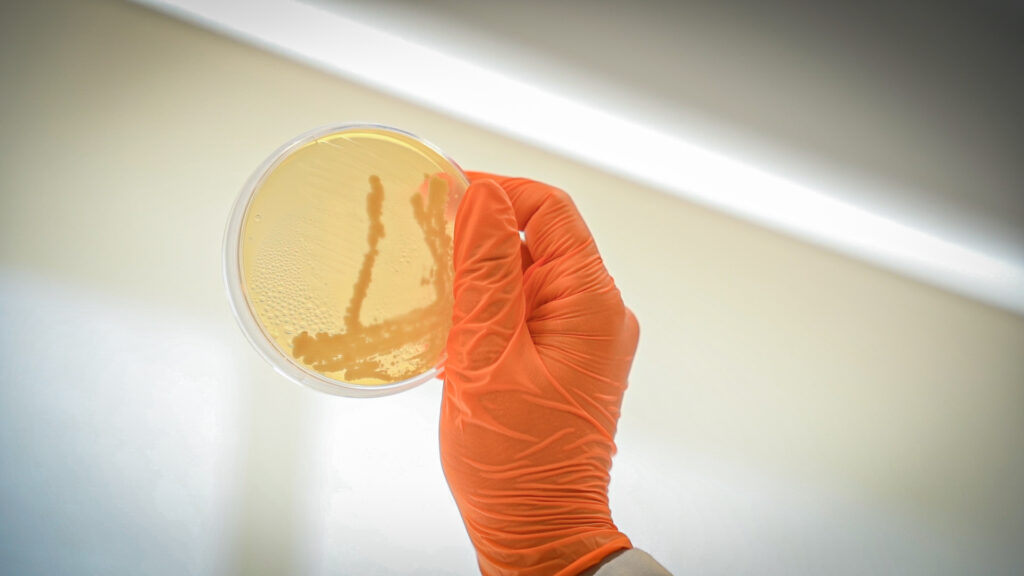
The research has combined genetic analyses, in vitro assays that simulate digestive conditions and an automated platform for high-throughput screening and monitoring of microbial growth. These tools make it possible to study properties such as resistance to gastrointestinal conditions and fermentation capacity, and speed up the selection of candidate strains with probiotic potential for future industrial applications.
Tests of resistance to acidic pH and bile salts are useful for identifying candidate strains, although their results alone are not sufficient to demonstrate that a strain provides a health benefit and can be considered probiotic.
Postbiotics: a new avenue for expanding food applications
Among the emerging trends identified by Mintel, postbiotics stand out for the opportunities they offer to develop new functional food formulations.
According to the definition of the International Scientific Association for Probiotics and Prebiotics (ISAPP), postbiotics are preparations of inanimate microorganisms and/or their components that confer a health benefit.
Unlike probiotics, postbiotics do not require live microorganisms to provide the demonstrated benefit. This characteristic may facilitate their incorporation into certain food matrices, particularly when processing or storage conditions compromise the viability of probiotics. Even so, their stability and functionality must be evaluated in each formulation.
Mintel identifies opportunities to incorporate these preparations into new food matrices, including products that are stable at room temperature. This opens the door to formats and categories in which the use of live probiotics presents greater technological challenges. However, inactivating a microorganism is not sufficient to obtain a postbiotic. It is necessary to select and characterise the starting microorganisms, define appropriate production and inactivation processes, ensure the safety of the preparation and have evidence to support its health benefit. Similarly, isolated microbial metabolites cannot automatically be considered postbiotics.
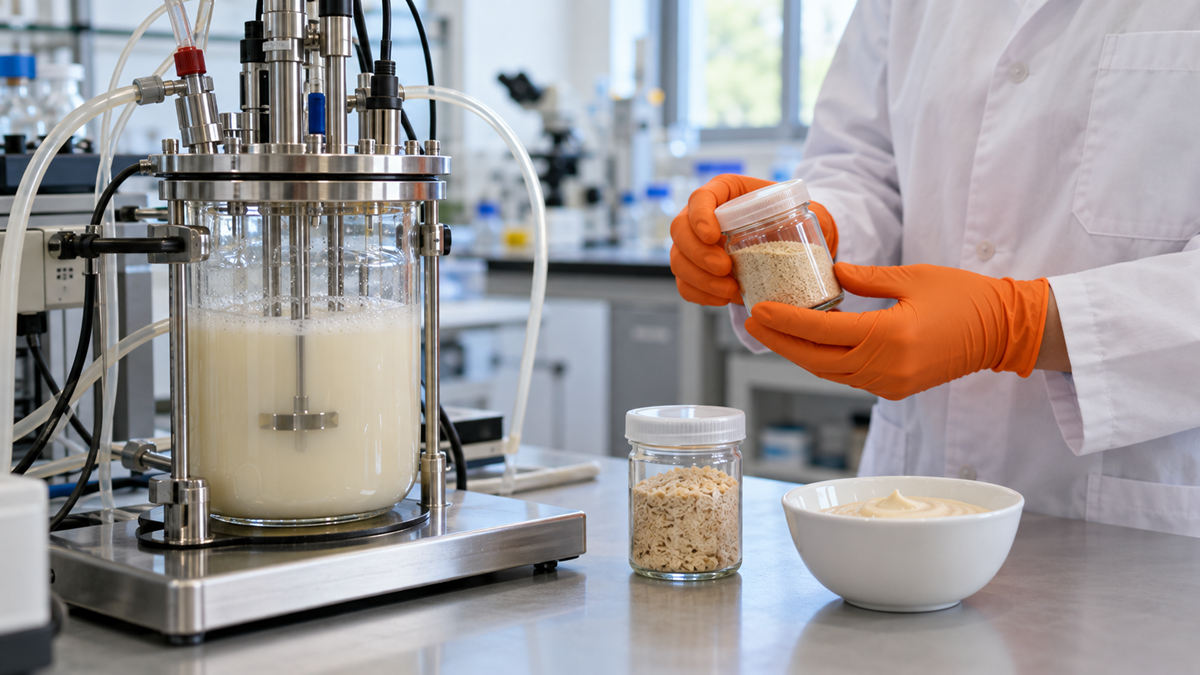
Advanced fermentation and formulation technologies can contribute to the development of these ingredients. At AINIA, our industrial biotechnology capabilities enable us to investigate microorganisms of interest, optimise fermentation processes and develop new ingredients of microbial origin.
For its part, microencapsulation makes it possible to protect sensitive ingredients, improve their stability and design controlled-release systems. At AINIA, we apply these technologies to the development of formulations containing probiotics and other bioactive compounds, and combine them with characterisation and functional evaluation tools. These capabilities open up possibilities for investigating new formulations with postbiotic preparations, taking into account the characteristics of each ingredient, processing conditions and the requirements of the final product. In each case, their application requires studies to confirm their technological feasibility and functionality.
Scientific evidence, key to differentiating biotic ingredients
The development of prebiotics, probiotics and postbiotics presents a common challenge: having scientific evidence to characterise their properties and substantiate the benefits attributed to them.
The Mintel report states that 56% of surveyed users of digestive health products found it difficult to know whether these products were working or whether their symptoms had improved naturally.
This uncertainty reinforces the need to study how ingredients behave during digestion, how they interact with the microbiota and which biological mechanisms may be involved in their effects.
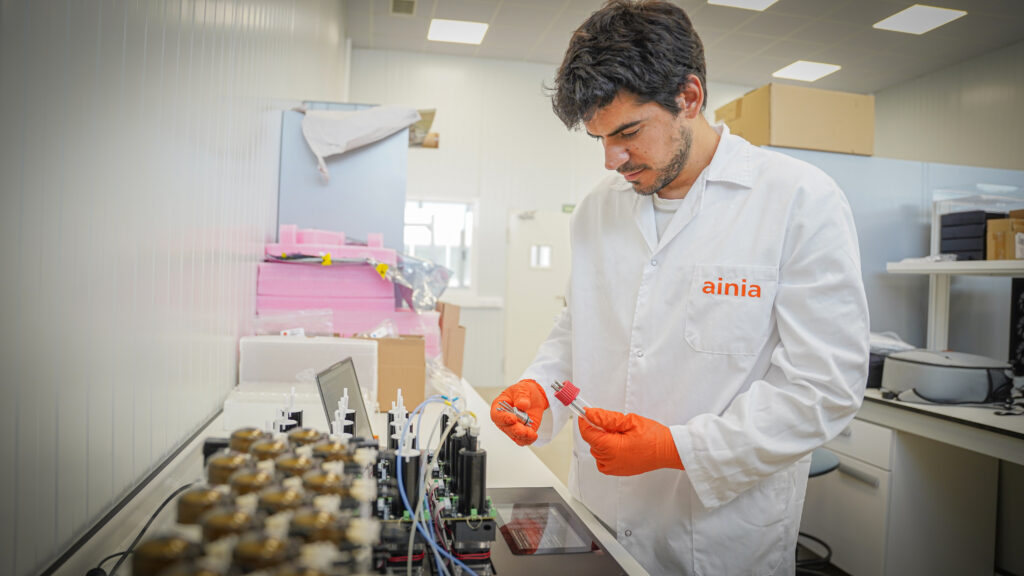
To make progress in this field, at AINIA we have developed, as part of the DISBIOSIS project, experimental in vitro models that make it possible to reproduce alterations in the gut microbiota and study their interaction with the gastrointestinal environment.
Among the advances is an experimental organ-on-chip system that integrates aspects of gastrointestinal digestion, the colonic microbiota and the intestinal mucosa. These tools make it possible to investigate mechanisms of action and evaluate the potential of new functional ingredients under controlled conditions.
As a continuation of this line of research, DISBIOSIS II aims, among other objectives, to further characterise bioactive agents derived from the microbiota and develop more complex experimental models to study their interaction with the body.
Although these models do not replace the clinical trials needed to demonstrate certain benefits in humans, they provide valuable information to guide ingredient selection and advance their functional evaluation.
Likewise, it is important to distinguish between generating scientific evidence and authorising health claims. Characterisation and functionality studies enable progress in the evaluation of new ingredients, but the communication of health benefits on food labelling or in advertising must comply with the requirements of European legislation on nutrition and health claims.
From research to the development of new functional foods
Innovation in biotic ingredients does not end with the identification of new fibres, microorganisms or preparations of microbial origin. Their incorporation into foods and food supplements requires addressing issues of safety, stability, dosage, sensory characteristics and industrial feasibility.
As we discuss in our article on Vitafoods Europe 2026 trends, the functional ingredients sector is evolving towards more diverse formats, supported by advanced formulation technologies and increasingly stringent requirements for scientific evidence.
En este escenario, la combinación de fermentación avanzada, caracterización microbiológica, procesos de obtención y transformación de ingredientes, modelos de digestión in vitro y microencapsulación permite abordar las distintas etapas del desarrollo tecnológico: desde la identificación de compuestos de interés hasta la formulación y evaluación de nuevos productos.
Prebiotics, probiotics and postbiotics offer complementary opportunities to move towards more specialised functional nutrition. While new sources of fibre and precision probiotics expand the possibilities for acting on the microbiota, postbiotics open up additional avenues for exploring formulations with differentiated technological properties.
For the food industry, the challenge lies not only in incorporating new ingredients, but also in combining scientific knowledge and technological capabilities to develop safe, stable products with well-characterised functionalities. The integration of biotechnology, functional evaluation and industrial development will be key to turning advances in microbiota research into new opportunities for food innovation.