Results of the VBNC-PATHOGENS Project
Pathogenic bacteria in a viable but non-culturable (VBNC) state pose a challenge to food safety, as they remain viable but lose the ability to grow on the culture media commonly used for their detection. At AINIA, through the VBNC-PATHOGENS project, we have made progress in developing tools to detect and study pathogenic microorganisms in this physiological state, contributing to more comprehensive microbiological control in the food industry.
Conventional microbiological methods used to control foodborne pathogens rely largely on the ability of microorganisms to grow on culture media. However, certain stress conditions can cause some bacteria to enter a state known as viable but non-culturable (VBNC), in which they remain viable but cannot be detected using traditional culture-based methods.
This phenomenon is particularly relevant from a food safety perspective, as different conditions associated with processing, preservation or sanitation may be linked to certain microorganisms entering this state. Furthermore, under certain conditions, VBNC cells can regain their ability to grow, a phenomenon known as reactivation.
Through the VBNC-PATHOGENS project, developed by AINIA with support from IVACE+i and ERDF funding, we have investigated this phenomenon, focusing primarily on Salmonella spp. and, to a lesser extent, on Listeria monocytogenes, two pathogens of great interest to the food industry. The project addresses both the study of conditions that may favour the emergence of the VBNC state and the development of analytical tools capable of detecting viable cells that might go unnoticed using culture-based microbiological methods.
What conditions can cause pathogens to enter the VBNC state?
One of the first challenges addressed in VBNC-PATHOGENS was to study the conditions that may favour the entry of Salmonella spp. andListeria monocytogenes into the VBNC state, as well as those that may subsequently allow their reactivation.
The project has investigated different stress conditions relevant to the food industry, including oxidative treatments, high-osmolarity conditions, low-temperature storage, desiccation and exposure to antimicrobial agents used in sanitation processes.
These studies have made it possible to analyse how microorganisms respond to adverse conditions and to generate bacterial populations with a marked loss of culturability. The results have highlighted the complexity of distinguishing potentially viable cells from other damaged or physiologically altered bacterial populations, reinforcing the need to complement traditional culture-based methods with advanced analytical tools.
This knowledge is particularly valuable for gaining a better understanding of how microorganisms respond to stress conditions associated with food processing or preservation.
Advanced technologies for detecting VBNC bacteria
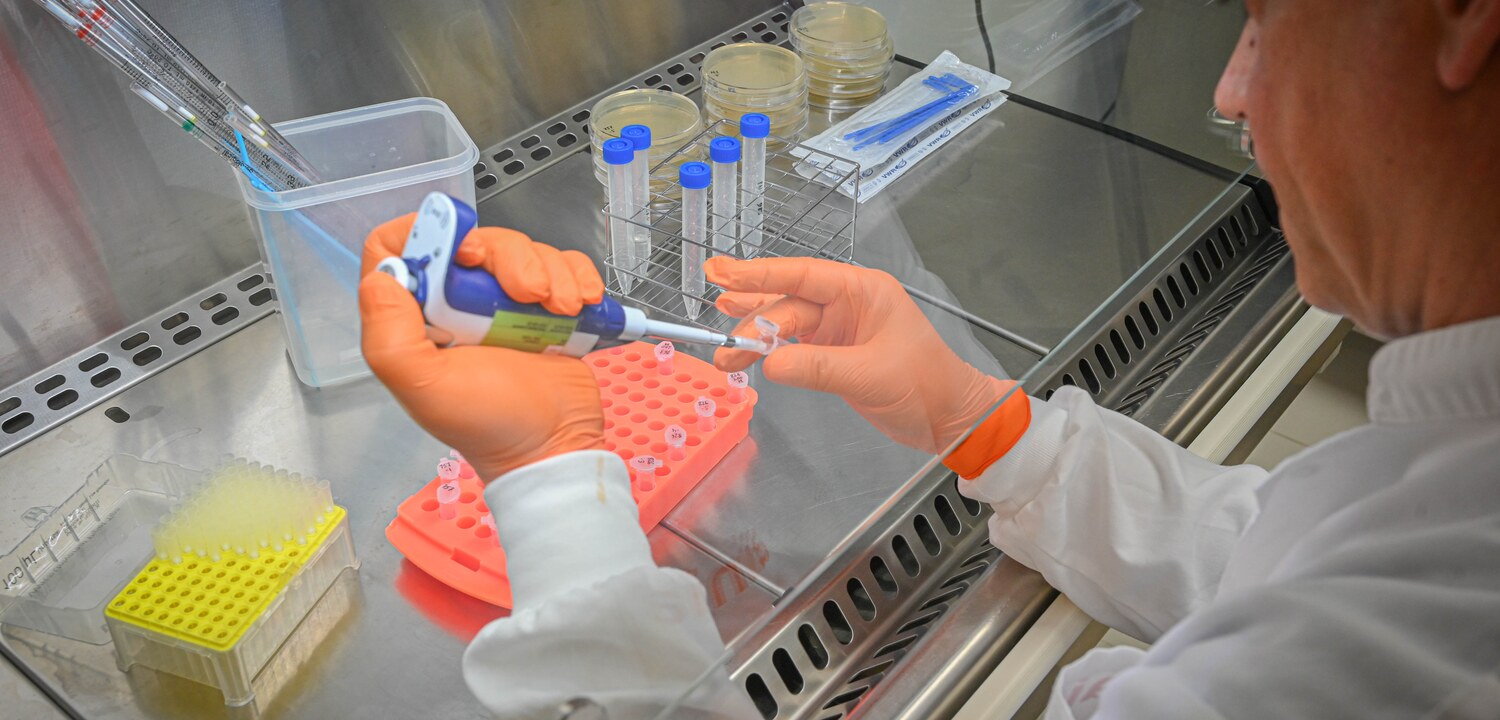
One of the main challenges associated with these microorganisms is their detection. Therefore, in VBNC-PATHOGENS, we have worked with different complementary analytical approaches aimed at studying both cell viability and their molecular and physiological activity.
The technologies investigated in the project include:
- Molecular biology techniques: PCR-based techniques have been studied to differentiate viable cells from non-viable cells and analyse markers associated with the physiological state of bacteria.
- High-throughput sequencing: the potential of transcriptomics has been explored to study bacterial gene expression and gain a deeper understanding of the changes that occur when bacteria enter the VBNC state.
- Flow cytometry: its use as a tool to study cell viability using fluorescent markers has been investigated, complementing the information obtained through molecular techniques and culture-based methods.
The results have highlighted the value of combining different analytical approaches to study bacterial viability.
Viability PCR techniques have complemented the information obtained through conventional culturing, facilitating the assessment of bacterial populations subjected to different stress conditions.
Flow cytometry, meanwhile, has shown considerable potential for distinguishing cell subpopulations with different physiological states, making it possible to differentiate viable, damaged and non-viable cells within the same sample.
The project has also laid the foundations for the application of transcriptomic tools aimed at studying changes in gene expression associated with stress conditions and potential VBNC states, providing a complementary approach to conventional microbiological methods.
Key advances of the VBNC-PATHOGENS project
The work carried out in VBNC-PATHOGENS has expanded our understanding of how pathogenic microorganisms respond to different stress conditions and enabled the evaluation of new tools for studying bacterial viability beyond methods based exclusively on culturing.
- Advance 1: Evaluation of different stress conditions relevant to the food industry, including oxidative treatments, desiccation, osmotic stress and agents used in sanitation processes, with significant reductions in bacterial culturability observed in several cases.
- Advance 2: Development and implementation of complementary methodologies based on conventional microbiology, viability PCR and fluorescence microscopy to study bacterial populations subjected to stress.
- Advance 3: Confirmation of the potential of flow cytometry to characterise heterogeneous bacterial populations and differentiate distinct physiological states within the same sample.
- Advance 4: Generation of samples and experimental knowledge that enable progress towards the application of transcriptomic tools to study the molecular mechanisms associated with loss of culturability and potential VBNC states.
Towards more comprehensive microbiological control in the food industry
The knowledge and methodologies developed in VBNC-PATHOGENS make it possible to complement traditional microbiological methods and advance the study of pathogenic microorganisms that remain viable despite a significant loss of culturability.
The application of these tools could help improve microbiological risk assessment in the food industry, both in the control of food products and processes and in the study of the effectiveness of preservation, cleaning and disinfection strategies against microorganisms that may exhibit a loss of culturability associated with physiological states consistent with VBNC.