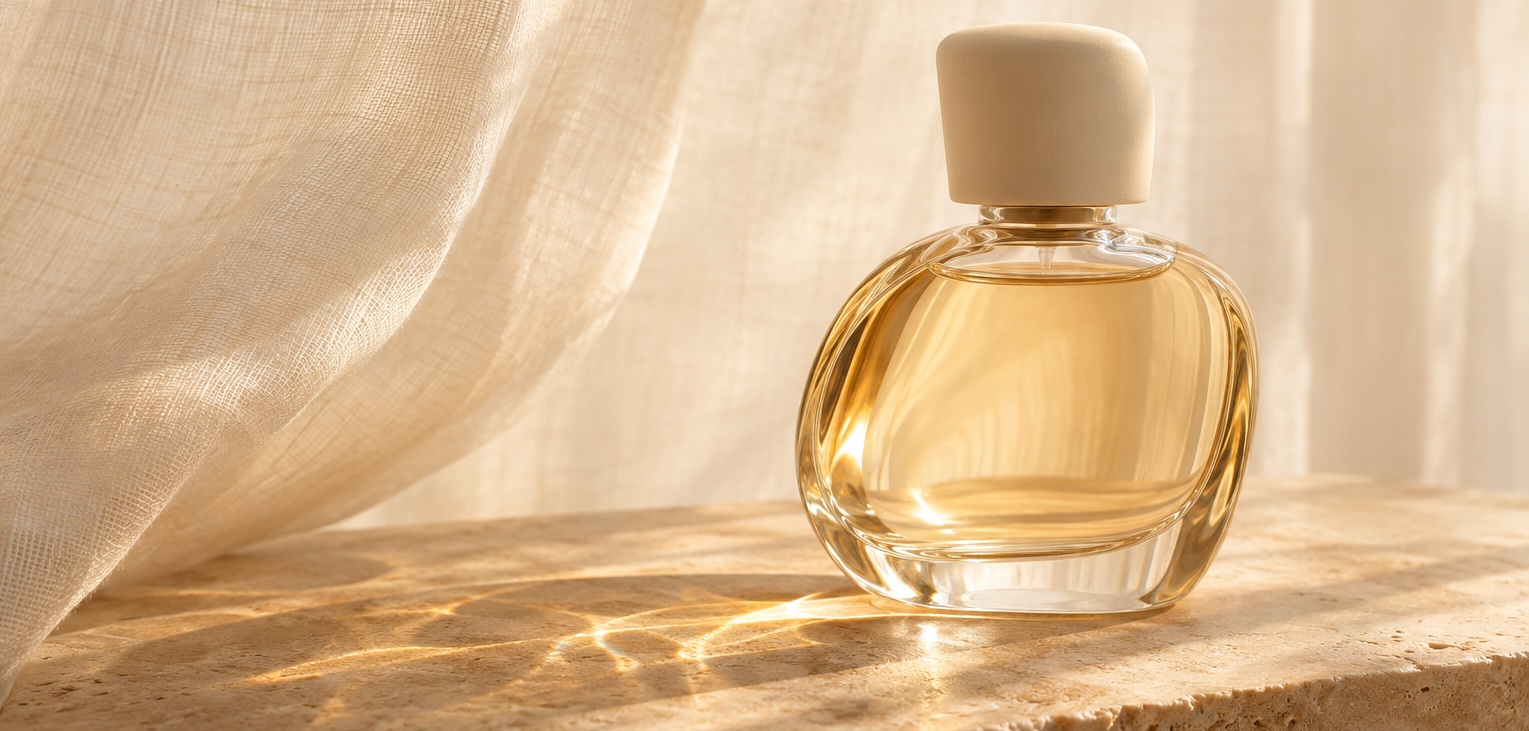
A fragrance can be more appealing and perceived as relaxing without necessarily showing the strongest neurophysiological indicators of relaxation. This is one of the findings of the work we carried out at AINIA with Sisley Paris and presented jointly at theEuroSense 2026conference. The study combines neurophysiological measurements and consumer assessments to provide complementary information that can help guide fragrance selection in cosmetics.
Fragrance is part of the experience of using a cosmetic product. Beyond determining whether it is pleasant, companies can study the emotions people associate with it and the physiological responses recorded during exposure. Understanding the relationship between these dimensions provides criteria for selecting fragrances according to the experience they aim to create.
With this aim, we at AINIA worked with Sisley Paris to evaluate two fragrances. We compared their emotional effects, paying particular attention to responses associated with relaxation, using a methodology that integrates participants’ conscious assessments and their neurophysiological reactions.
A methodology for studying different dimensions of the experience
For the study, we recruited 40 healthy consumers and conducted the tests in a controlled environment. Each participant evaluated both fragrances in a blind test, with a randomised and balanced presentation order. This experimental design allowed us to compare each person’s responses to the two stimuli and reduce the influence of exposure order.
The protocol included three phases: one minute before exposure without fragrance, one minute of exposure and one minute of recovery afterwards. During the test, we recorded electrical brain activity using electroencephalography, skin conductance and heart rate.
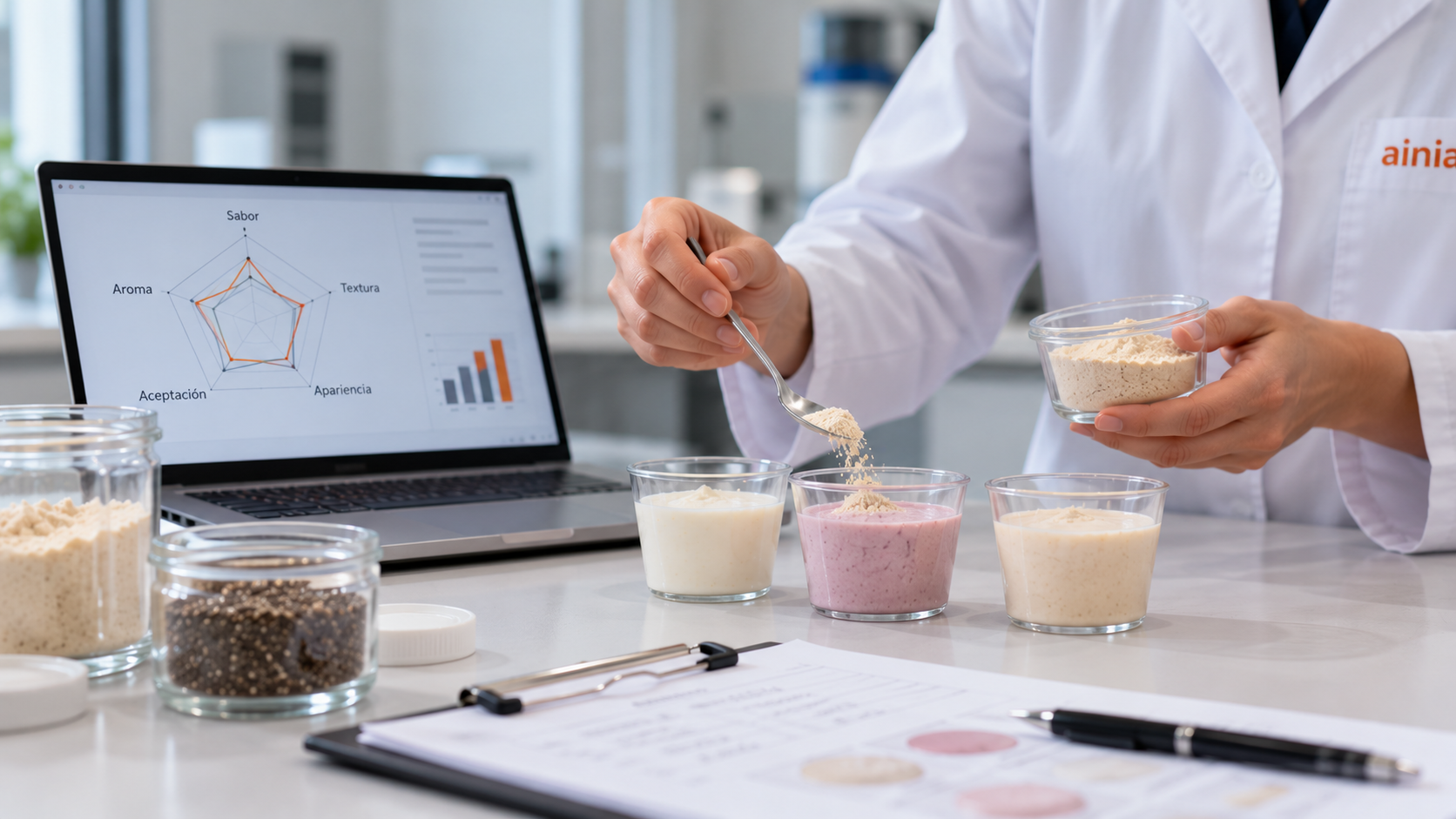
We completed the evaluation with questionnaires covering free word association, emotional state, sensory acceptance and perceived effects of relaxation or activation. We also analysed participants’ assessments of the emotional benefits attributed to each fragrance.
Combining these tools has allowed us to examine the same experience from complementary perspectives: what people say about the fragrance and the neurophysiological changes recorded during its evaluation.
Differences between perceived relaxation and neurophysiological responses
One of the main findings we observed was that neurophysiological responses and self-reported assessments did not fully align.
One of the fragrances produced more pronounced neurophysiological indicators of relaxation. The other, however, was more widely liked and received more positive ratings for its perceived emotional benefits, including those associated with relaxation.
This finding shows that liking, perceived relaxation and neurophysiological indicators can exhibit different patterns. Therefore, analysing just one of these dimensions provides only a partial picture of the experience.
Self-reported assessments capture each participant’s preferences and conscious interpretation. Neurophysiological measurements provide additional information about the body’s response during exposure. Interpreting these findings together helps us better understand the differences between the fragrances evaluated.
The study with Sisley Paris: evidence to guide cosmetic product development
The value of the work we carried out with Sisley Paris lies in providing complementary information to support the selection of fragrances for cosmetic formulations.
When a company aims to create an experience associated with relaxation, it is useful to compare consumers’ perceptions with the neurophysiological indicators recorded. If the objective is to assess fragrance acceptance, liking ratings provide specific information about that dimension. Defining the research question makes it possible to select the appropriate tools and interpret the results in relation to the development objective.
This approach helps support fragrance selection decisions and identify aspects that require further evaluation. The study’s conclusions relate to the two fragrances and the conditions tested. Applying these findings to a finished cosmetic product would also require consideration of the formulation and real-world conditions of use.
Collaboration between research and industry
At EuroSense 2026, together with Sisley Paris, we shared this collaborative experience with the sensory and consumer science community.
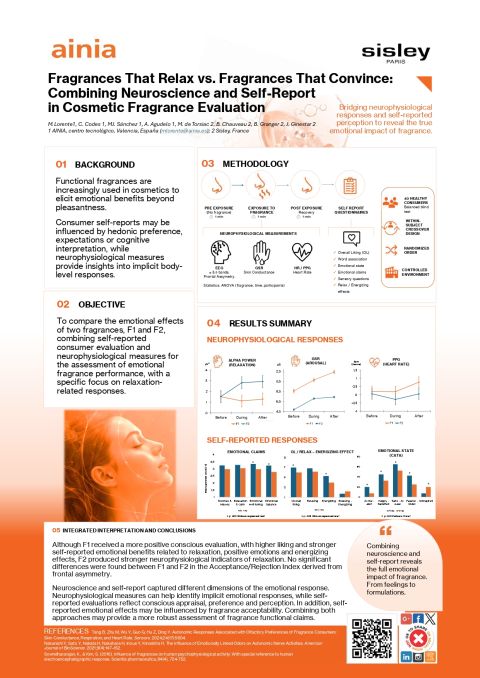
Photo caption. Presentation of the AINIA and Sisley Paris study on emotional responses to fragrances at the EuroSense 2026 conference.
At AINIA, we design sensory and consumer response studies tailored to each company’s innovation objectives. If you need to assess how a fragrance is perceived or gain a deeper understanding of the experience created by a cosmetic product, we can help you define a methodology that addresses your development questions.