

AINIA / Food Quality and Safety
Food Quality and Safety
Comprehensive solutions to anticipate risks, prevent incidents and ensure the quality and safety of your food products
Anticipate risks. Prevent incidents. Ensure the quality and safety of your products
At AINIA, we help you manage food quality and safety comprehensively: from risk anticipation and prevention on the production floor to analytical control, product validation, digitalisation and incident response.
Food quality and safety are no longer just about control: they require anticipation
Supply chains are becoming increasingly global, new microbiological and chemical risks are emerging, regulatory pressure is growing, and companies are generating more and more data. At the same time, customers, public authorities and consumers are demanding greater traceability, faster response times, product consistency and supporting evidence.
The key is to move from reactive management to a preventive and predictive model capable of prioritising real risks, detecting deviations earlier and using available information to make decisions more quickly.
2nd Food Quality and Safety Meeting 2025
At the 2nd Food Quality and Safety Meeting organised by AINIA, experts from industry, retail and public authorities analysed the sector’s main challenges. Risk anticipation, the application of new technologies and coordination between the different stakeholders were among the key factors in strengthening prevention and improving the ability to respond to future crises.
What makes food quality and safety management difficult today?
- Changing risks and regulations: New hazards, alerts, regulatory changes and emerging risks that are difficult to anticipate.
- Vulnerable processes and facilities: Cross-contamination, hygiene, design weaknesses and validations that do not always prevent recurrence.
- Controls that come too late: Need for faster responses, advanced methods and in-line monitoring.
- Supply chains that are difficult to verify: Suppliers, origin, fraud, authenticity, raw materials and markets with different levels of exposure.
- Products that must maintain safety and quality: Shelf life, stability, deterioration, specifications and packaging performance during commercialisation.
- Scattered data and high-impact incidents: Fragmented information, limited predictive capabilities and the need to respond quickly to a deviation or crisis.
In food quality and safety, detecting a problem is not enough. The real value lies in anticipating it, reducing the likelihood of its occurrence, demonstrating product compliance and knowing how to respond when a deviation occurs.
A connected approach to food quality and safety
Risk anticipation and food quality and safety strategy
Prevention and control of process risks
Detection, analysis and verification
Safety, stability and shelf life
Data, traceability and intelligent control
Incident and crisis management
01_Risk anticipation and food quality and safety strategy
If the risk changes, your control system must change too.
At AINIA, we monitor signals, identify emerging risks, interpret regulatory changes and assess vulnerabilities in raw materials, suppliers and markets to direct resources towards the risks that truly matter.
We help you to:
- SEALI Hub and early warning services
- Food Alert and monitoring of official alerts.
- Identification of emerging risks and horizon scanning.
- LEXAINIA and legislative monitoring
- Food fraud and vulnerability assessment
- Risk assessment by raw material, origin, supplier or market
- Design of risk-based analytical control plans
- HACCP, IFS, BRCGS and management systems
- Food safety culture, procedures and training
How to anticipate food safety risks: the experience of EROSKI
The Head of Food and Non-Food at EROSKI, Mireya Arambarry, highlights the value of having up-to-date information, legislative monitoring and early warning tools to anticipate risks and facilitate decision-making in food safety.
02_Prevention and control of process risks
The most efficient way to manage an incident is to prevent it from happening.
Prevention extends to equipment and facility design, hygiene, cleaning effectiveness, process validation and the ability to anticipate the microbiological behaviour of both the product and the process.
We help you to:
- Hygienic design of equipment and facilities and EHEDG capabilities
- Audits and validation of cleaning and disinfection
- Virucidal, bactericidal and fungicidal efficacy studies
- Diagnosis of contamination and identification of contamination sources
- Environmental and surface contamination control
- Validation of processes and treatments
- Predictive microbiology and modelling
- New preservation technologies
- Natural preservatives and antimicrobials
- Optimisation of preservation and processing conditions
03_Detection, analysis and verification
Detect earlier, verify more effectively and make evidence-based decisions
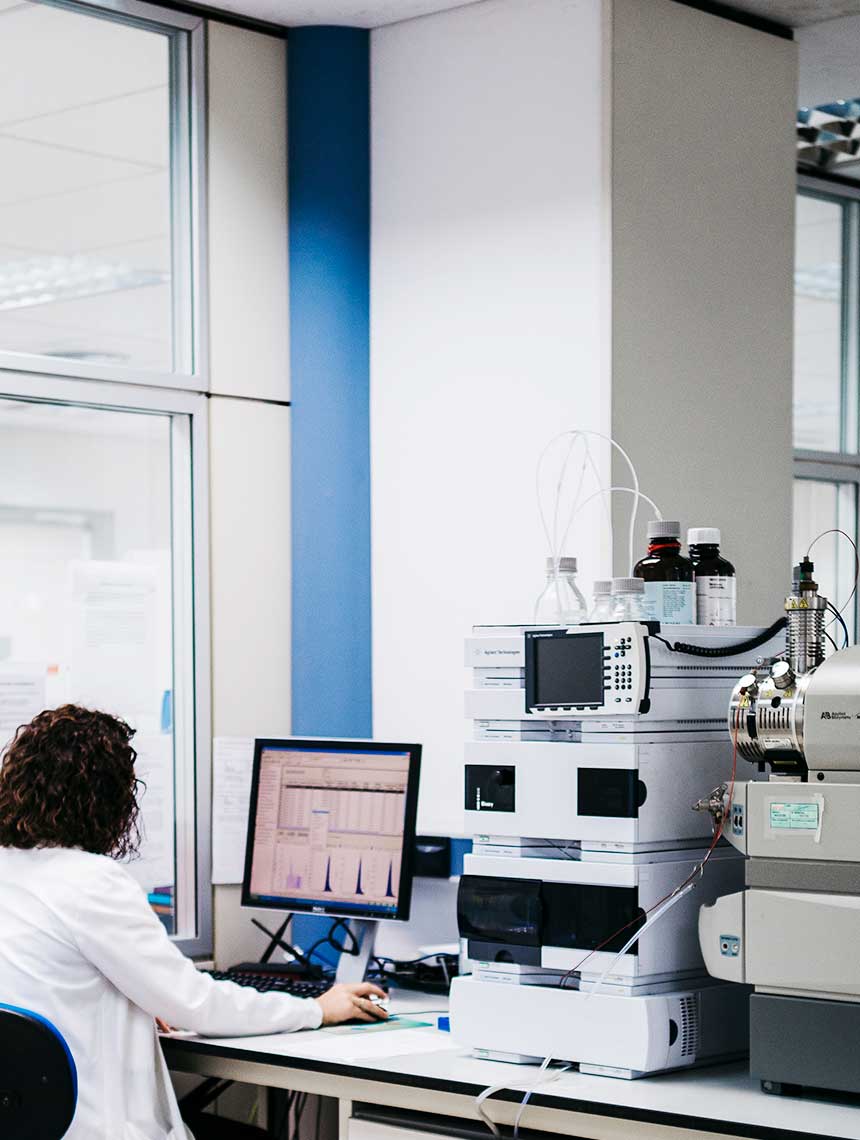
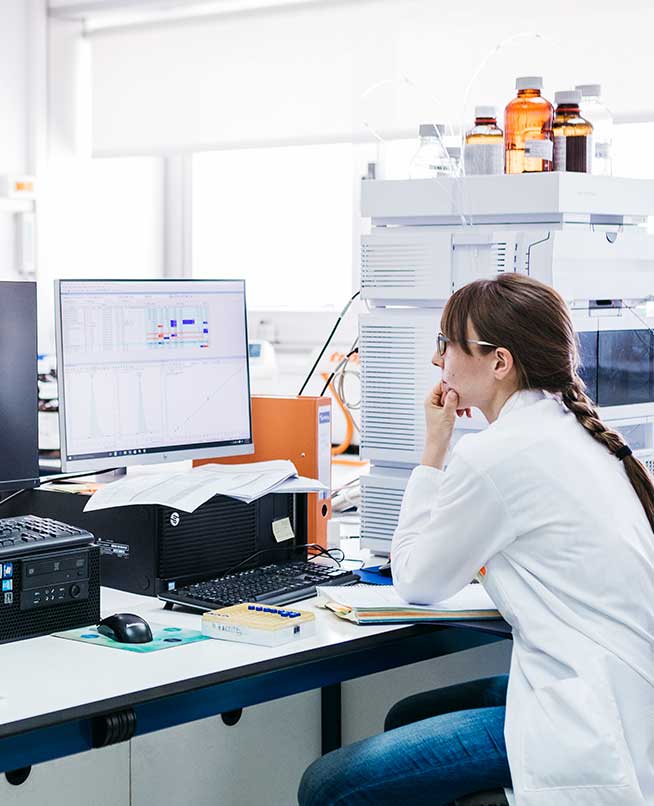
AINIA combines advanced analytical capabilities with product knowledge to verify safety, quality, authenticity and compliance with specifications.
| Microbiological risks | Pathogens, hygiene indicators, spoilage microorganisms, microbiological identification and characterisation, viruses, molecular techniques, rapid methods and metagenomics. |
| Chemical risks and contaminants | Allergens, pesticides, veterinary drug residues, metals, mycotoxins and natural toxins, process contaminants, MOSH/MOAH, PFAS and other emerging contaminants. |
| Authenticity, composition and quality | Physicochemical characterisation, nutritional information, additives, authenticity, adulteration, origin and compliance with specifications. |
| Food contact materials | Suitability for food contact (FCM), overall and specific migration, NIAS and material characterisation. |
Cross-cutting capabilities: chromatography, spectrometry, molecular techniques, sensors, rapid methods, advanced control and interlaboratory comparisons.
04_Safety, stability and shelf life
Ensure your product maintains its safety and quality throughout its shelf life
Shelf life does not depend on time alone. Formulation, processing, storage, distribution and packaging influence the microbiological, physicochemical and sensory evolution of the product. AINIA integrates these factors to validate its safety and stability during commercialisation.
- Shelf life studies
- Challenge tests
- Product stability and quality studies
- Spoilage studies and diagnosis
- Predictive microbiology and growth/inactivation models
- Optimisation of storage conditions
- Validation of formulation and process changes
- Product-process-packaging interaction
- Packaging integrity and sealing
- Packaging permeability and performance related to preservation
05_Data, traceability and intelligent control
From scattered data to food quality and safety decisions
At AINIA, we connect historical data, traceability, in-line inspection and predictive models to detect trends, automate controls and act earlier when deviations occur
Turn data into decisions:
- Food Safety Analytics
- Digital Food Factory
- Food quality and safety dashboards
- Integration of ERP, LIMS and other sources
- AI and predictive models
- Digitalisation of traceability
Automatically monitor product and process:
- NIRSpector
- CHEMInspector
- VISpector
- TERMOSEAL
- Advanced Vision Digitalization
- Sensors and in-line quality control
- Detection of foreign bodies, composition and homogeneity using non-destructive technologies
06_Incident and crisis management
When an incident occurs, every decision counts
Crisis management requires a combination of rapid analysis, scientific and technical expertise, and process knowledge. The added value goes beyond responding: it also involves identifying the root cause and reducing the likelihood of recurrence.
- 24-hour alert service and urgent incident management
- Priority analyses and confirmation of the problem
- Scientific and technical risk assessment
- Identification of microorganisms or contaminants
- Spoilage and diagnostic studies
- Root cause investigation and identification of the source
- Determination of the extent, isolation and traceability of batches
- Definition of corrective and preventive measures
- Technical support for decision-making and incident management
Challenges solved ...

Identifying the source of recurring contamination
We locate sources of microbiological contamination in facilities and production processes, identifying their causes to prevent incidents from recurring.
Optimising control plans to focus resources on priority risks
We design and optimise risk-based analytical control plans, helping companies prioritise relevant hazards and improve the efficiency of their controls..
Diagnosing product deterioration and defining corrective measures
We investigate the causes of deterioration affecting product quality and stability, identifying solutions to prevent it from occurring.

Shelf-life and microbiological safety validation
We assess the microbiological, physicochemical and sensory changes in food products to establish and validate their shelf life under real storage conditions.

Safety verification of food contact materials
We assess the suitability of materials intended for food contact through migration testing and substance analysis, including non-intentionally added substances (NIAS).
Hygienic assessment of processing lines and validation of cleaning and disinfection
We assess the hygienic design of equipment and facilities and validate the effectiveness of cleaning and disinfection procedures to minimise contamination risks.
Digitalisation of quality and safety data to anticipate incidents
We integrate quality, process and traceability data using digital tools and predictive models that facilitate the early detection of deviations.
Digitalisation of quality and safety data to anticipate incidents
We integrate quality, process and traceability data using digital tools and predictive models that facilitate the early detection of deviations.
Scientific and technical support in response to food safety alerts
We provide specialist assistance to assess risks, identify the source and extent of incidents, and define corrective measures to facilitate decision-making.

Frequently asked questions
How can I define a risk-based analytical control plan?
An effective analytical control plan must begin with the identification and assessment of risks associated with raw materials, suppliers, processes and finished products. Based on this information, the parameters to be analysed, the most appropriate methods and the frequency of controls are established. At AINIA, we help design and optimise risk-based control plans, prioritising relevant hazards and improving the efficiency of analytical resources.
How can I anticipate risks associated with raw materials, suppliers and new markets?
Anticipating risks requires a combination of emerging risk monitoring, food safety alert tracking, analysis of regulatory changes and assessment of vulnerabilities in the supply chain. AINIA has tools such as SEALI Hub, Food Alert and LEXAINIA, which help identify threats, detect relevant changes and support preventive decision-making in food quality and safety.
What should I do if I detect recurring microbiological contamination?
When microbiological contamination recurs, it is essential to identify its source rather than simply eliminate its effects. This requires investigating potential sources of contamination in facilities, equipment, surfaces and production processes. At AINIA, we carry out microbiological diagnostic studies and root cause analyses to identify the source of contamination and define corrective and preventive measures that reduce the risk of recurrence.
How can I validate the effectiveness of a cleaning and disinfection process?
Validation of cleaning and disinfection procedures makes it possible to verify their effectiveness against microbiological risks under the specific conditions of each facility. This involves assessing equipment, surfaces, the procedures applied and the results obtained through inspections and testing. AINIA carries out hygiene audits, cleanability studies and bactericidal, fungicidal and virucidal efficacy tests to verify and optimise these processes.
How can I validate the microbiological shelf life and stability of a food product?
Shelf-life validation requires studying how the product changes during storage and commercialisation, considering factors such as formulation, processing, storage temperature and packaging. AINIA combines microbiological, physicochemical and sensory studies with tools such as challenge tests and predictive microbiology to assess the safety, stability and quality of food products throughout their shelf life.
What analyses do I need to verify the safety of a food contact material?
The required tests depend on the composition of the material, the food with which it will come into contact and the intended conditions of use. Common assessments include overall and specific migration tests, material characterisation and the analysis of non-intentionally added substances (NIAS). At AINIA, we help define the studies needed to assess the suitability of materials and verify their compliance with applicable requirements.
How can I detect fraud or verify the authenticity of a raw material or product?
Food fraud prevention begins with assessing vulnerabilities associated with raw materials, suppliers, origin and the supply chain. Advanced analytical techniques can be used to verify authenticity by detecting adulteration, substitution or non-compliance with specifications. AINIA combines vulnerability assessment with authenticity testing and product characterisation to help companies strengthen their control systems.
How can I digitalise and integrate my food quality and safety data?
Digitalisation makes it possible to connect information from laboratories, management systems, production processes and traceability tools to gain a more comprehensive view of food quality and safety. AINIA develops solutions that integrate data from different sources, such as ERP and LIMS, and applies advanced analytics and artificial intelligence to identify trends, anticipate deviations and facilitate data-driven decision-making.
What technologies enable in-line quality control?
Sensor technologies, spectroscopy, machine vision and artificial intelligence make it possible to automate product and process inspection, reduce inspection times and detect deviations during production. AINIA develops and applies advanced inspection solutions, such as NIRSpector, CHEMInspector, VISpector and TERMOSEAL, to address needs related to composition, homogeneity, foreign body detection and packaging integrity.
What should I do in the event of a food safety alert or incident?
In the event of a food safety alert, it is essential to act quickly, assess the risk, identify potentially affected products and batches, and take the necessary containment measures. It is also important to investigate the root cause to prevent the incident from recurring. Through its Alerta 24h service, AINIA provides scientific and technical support, priority analyses, contamination diagnosis and assistance in defining corrective and preventive measures.
Do you want to improve the management of your products' quality and safety?
Whether you need to anticipate a new risk, resolve an incident, optimise your controls, validate shelf life, verify product quality or digitalise your management system, at AINIA we bring together the capabilities you need to make decisions more quickly and with greater confidence.
Would you like to know more?
Leave us your details and we will contact you to answer your questions or continue the conversation.