The general application of the European Packaging and Packaging Waste Regulation, known as the PPWR, from 12 August 2026 represents a significant change for companies in the food chain. Although the requirements related to the safety of food contact materials continue to be regulated mainly through specific food contact materials legislation, the new framework increases the requirements in areas such as sustainability, recyclability, the incorporation of recycled material and packaging traceability.
This scenario reinforces the need for technical evidence that demonstrates both material compliance and the safety of food packaging throughout its entire life cycle.
Adaptation should not be understood solely as a documentary update. The new requirements are incorporated into an already extensive regulatory framework, in which food contact materials legislation, the successive amendments to Regulation (EU) No 10/2011 on plastic materials, the restrictions applicable to certain substances and the requirements associated with recycled materials converge.
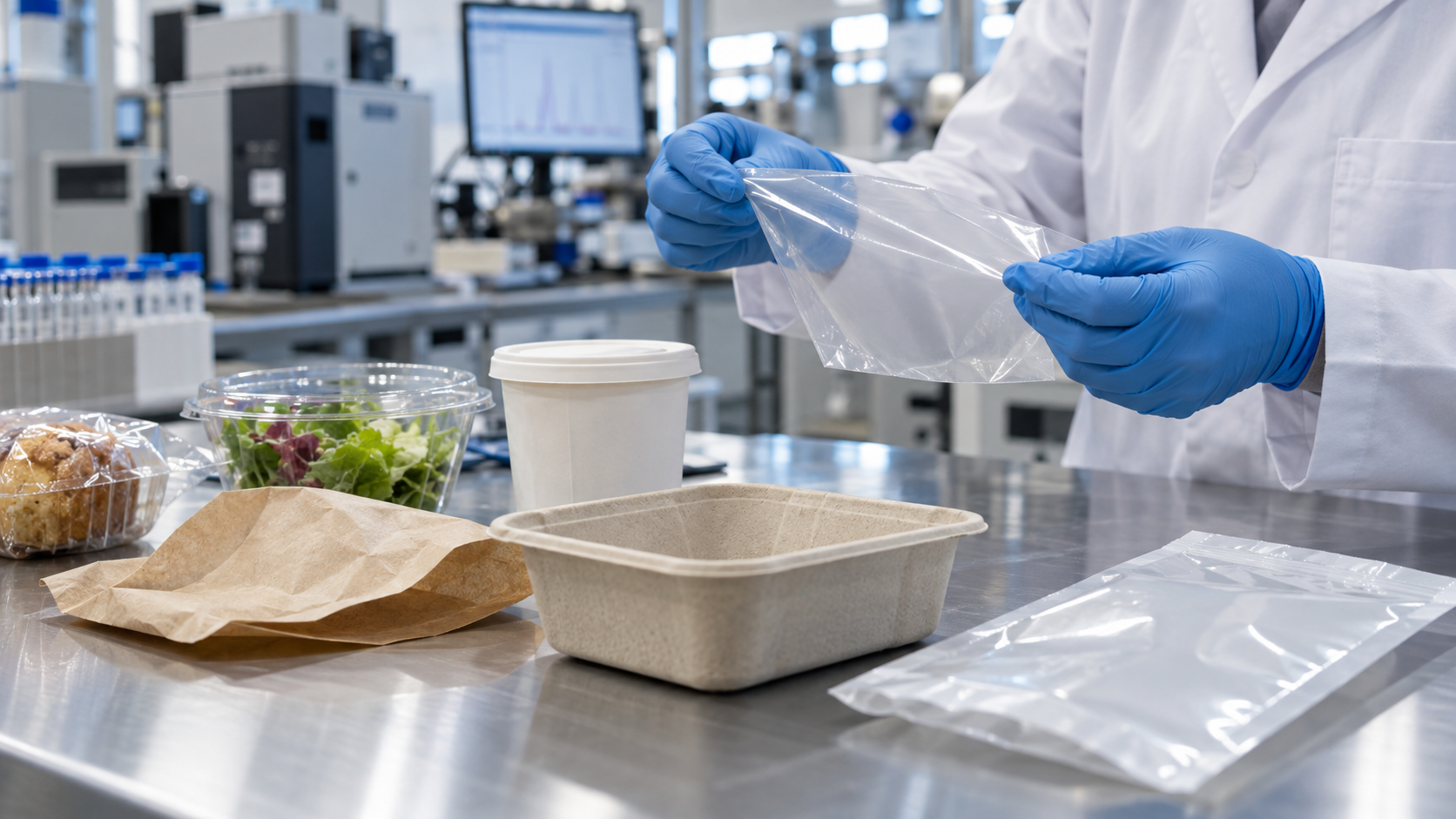
In this context, the food contact materials laboratory plays a fundamental role in transforming regulatory obligations into objective evidence that enables the safety and suitability of packaging to be assessed.
The analysis must reflect the actual use of the packaging
Not all materials behave in the same way, nor are all packaging materials intended for the same applications. The type of food, contact time, temperature, heat treatments or storage conditions may influence the interaction between the packaging and the product.
The ultimate objective is to ensure that the material does not transfer components to the food in quantities that could endanger human health, bring about an unacceptable change in the composition of the food or alter its organoleptic characteristics.
Therefore, an analytical strategy for food packaging should not be approached generically, but should be developed based on the intended use of the material. The objective is to verify that the packaging maintains its safety and functionality under the conditions in which it will actually be used.
This approach is particularly important when the company carries out transformation operations on the material received. Processes such as thermoforming or blow moulding may modify the characteristics of the final packaging and promote the appearance of substances that were not present, or were not present at the same concentrations, in the starting material.
In these cases, the information initially provided by the supplier may need to be supplemented with new evidence concerning the final article.
Beyond overall migration
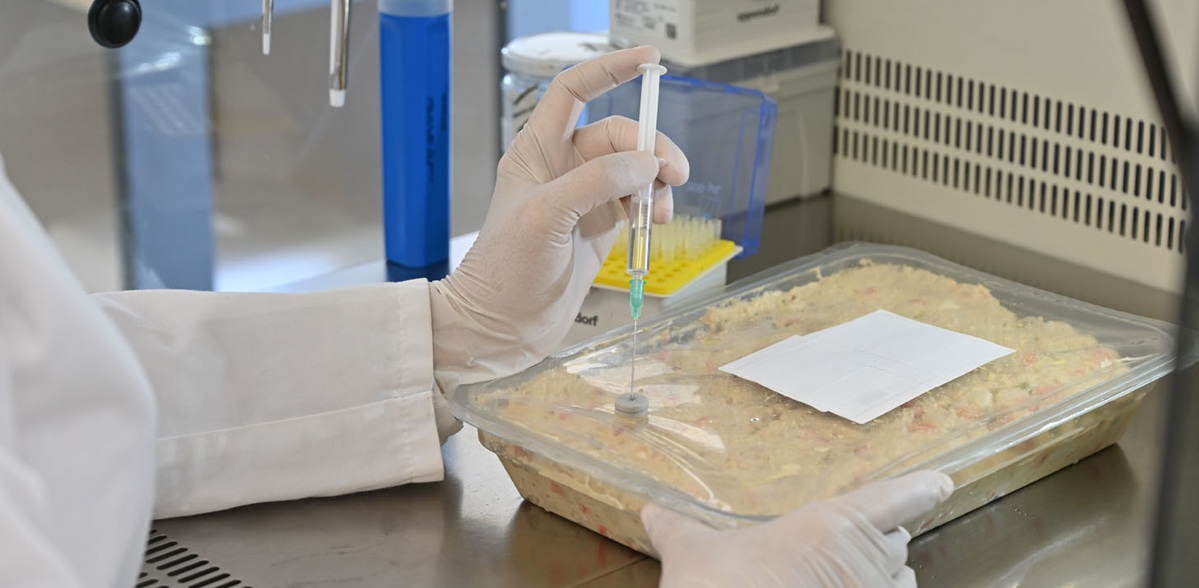
Migration testing is an essential tool for assessing the potential transfer of components from the material to the food.
Although overall migration remains a fundamental requirement for demonstrating the overall inertness of the material, on its own it does not provide information on which substances migrate or on the potential risks associated with specific compounds.
For this reason, the safety of food packaging cannot be determined solely by means of a general value. It is necessary to adopt a broader view that considers both regulated and known substances and those that may appear during the manufacture, transformation, storage or use of the material.
The control strategy must be defined according to the composition of the packaging, the information available on the raw materials and the potential risks associated with the production process. This makes it possible to select the most appropriate analyses and avoid both insufficient controls and unnecessarily broad analytical programmes.
NIAS: unavoidable substances that must be assessed
One of the areas gaining greater prominence is that of non-intentionally added substances, known as NIAS.
These substances are not deliberately incorporated into the formulation of the material. They may arise from impurities, reactions between components, degradation processes or transformations caused by heat, pressure, radiation or other manufacturing conditions.
The presence of NIAS in food contact materials does not automatically imply that a material is unsafe. The challenge is to detect them, obtain information on their concentration and assess whether they may pose a risk under the intended conditions of use.
Therefore, the analytical assessment of NIAS must be accompanied by a toxicological interpretation and an exposure assessment. The final result must make it possible to take an informed decision on the compliance and safety of the packaging.
PFAS, bisphenols and MOSH/MOAH: new areas of control
Regulatory and scientific developments are focusing attention on different families of substances of particular interest.
PFAS in food packaging present a particular challenge due to the breadth and diversity of compounds that may be included under this designation. Their possible presence in certain surface treatments and materials with grease- or moisture-resistant properties is driving the need to review formulations and control strategies.
Restrictions on bisphenol A and other hazardous bisphenols have also been strengthened. This affects different materials and components used in contact with food, so companies must review both the information received from their suppliers and the evidence available to demonstrate compliance.
Furthermore, MOSH and MOAH mineral oil hydrocarbons may reach food from different sources. Packaging may be one of them, but raw materials, lubricants, production processes or environmental sources may also be involved.
In these cases, the value of the laboratory does not lie solely in detecting a possible presence. It must also help to distinguish interferences, identify the probable origin and guide the most appropriate mitigation measures.
From analytical results to decision-making
The laboratory should be understood as a tool to support risk management and not merely as a final verification mechanism.
Early planning makes it possible to identify information gaps, prioritise the most critical materials and anticipate potential needs for replacement, reformulation or validation.
This anticipation is particularly relevant in view of the application of the PPWR and the growing requirement for compliance declarations and decisions to be supported by sufficient technical documentation.
The new regulatory scenario presents an opportunity to review control systems and move towards integrated food packaging safety management. A management approach in which regulation, knowledge of the material, supply chain information, laboratory analysis and risk assessment are connected from the earliest stages of packaging development and selection.
In an increasingly demanding regulatory context, food packaging safety cannot be based solely on documentary declarations. The combination of material knowledge, supply chain information, analytical testing and risk assessment will be key to demonstrating compliance and ensuring consumer protection.
In this scenario, the laboratory becomes a strategic partner capable of transforming regulatory requirements into objective technical evidence that enables informed decisions to be made.
At AINIA, we work with companies to define analytical strategies adapted to each material and application, assess regulated and non-intentionally added substances and interpret the results from the perspective of food safety and regulatory compliance.