Turn your sustainability goals into viable, measurable and scalable solutions
At AINIA, we help companies turn their sustainability goals into measurable, safe, viable and scalable solutions, from diagnosis and technological development through to industrial and regulatory validation.
We integrate capabilities in environmental assessment, water, bioeconomy, biotechnology, process technologies, product development, packaging, laboratories, legislation, consumer, digitalisation and scaling to offer a comprehensive response to the industry’s sustainability challenges.
Sustainability must generate value for the company
Reducing environmental impact, optimising the use of resources and moving towards circular models requires making decisions that affect raw materials, products, industrial processes, packaging and the value chain.
The challenge is not only to find an alternative with lower impact. That alternative must also be safe, functional, regulatorily viable, accepted by the market and competitive at industrial scale.
At AINIA, we approach each project from a technological, environmental, economic, regulatory and consumer perspective. This is how we help companies prioritise actions, reduce risks and move from general objectives towards applicable solutions
AINIA Sustainability Conference 2025: Innovation and collaboration
Industrial sustainability requires integrating technological innovation, collaboration between companies and knowledge centres, and a regulatory framework that facilitates transformation.
Solutions such as CO₂ valorisation, water reuse, anaerobic digestion and biomethane make it possible to convert waste and emissions into new resources.
Progress towards more circular models requires balancing environmental impact, economic viability, social acceptance and the integration of projects into their environment.
¿What is holding back your sustainability strategy?
- Not knowing where the impact is concentrated or which actions to prioritise.
- Lacking reliable data to compare alternatives and justify investments.
- Needing to reduce consumption without compromising productivity or safety.
- Generating waste or by-products without a profitable recovery route.
- Finding more sustainable solutions that do not maintain the necessary performance.
- Facing new regulatory and market requirements.
- Having difficulties moving from a laboratory test to industrial scale
- Not having sufficient evidence to communicate progress rigorously.
Six challenges for moving towards a more sustainable industry
Reducing the environmental impact of products and processes
Optimising the use of water, energy and raw materials
Preventing waste and valorising by-products
Developing more sustainable products, ingredients and packaging
Complying with the new sustainability requirements
Measuring, demonstrating and communicating results
01_Reducing the environmental impact of products and processes
Turn environmental data into improvement decisions
Measuring the impact makes it possible to know which raw materials, operations or stages of the value chain concentrate the highest consumption and emissions. However, the real value appears when that information becomes decisions about product, process, technology or investment.
At AINIA, we combine environmental assessment, process knowledge and techno-economic analysis to compare alternatives and design realistic roadmaps.
We help you to:
- Analyse the life cycle of products, processes, technologies and packaging.
- Calculate the carbon footprint, water footprint and other environmental indicators.
- Evaluate the cost and social aspects associated with the life cycle.
- Identify critical points and opportunities to reduce impact.
- Compare raw materials, formulations, technologies and production scenarios.
- Diagnose facilities and identify Best Available Techniques.
We also incorporate environmental criteria from the earliest stages of development, preventing sustainability from being assessed when the product or process is already defined. This makes it possible to prevent impacts, reduce redesigns and better balance environmental performance, functionality and cost.
What will you get?
A prioritised, data-backed roadmap to reduce impacts and guide investments towards the alternatives with the greatest viability.
Innovation for decarbonisation: challenges and solutions from Repsol
Decarbonisation is an industrial challenge that requires combining different technologies, adapting production processes and accelerating their scaling.
Innovation, collaboration between companies and technology centres and the development of solutions such as CO₂ capture and valorisation are key to reducing emissions.
02_Optimising the use of water, energy and raw materials
Optimising the use of water, energy and raw materials
Reduce consumption, costs and dependence on resources
Water, energy and raw materials determine the competitiveness and resilience of any industrial activity. Improving their use requires understanding process flows, identifying losses and validating solutions adapted to each facility.
At AINIA we analyse in an integrated way the production process, treatment systems, cleaning operations and the possibilities for resource recovery.
Integrated and circular water management
We study consumption and the streams generated to reduce abstraction, improve treatments and increase reuse.
We can help you diagnose and optimise EDARI and EDARU, carry out treatability tests and validate biological, physicochemical, membrane and advanced oxidation technologies. We also address the recovery of compounds present in wastewater, brine treatment and the reuse of process water.
Projects may include physicochemical, microbiological and virological characterisation, assessment of emerging contaminants and technical and legal advice on discharges, reuse and sanitation charges.
We evaluate thermal operations, preservation treatments and other production stages to reduce consumption, improve yields and limit the generation of residual streams.
Pilot plant validation makes it possible to verify the behaviour of a technology before transferring it to production.
Sustainable industrial hygiene
Hygienic design and cleaning optimisation can reduce the use of water, energy, detergents and disinfectants.
AINIA evaluates the cleanability of equipment and facilities, designs sanitisation procedures and validates the bactericidal, fungicidal and virucidal efficacy of products and treatments.
Biogas and biomethane
We evaluate waste and by-products as substrates for anaerobic digestion and determine their biomethanisation potential.
Studies may include biodegradability, kinetics, inhibition, selection of co-substrates, tests in continuous pilot reactors, biogas composition, residual biogas analysis and digestate valorisation. We also carry out technical, economic and environmental feasibility studies of biogas and biomethane plants.
What will you get?
More efficient and resilient processes, with lower consumption, operating costs and risks associated with resource availability.
Network Interview
In this video you can see how nature-based innovation can generate effective functional ingredients through cleaner and more responsible processes.
HTBA integrates green chemistry, efficient use of resources and high quality standards to reduce the environmental impact of its activity.
Its approach connects sustainability, science and health, demonstrating that industrial competitiveness can advance hand in hand with natural and technologically innovative solutions.
03_ Preventing waste and valorising by-products
Preventing waste and valorising by-products
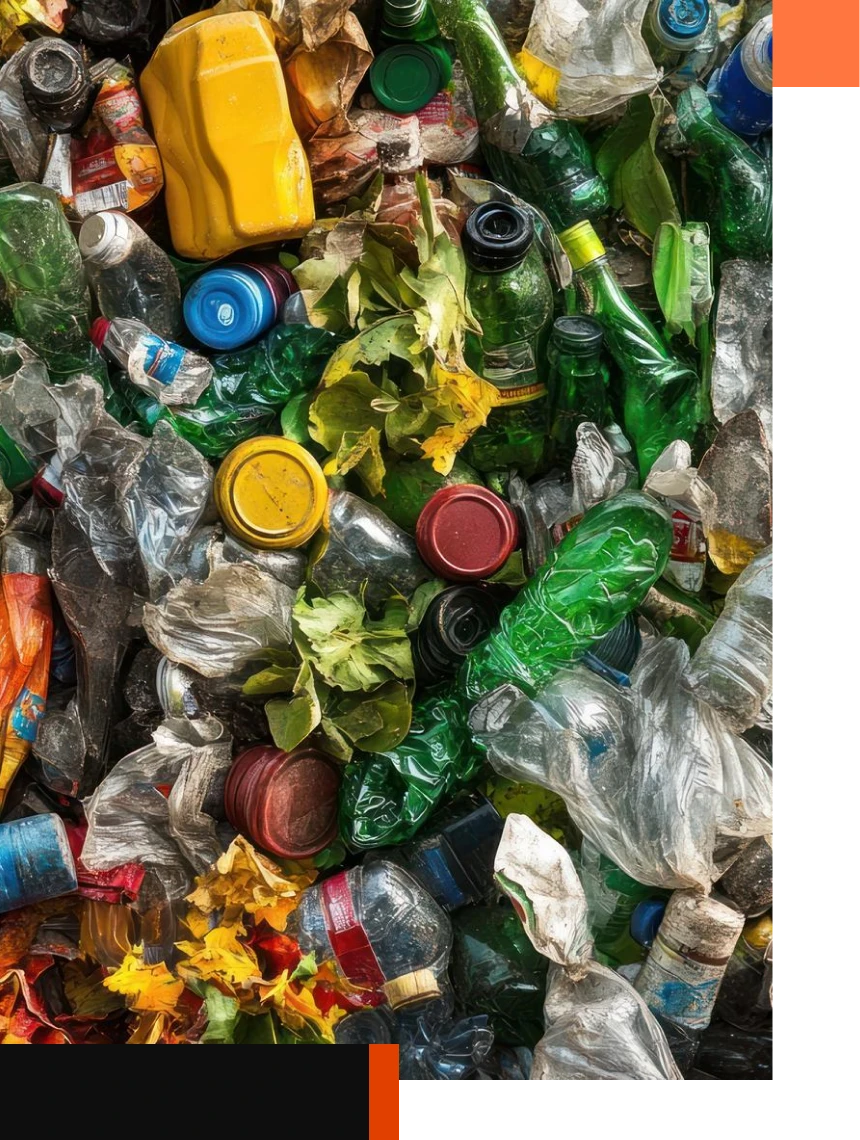
Transform residual streams into new resources
Waste and by-products can become ingredients, biomaterials, bioproducts, fertilisers or energy sources. To achieve this, it is necessary to understand their composition, stability and variability, identify applications and select processes compatible with regulation and the market.
At AINIA, we address the complete pathway, from prevention and characterisation through to the development and scaling of new solutions.
Waste prevention and shelf-life extension
We help identify the points where losses are generated, their causes and possible prevention measures.
Shelf-life studies, diagnosis of alterations, predictive microbiology, challenge tests, preservation technologies and active packaging make it possible to reduce discards without compromising product safety or quality.
We also support the design of waste prevention plans and the application of the hierarchy of uses: human consumption, transformation into new products, animal feed, industrial applications or agronomic and energy recovery.
Azucarera: circular economy and full use of beet
Azucarera integrates sustainability into its production model through the use of 100 % of locally grown sugar beet.
The company applies circular economy principles to valorise its streams, transforming by-products into new ingredients and added-value solutions. In this area, collaboration with AINIA has been key to developing technologies and processes that make it possible to optimise the use of these by-products and improve their valorisation.
Use of waste and by-products
We characterise the streams to identify compounds of interest and select the most suitable technologies:
Membrane technologies, purification, drying and microencapsulation.
Cascade valorisation processes and biorefinery models.
From these streams we can develop food, cosmetic or pharmaceutical ingredients, bioactive compounds, oils, pigments, aromas, antioxidants, biomaterials and chemical components of biological origin.
We also work on obtaining single-cell proteins, microalgae and other new biomasses; the use of lignocellulosic biomass; and the development of biofertilisers, biopesticides, biofuels, biogas and biomethane.
Project ELDRIN
Project ELDRIN
- New advances in the valorisation of lignocellulosic biomass to obtain sustainable biomaterials and biochemicals
- AINIA transforms plant and industrial waste into new sustainable materials for packaging
Regulatory and economic viability
We analyse the consideration of a stream as waste, a by-product or end-of-waste status, as well as the requirements for using and marketing the new products obtained.
Techno-economic assessment makes it possible to prioritise the applications with the greatest potential before moving towards scaling.
What will you get?
New opportunities to reduce management costs, recover resources and develop circular products or business models.
04_Developing more sustainable products, ingredients and packaging
Developing more sustainable products, ingredients and packaging
Innovate without compromising functionality, safety or acceptance
Sustainability must be incorporated from product design and jointly consider raw materials, formulation, process, packaging, shelf life and consumer behaviour.
At AINIA, we develop and validate solutions for the agri-food, cosmetics, pharmaceutical, chemical and packaging sectors, combining eco-design, biotechnology, analysis, regulation and market knowledge.
Sustainable products and ingredients
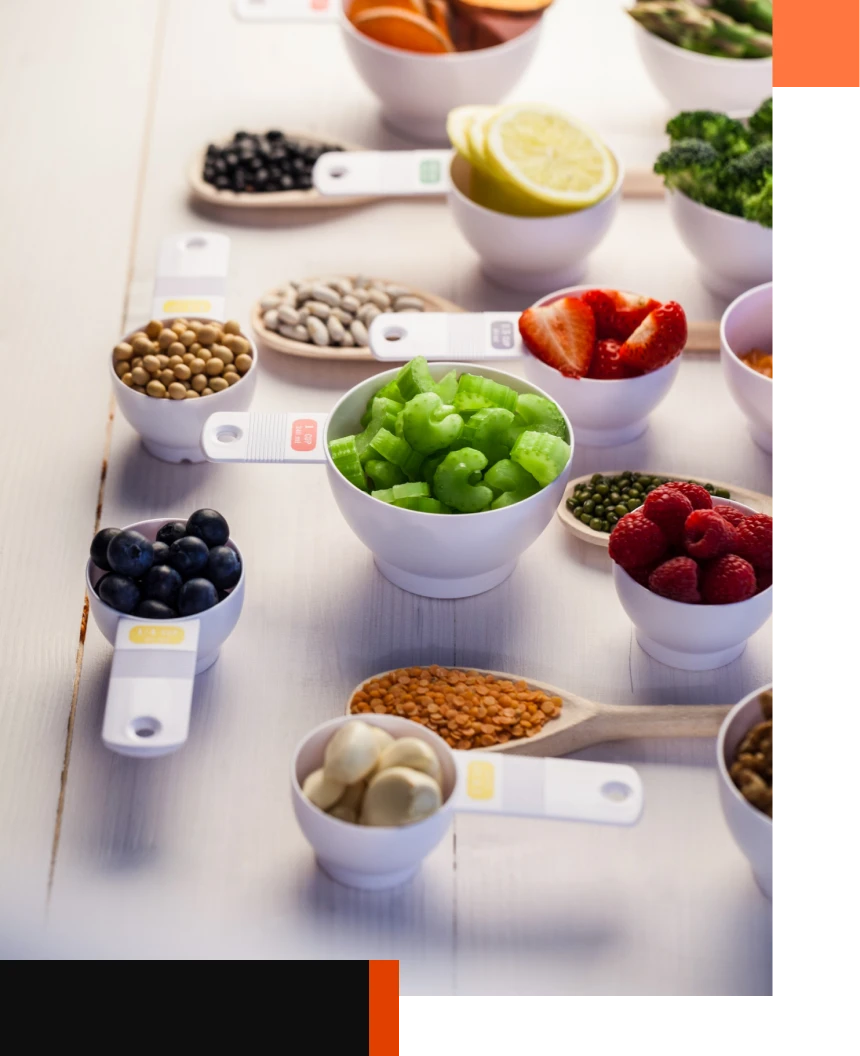
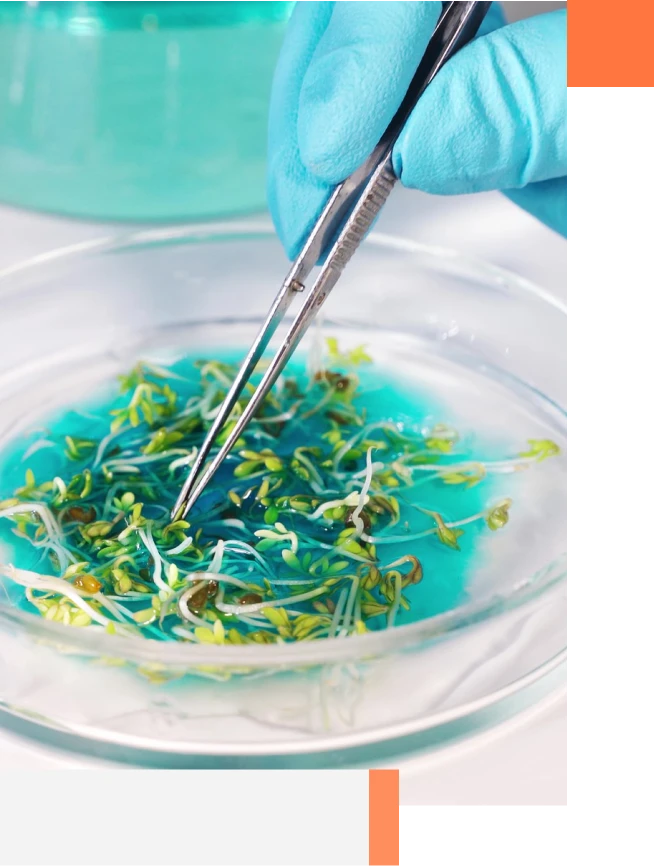
We help reformulate products, replace substances or raw materials with higher impact and evaluate renewable, recycled or bio-based alternatives.
In food, we work on:
Alternative proteins from plant sources, microalgae, macroalgae, lemna, microorganisms and other emerging sources.
Development of plant-based products and new food analogues.
Functionalisation of ingredients, texturisation and extrusion.
Development of fermented foods, functional ingredients and nutritionally optimised products.
In cosmetics, pharmaceuticals and chemicals, we develop active ingredients, ingredients and biotechnological compounds obtained through more efficient and sustainable processes.
The solution is validated from different perspectives: functionality, processability, stability, safety, efficacy, sensory quality and consumer acceptance.
SUPRALEM: Innovative and sustainable technologies for the production of improved biomasses
The SUPRALEM project promotes new sources of plant protein from duckweed and microalgae, produced using more sustainable cultivation technologies.
The combination of advanced processes makes it possible to enrich biomasses, improve their functionality and make full use of their different fractions.
This approach contributes to developing ingredients with high nutritional value, lower environmental impact and new possibilities for the food industry..
Circular packaging and materials
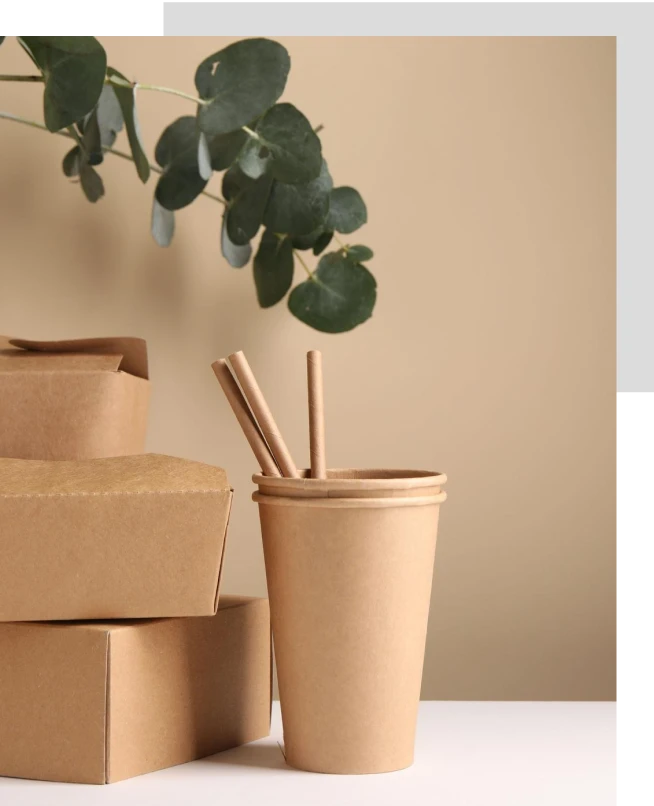
We apply eco-design criteria to reduce material, optimise formats and develop recyclable, mono-material, reusable structures or with recycled content.
We also work on materials of renewable origin, biopolymers obtained from waste, active packaging and functional coatings that help preserve the product and prevent waste.
Validation may include:
- Mechanical properties, barrier, sealing and resistance during transport and distribution.
- Compatibility between the packaging and the product.
- Assessment of adhesives, inks, coatings and other components.
Overall and specific migration, NIAS and food contact materials.
Recyclability, classification and compatibility with recycling processes.
Consumer and market
We analyse the perception of sustainability, the acceptance of reformulated products and the experience of use of new packaging.
Concept and product tests, sensory analysis, market studies and digital observation help select proposals with a higher probability of acceptance.
What will you get?
Products, ingredients and packaging with lower impact, technically sound and ready to meet regulatory and market requirements.
FerVeLact II: plant-based ingredients for a more sustainable diet
FerVeLact II develops alternatives to dairy products from local plant-based raw materials such as almond, lupin, tiger nut and flax.
The project combines structured vegetable fats, clean technologies with supercritical CO₂ and precision fermentation to improve its nutritional, sensory and technological profile.
This approach promotes a more sustainable food chain, reduces dependence on ingredients of animal origin and generates new innovation opportunities for the industry.
05_ Complying with the new sustainability requirements
Complying with the new sustainability requirements
Anticipate regulation and reduce risks
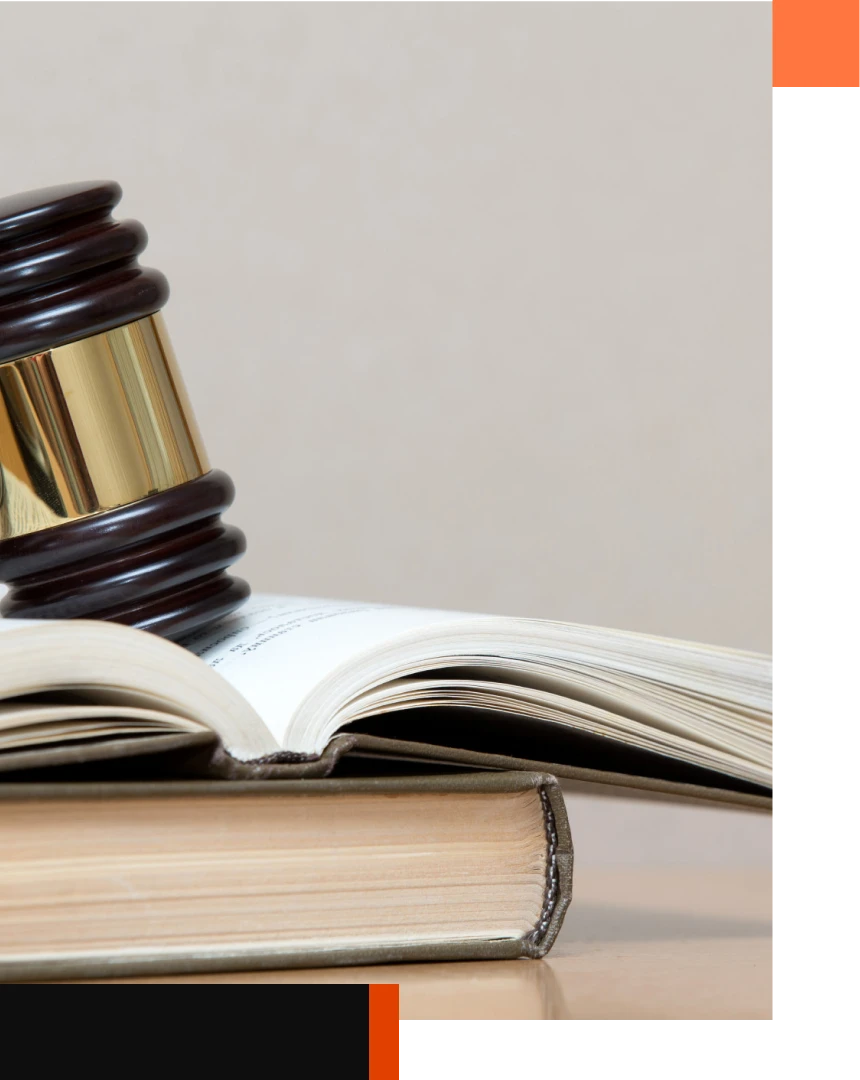
Obligations related to packaging, waste, water, chemical substances, contact materials and environmental claims increasingly affect product design and marketing.
At AINIA, we connect technical, analytical and legal knowledge to identify which requirements apply and how they should be integrated into each project.
We help you to:
- Interpret and apply the Packaging and Packaging Waste Regulation, PPWR.
- Assess recyclability, reuse, reduction and recycled content requirements.
- Review food contact materials, migrations, NIAS and declarations of conformity.
- Analyse obligations regarding waste, by-products, discharges and water reuse.
- Assess new ingredients, biomaterials, biofertilisers and biopesticides.
- Identify restricted or emerging substances and study alternatives.
We also carry out regulatory monitoring, compliance diagnostics and gap analyses to help companies anticipate changes.
Transform residual streams into new resources
Messages such as “recyclable”, “biodegradable”, “compostable”, “of renewable origin” or “with a lower footprint” must have proportionate and verifiable evidence.
We review the consistency between the message, the available data and the applicable technical and regulatory requirements.
What will you get?
Greater security to make decisions, adapt your products and reduce risks of non-compliance, commercial blockage or redesign.
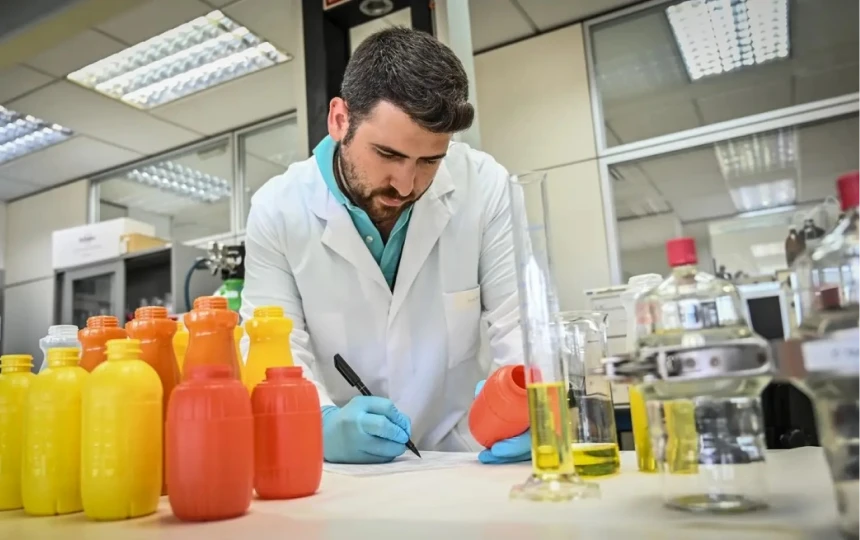
Companies will have to demonstrate the sustainability of their packaging from August 2026
The PPWR turns packaging sustainability into a technical and documentary obligation that companies will have to demonstrate through a specific EU Declaration of Conformity for each type of packaging.
The regulation introduces requirements on recyclability, recycled content, material reduction, reuse, compostability and control of substances such as PFAS.
Anticipating adaptation will be key to having traceable information, carrying out the necessary analyses and proving that each packaging complies with the new European sustainability criteria.
06_Measuring, demonstrating and communicating results
Measuring, demonstrating and communicating results
Generate evidence to support your progress
Environmental improvements must be measurable and demonstrable. This makes it possible to verify their effectiveness, justify investments, respond to customers and communicate results with credibility.
At AINIA, we integrate environmental assessment, laboratory analysis, technological validation, consumer and digitalisation to generate evidence adapted to each objective.
Measurement and validation
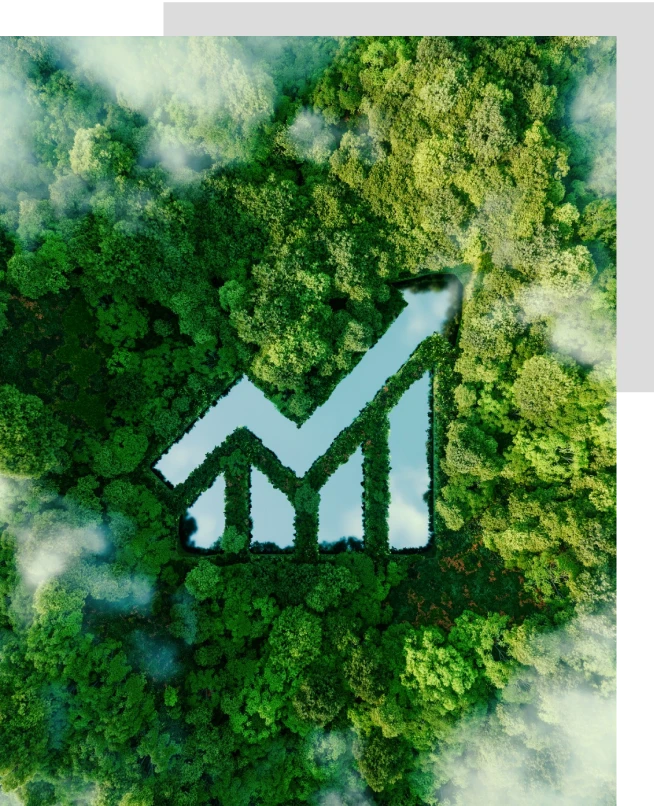
We can measure the evolution of environmental footprints, consumption, yields, waste generation and circularity indicators.
Our laboratories make it possible to characterise products, materials, packaging, water, residual streams and by-products. We carry out physicochemical and microbiological analyses, contaminant studies, migrations, NIAS, shelf life, stability, resistance and functional properties.
Proofs of concept, comparative tests and pilot validation make it possible to demonstrate the behaviour of the solution under representative conditions.
Digitalisation for sustainability
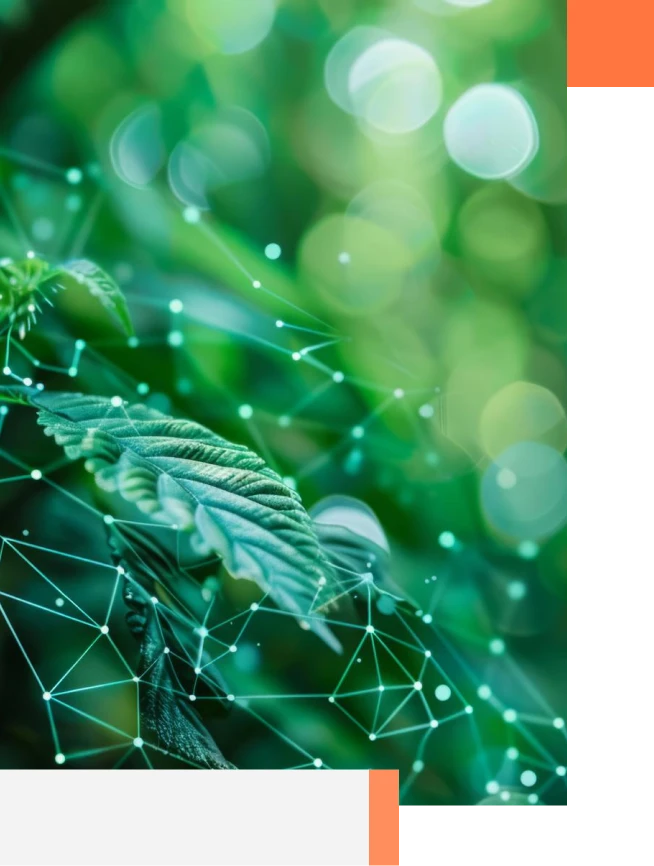
We apply sensor technology, monitoring, traceability, predictive models and artificial intelligence to integrate environmental and production data.
These tools can help anticipate losses, optimise consumption, improve yields and continuously monitor the measures implemented.
Consumer evidence
We assess how consumers understand and value environmental improvements, new materials, reformulations and associated messages.
This makes it possible to adjust communication and avoid arguments that, even if technically correct, are not clear or relevant to the market.
What will you get?
Verifiable data to make decisions, justify investments and communicate your progress rigorously and clearly.
A comprehensive process, from diagnosis to implementation
Sustainability can begin with a cost issue, a reduction target, a regulatory obligation, a by-product, a new formulation or a market opportunity.
Whatever the starting point, at AINIA we connect the necessary capabilities to build a coherent solution.

Diagnosis and prioritisation
We analyse the product, process or facility, identify risks and opportunities and define the project objectives and indicators.

Measurement and characterisation
We generate the environmental, analytical, production, economic, regulatory and market information needed to compare alternatives.

Development of the solution
We design or select technologies, processes, formulations, materials and recovery models adapted to each need

Validation
We verify its functionality, safety, stability, environmental impact, regulatory viability and acceptance.

Scaling
We transfer development to pilot plants, optimise process conditions and produce samples or first batches.

Implementation and demonstration
We support industrial transfer, measure results and generate the evidence needed for its documentation and communication.
A multidisciplinary response with a single technology partner
Each project requires a different combination of capabilities. At AINIA we integrate:
- Environmental assessment, life cycle analysis and eco-design.
- Circular water management, stream treatment and resource recovery.
- Biogas, biomethane, anaerobic digestion and energy recovery.
- Bioeconomy, biorefineries and valorisation of by-products.
- Extraction, fermentation, bioprocesses, separation and microencapsulation.
- Alternative proteins, plant-based products and new ingredients.
- Biomaterials, biofertilisers, biopesticides and biobased chemicals.
- Process technologies, preservation, shelf life and industrial hygiene.
- Development, eco-design and validation of packaging.
- Analysis and safety assessment laboratories
- Environmental, food and contact materials legislation.
- Market research, sensory analysis and consumer behaviour.
- Sensor technology, artificial intelligence, traceability and monitoring.
- Pilot plants, technological scaling and industrial transfer.
From the laboratory to industrial production
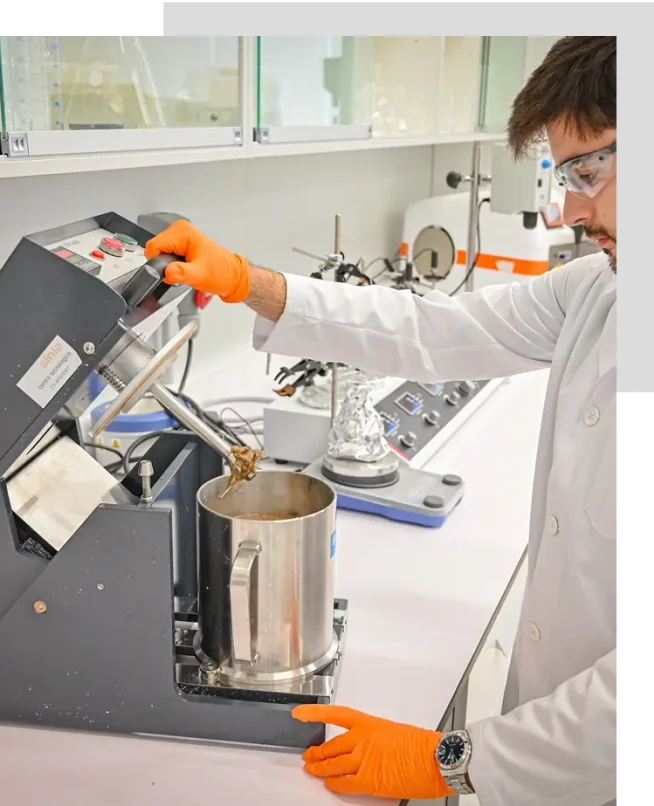
AINIA’s infrastructures make it possible to test and optimise solutions before undertaking an industrial investment.
When the project requires it, ALTEX makes it possible to scale extractive processes and produce food, cosmetic and pharmaceutical ingredients using supercritical CO₂, closing the pathway from development to production.
¿Why work with AINIA?
A comprehensive vision
We jointly address the environmental, technological, economic, regulatory and market dimensions. This avoids partial solutions that reduce an impact, but generate new problems at another stage.
Specialised capabilities
We have expert professionals in biotechnology, industrial processes, water, chemistry, microbiology, packaging, legislation, environmental assessment, consumer and digitalisation.
Infrastructure to validate before investing
We have laboratories, pilot plants and advanced equipment to reduce uncertainty and verify the scalability of solutions.
Multisectoral knowledge
We work with companies in the agri-food, cosmetics, pharmaceutical, chemical, packaging and consumer goods sectors.
Results orientation
We develop measurable, safe, functional, viable and transferable solutions for industry.
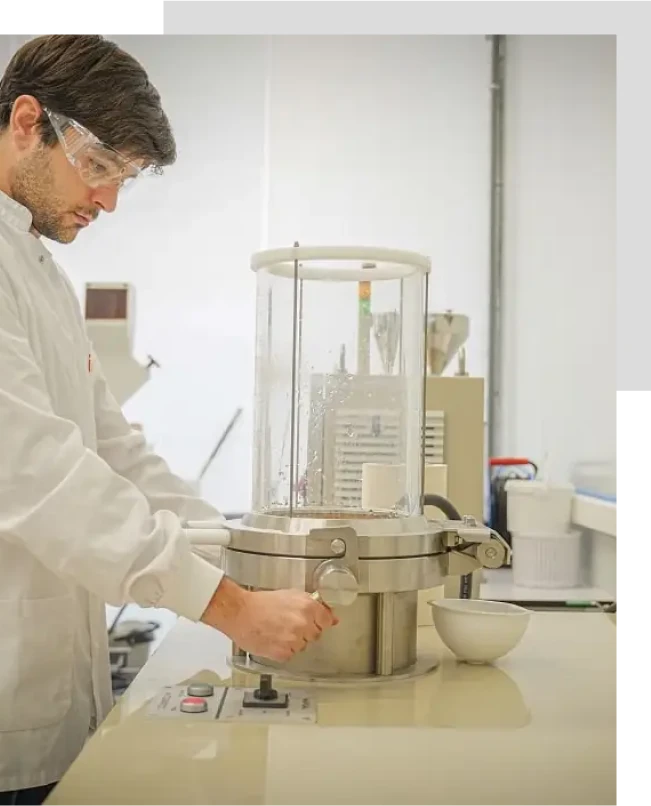
AINIA Network Interview: Coralim Aditivos
Discover how Coralim Aditivos integrates sustainability into its strategy through the development of natural colourants and solutions adapted to new market demands.
Innovation and technological collaboration make it possible to move towards more responsible products, without giving up quality, functionality or food safety.
Its approach shows that sustainability can also become a lever for differentiation and competitiveness for the agri-food industry.
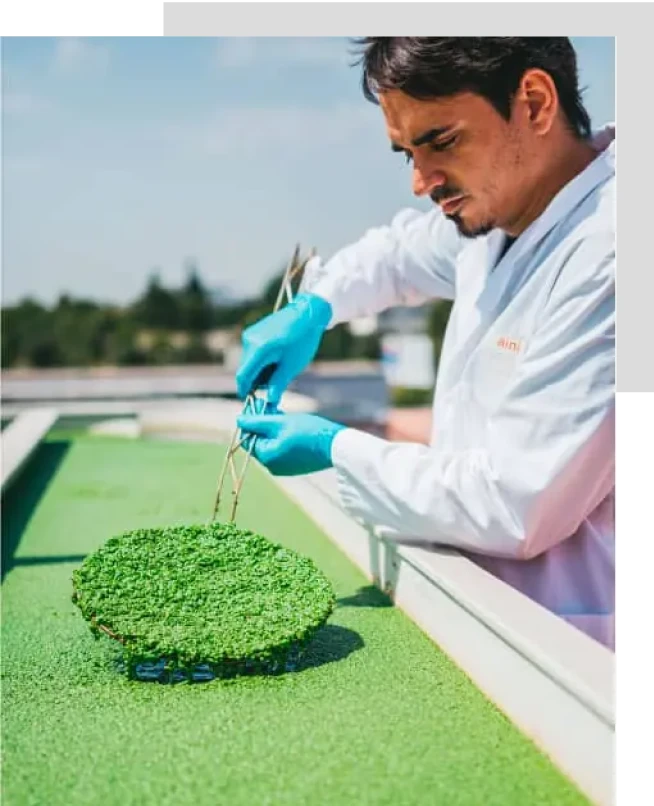
Sustainable innovation with applicable results
AINIA’s projects make it possible to respond to challenges such as:
- Reduce the environmental footprint of a product or process.
- Save and reuse water in an industrial facility.
- Improve an EDARI (Industrial Wastewater Treatment Plant) or recover resources from residual streams.
- Optimise cleaning and reduce the consumption of chemical products.
- Assess the viability of a biogas plant.
- Transform a by-product into an ingredient or biomaterial.
- Prevent waste and extend shelf life
- Develop alternative proteins or new plant-based products.
- Replace raw materials or substances with greater impact.
- Redesign packaging to improve its recyclability.
- Adapt to the PPWR and generate technical documentation.
- Validate an environmental declaration.
- Scale up and produce a new ingredient.
Frequently asked questions
Where should I start?
Yes. We design the study so that the result is actionable and comparable. We also support you in the creation or improvement of an internal sensory panel.
Is it necessary to carry out a complete life cycle assessment?
Not always. The scope can be adapted to the decision that needs to be made: initial diagnosis, specific footprint, comparison of alternatives or full life cycle assessment.
Can you validate a solution before making an investment?
Yes. AINIA’s laboratories and pilot plants make it possible to carry out proofs of concept, optimise processes, produce samples and generate data before undertaking industrial implementation.
Can AINIA help with the PPWR?
Yes. We combine regulatory advice, eco-design, knowledge of materials and laboratory analysis to identify obligations and adapt packaging.
Can you study any waste or by-product?
Its potential depends on composition, volume, stability, availability and regulation. We can characterise the stream, identify applications and assess technical and economic viability.
Can you support an environmental claim?
Yes. We analyse the message and define the environmental, analytical, technological, regulatory or consumer evidence needed to support it.

Turn your sustainability goals into applicable results
Whether you need to reduce consumption, valorise a by-product, develop a more sustainable product, redesign packaging, anticipate a new obligation or demonstrate an environmental improvement, at AINIA we help you define and execute the most suitable path.
With a single technology partner you can connect diagnosis, development, analysis, regulation, consumer, validation, scaling and industrial production.
Would you like to know more?
Leave us your details and we will contact you to answer your questions or continue the conversation.